
Commercial Refrigeration and Walk-In Repair in West Lake Hills, TX
A walk-in cooler climbing above 41 degrees, a reach-in that ices up every night, a prep cooler failing a health inspection, or a condensing unit short-cycling on a hot afternoon. TakiDA services commercial refrigeration for restaurants, cafes, country clubs, spas, gyms, salons and retail across West Lake Hills and the surrounding 78746 area. EPA Section 608 Universal certified and insured. Commercial diagnostic $149, applied toward the repair.
Call (737) 388-3867 | Request a visit
Commercial Refrigeration Symptoms We Sort Out
The box is drifting above food-safe temperature
Common causes. A slow leak leaving the system short of charge, a restriction in the liquid line, a condenser packed with dust, a compressor losing capacity, or a defrost cycle that never terminates so the coil stays iced.
What we do. We take suction and discharge pressures with superheat and subcooling, read box and coil temperatures, and inspect the condenser before touching gauges. Plenty of the equipment up here sits in tight back-of-house rooms with poor air movement, and a condenser starved of air looks exactly like a failing compressor until the numbers are on the gauges.
The evaporator ices over completely
Common causes. A failed defrost timer, heater or termination thermostat, a low charge, an air path blocked by overstacked product, or a door gasket pulling humid air in all day.
What we do. We confirm the defrost cycle actually runs and terminates, measure heater current, check gaskets and verify the charge. In a kitchen that gets slammed for a few hours and then sits quiet, the door spends its busy window wide open and the coil pays for it, so the gasket and the door habit get looked at alongside the electrics.
The condensing unit short-cycles or trips
Common causes. A high-pressure cutout tripping on a dirty or sun-baked condenser, a failed start component, low voltage at the disconnect, or a condenser fan motor that has quit.
What we do. We measure voltage under load and compressor amps against the nameplate with the clamp meter, check the fan and the cutout, and clean the condenser. Rooftop and outdoor units take the worst of a Texas summer, and airflow fixes more of these than parts do.
Water pooling in the box or on the floor
Common causes. A condensate drain blocked or frozen, a cracked drain pan, a failed drain line heater, or a coil that ices and then dumps everything when it thaws.
What we do. We clear and re-pitch the drain line, test the heater, and then find out why the coil iced in the first place. Water on a kitchen floor is a slip claim waiting to happen, so we treat the cause rather than mopping the symptom.
The top rail of the prep cooler runs warm
Common causes. An evaporator fan that has stopped, pans blocking the air channel, a missing rail gasket, or a low charge showing itself first at the warmest part of the box.
What we do. We measure at the product line rather than at the dial, check the fan and rail seals, and verify charge. Rail temperature is where health inspections are won or lost, and it is also where overloading shows up first, so we tell you plainly which of the two you are dealing with.
The compressor runs hot, loud, or not at all
Common causes. A failed start capacitor or relay, worn mounts, liquid floodback from a defrost fault, or a winding that has failed internally.
What we do. We test the starting components and read winding resistance before condemning anything. The compressor is the most expensive part in the system, and we are not willing to call it dead on a hunch when a twenty dollar relay produces the same symptom.
The door stopped sealing and the box is sweating
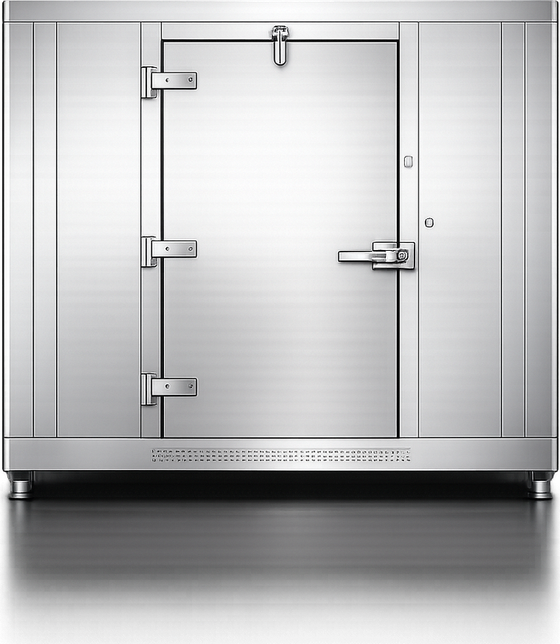
Common causes. Torn gaskets, a walk-in door sagging on its hinges, a failed frame heater on a freezer, or a closer that no longer pulls the door home.
What we do. We replace gaskets, adjust hinges and closers, and test the frame heater. Gaskets are cheap and give the best return of any repair on a walk-in, because every hour of a bad seal is paid for twice: once in the compressor running longer and once in the product sitting warmer.
The controller is alarming or showing numbers that cannot be right
Common causes. A failed probe, a probe hanging somewhere it should not be, a controller reconfigured during an earlier service call, or a loose sensor connection.
What we do. We check each probe against a measured temperature, reposition any left dangling in the airstream, and set the controller back to the manufacturer values. A probe taped in the wrong spot will have a box chasing a target it already reached, and no part replacement fixes that.
Commercial Refrigeration We Work On
Walk-in coolers and freezers, reach-in refrigerators and freezers, under-counter and back-bar coolers, prep and sandwich tables, display and merchandiser cases, keg coolers and draft systems, blast chillers, and remote and self-contained condensing units. We service Traulsen, True, Turbo Air, Hoshizaki, Continental, Beverage-Air, Norlake, Kolpak, Heatcraft, Copeland and Scotsman equipment for restaurants, cafes, country clubs, spas, gyms, salons and retail.
What a Commercial Refrigeration Repair Costs
The commercial diagnostic is $149 and it comes off the repair when you approve it. Gaskets, fan motors, defrost parts, probes and drain work sit at the moderate end. Leak repair with evacuation and recharge, compressor replacement and condensing unit changes are the expensive end. On older equipment we give you both figures, repair against replacement, and let you decide with the numbers in hand.
Where We Work in West Lake Hills
We cover West Lake Hills and the 78746 area around it, including the businesses along Bee Caves Road and the Loop 360 corridor, plus Westlake Highlands and Rollingwood. Lakeway and Bee Cave are inside our normal route, and Austin is a short run from here.
Frequently Asked Questions
Our walk-in is climbing. How fast can you get here?
Commercial calls go to the front of the schedule and same-day is usually possible. Tell us the box temperature and whether product is already at risk, and we will say honestly whether you should start moving inventory before we arrive rather than letting you find out later.
Can you top it up so we get through tonight?
A system that is low is leaking, and adding gas without finding the leak is a patch, not a repair, and not something we sign off on. Where it is safe we will stabilize you to get through service, then come back and fix the leak properly.
Do you work around our service hours?
Tell us your window when you call. A box going warm does not wait until morning, and we would much rather plan around your rush than work through the middle of it.
We keep failing inspection on the prep rail. Is the unit at fault?
Sometimes it is the unit and sometimes it is how the table gets loaded. We measure at the product line, check airflow and the rail seals, and tell you which one you have. That answer is usually a great deal cheaper than a new table.
Book Commercial Refrigeration Service in West Lake Hills
Tell us the equipment, the brand, the current box temperature and how fast it is drifting, and we will come prepared for the sealed system as well as the simple causes.
Commercial Refrigeration Repair in West Lake Hills, TX
-

What Brings Us Out to West Lake Hills Kitchens
- Product warming overnight
- Ice sheet over the evaporator coil
- Condenser fan spinning, box still warm
- Compressor starting and stopping
- Puddle at the walk-in threshold
- Door swinging open on its own
- Controller showing a sensor fault
-
Refrigeration We Cover
- Walk-in coolers and freezers
- Reach-in refrigerators and freezers
- Refrigerated display cases
- Remote and self-contained racks
- Defrost and controller work
- True, Turbo Air, Traulsen, Beverage-Air
- Delfield, Continental, Master-Bilt, Norlake

Commercial Refrigeration Brands We Service in West Lake Hills
If your brand is not listed, contact us — we likely service it.
Why Homeowners & Businesses Choose TakiDA
-
 Quality WorkWe deliver professional appliance repair with attention to detail, proper diagnostics, and long-lasting results you can rely on.
-
 OEM / High-Quality PartsWe use OEM or high-quality replacement parts to ensure correct operation, reliability, and extended appliance lifespan.
-
 Same-Day / Next-Day ServiceFast response with same-day or next-day service to reduce downtime and get your appliances back in working order quickly.
-
 Clear PricingUpfront estimates with transparent pricing. No hidden fees, no surprises — you know the cost before work begins.
-
 EPA Certified & InsuredEPA Section 608 Universal certified and fully insured for residential and commercial repair, giving you peace of mind and protection.
-
 Warranty on Labor & PartsAll repairs are backed by a warranty on labor and installed parts for added confidence and long-term reliability.
