
Commercial Ice Machine Repair in West Lake Hills, TX
An ice machine that stopped producing, a harvest cycle that never releases, thin or cloudy cubes, or a bin that runs dry through a lunch rush. TakiDA repairs and deep-cleans commercial ice machines for restaurants, cafes, country clubs, bars, spas, gyms and retail across West Lake Hills and the surrounding 78746 area. EPA Section 608 Universal certified and insured. Commercial diagnostic $149, applied toward the repair.
Call (737) 388-3867 | Request a visit
Ice Machine Symptoms We Sort Out
The machine has stopped making ice entirely
Common causes. A bin thermostat or ice-level sensor convinced the bin is still full, a water supply closed or clogged, a failed inlet valve, an evaporator buried in scale, or a fault in the sealed system.
What we do. We pull the diagnostic the machine stores, confirm water is actually arriving, and watch a full freeze and harvest cycle before touching gauges. A sensor reading a full bin is cheap and common; a sealed system fault is neither, and the two are easy to tell apart once the cycle has been watched rather than guessed at.
Cubes are thin, hollow or cloudy
Common causes. Scale on the evaporator, a water distribution tube with blocked holes, a low water level in the trough, a failed water pump, or a thickness sensor out of adjustment.
What we do. We deep-clean and descale the evaporator, distributor and trough, clear the pump, and set the cube thickness to spec. Central Texas water is hard enough that this is the most common service on these machines, and a filter extends the interval considerably.
The slab will not drop at harvest
Common causes. A failed hot gas valve, a harvest assist stuck in place, scale bonding the slab to the evaporator plate, or a curtain switch that never reports the slab falling.
What we do. We watch a complete harvest, test the hot gas valve and the curtain switch, and inspect the plate. Scale is the usual culprit on local water, and a machine that harvests fine when clean and sticks a month later is telling you about the cleaning interval rather than about a part.
Water escaping around the base of the machine
Common causes. A blocked bin or evaporator drain, a cracked trough, an inlet valve that will not shut fully, a loose supply fitting, or condensate running off a bin with a failed gasket.
What we do. We find the leak while the machine is running rather than reading the puddle, clear and re-pitch the drains, and replace the valve, fitting or gasket at fault. Behind a bar or in a tight service area the leak usually shows up on someone elses floor before anyone looks at the machine.
It runs all day and produces barely any ice
Common causes. An air-cooled condenser choked with dust, a machine wedged into a hot corner with no clearance, incoming water arriving warm, a low charge, or a compressor losing capacity.
What we do. We measure air temperature at the condenser intake and water temperature at the inlet, then clean the condenser and check the charge. Ice machines are rated at conditions most kitchens never give them, and a machine in a hot closet is doing its best rather than failing.
The ice tastes or smells off
Common causes. Biofilm in the trough and distribution tube, a water filter long past its life, scale through the water path, or kitchen odours being pulled into an open bin.
What we do. We carry out a full sanitizing clean of every wetted surface, change the filter and check the bin lid and seals. Ice is food, and this is the one complaint where the machine looks perfectly healthy while producing something you would not want in a glass in front of a member or a guest.
The machine locks out with a safety code
Common causes. High discharge pressure from a blocked condenser, a long freeze or long harvest fault, a water-level sensor fault, or a thermistor out of range.
What we do. We read the stored code, then test the circuit the code names rather than clearing it and hoping. Safety lockouts are the machine telling you what already went wrong.
The bin empties before service ends
Common causes. A machine undersized for the volume going through it, production dropping from scale or a dirty condenser, a bin sensor cutting production off early, or ice melting faster than it is made in a hot room.
What we do. We measure actual production against the rating rather than taking the badge at face value, then work out whether you have a capacity problem or a condition problem. Those two have very different price tags, and you should know which one you have before shopping for a bigger machine.
Ice Machines We Work On
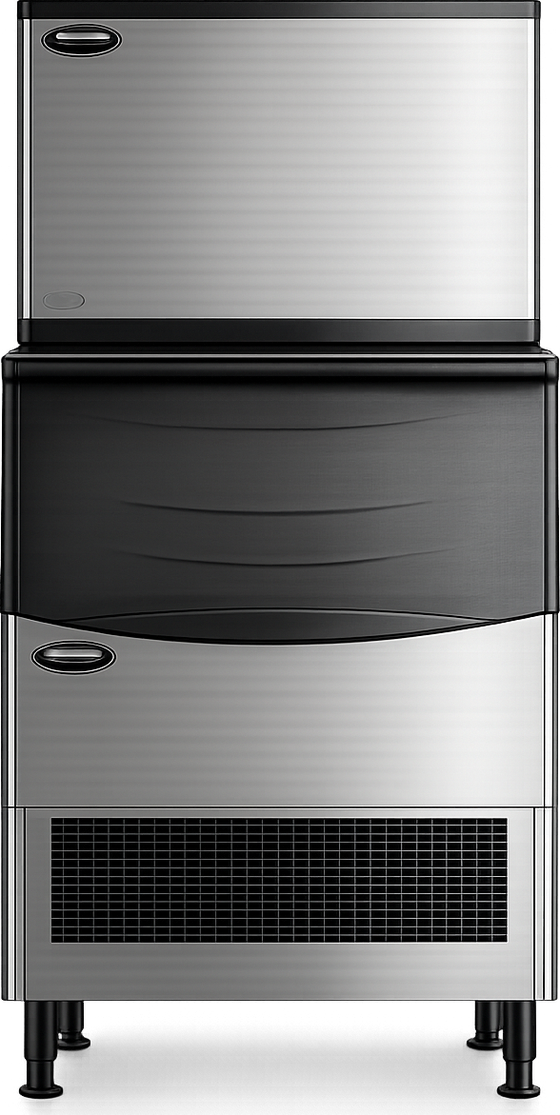
Modular cubers on bins, under-counter and self-contained units, nugget and flake machines, remote and air-cooled condensers, and water-cooled units. We service Hoshizaki, Manitowoc, Scotsman, Ice-O-Matic, Follett, True and Turbo Air for restaurants, cafes, bars, country clubs, spas, gyms and retail.
What an Ice Machine Repair Costs
The commercial diagnostic is $149 and it comes off the repair when you approve it. A full deep clean and descale is the low end and is genuinely what most machines need. Water pumps, inlet valves, hot gas valves, thermistors and fan motors are the middle. Compressors, evaporators and sealed system work are the expensive end, and on an older machine we show you both figures before anything is ordered.
Where We Work in West Lake Hills
We cover West Lake Hills and the 78746 area around it, including the businesses along Bee Caves Road and the Loop 360 corridor, plus Westlake Highlands and Rollingwood. Lakeway and Bee Cave are inside our normal route, and Austin is a short run from here.
Frequently Asked Questions
How often should an ice machine be cleaned?
Manufacturers generally call for twice a year, and on hard water in this area a machine often needs it more often than that. We will tell you what your machine's scale looks like and set a realistic interval.
Would a filter sort out the ice quality?
It helps a great deal, and a scale-inhibiting filter adds real life to the evaporator and the water pump. It is not a replacement for cleaning, but it stretches the interval between cleans and keeps the machine healthier for longer.
Can it be cleaned without losing a whole day?
A proper deep clean takes a few hours with the machine switched off. Tell us your service window and we will work around it, which in practice usually means starting early or coming in after close.
How soon can you get to us?
Commercial calls go to the front of the schedule and same-day is usually possible. A bar, cafe or club dining room with no ice is treated as urgent, because there is no workaround for it.
Book Ice Machine Service in West Lake Hills
Tell us the brand, the model, whether the water is filtered, and what the machine is doing, and we will arrive ready to clean, repair or diagnose the sealed system on the first visit.
Commercial Ice Machine Repair in West Lake Hills, TX
-

What Brings Us Out to an Ice Machine
- Bin empty by the middle of service
- Cubes coming out soft or short
- Sheet sticking and never releasing
- Production falling off as the day warms
- Drip forming under the cabinet
- Machine cycling but no water entering
- Scale coating the evaporator
-
Ice Machines We Cover
- Modular cube machines on bins
- Undercounter ice machines
- Flake and nugget machines
- Air and water cooled condensers
- Remote condenser systems
- Hoshizaki, Manitowoc, Scotsman
- Ice-O-Matic, Follett, KoolAire, True

Ice Machine Brands We Service in West Lake Hills
If your brand is not listed, contact us — we likely service it.
Why Homeowners & Businesses Choose TakiDA
-
 Quality WorkWe deliver professional appliance repair with attention to detail, proper diagnostics, and long-lasting results you can rely on.
-
 OEM / High-Quality PartsWe use OEM or high-quality replacement parts to ensure correct operation, reliability, and extended appliance lifespan.
-
 Same-Day / Next-Day ServiceFast response with same-day or next-day service to reduce downtime and get your appliances back in working order quickly.
-
 Clear PricingUpfront estimates with transparent pricing. No hidden fees, no surprises — you know the cost before work begins.
-
 EPA Certified & InsuredEPA Section 608 Universal certified and fully insured for residential and commercial repair, giving you peace of mind and protection.
-
 Warranty on Labor & PartsAll repairs are backed by a warranty on labor and installed parts for added confidence and long-term reliability.
