
Commercial Ice Machine Repair in Leander, TX
A bar or kitchen without ice stops serving before anything else goes wrong. We repair commercial ice machines — cubers, flakers and nugget machines, with bins or dispensers — for restaurants, bars, convenience stores, gyms and offices across Leander and the surrounding area. The $149 commercial diagnostic goes toward the repair, and you get a firm price before any part is replaced.
Common Commercial Ice Machine Problems in Leander
Commercial cubers run a timed, sensed cycle, and the manufacturers publish exactly what that cycle should look like. The figures below come from Manitowoc, Scotsman and Hoshizaki service literature, and they are what we check the machine against on site.
The machine makes no ice at all
Common causes. No ice with the machine powered means water, refrigeration, or a safety that has locked it out. Water first: the supply valve, the inlet solenoid, the filter and the float. Then refrigeration: a dirty condenser, a failed fan, a contactor, a compressor. Then the safeties — a high-pressure switch that has tripped on a hot condenser, or a controller that has stopped the machine after repeated failed harvests. On one common platform the controller stops ice making for an hour after three consecutive harvests in which the curtain switch never triggered.
What we do. We confirm water is arriving and the machine is going into cycle, then take pressures. A machine locked out by its own safety looks dead but is telling you exactly what failed earlier, and reading the controller before resetting it is the difference between a diagnosis and a reset.
Production has dropped off
Common causes. A machine producing half what it used to is usually running long freeze cycles. The manufacturers give the expected cycle times, and on a typical cuber that is somewhere in the fifteen-to-twenty-five minute range depending on air and water temperature. A dirty condenser, high room temperature, warm supply water, scale on the evaporator or a low charge all stretch the freeze cycle and cut daily output. One platform will force a harvest after a maximum freeze time of sixty minutes, which is the machine admitting it cannot finish.
What we do. We time the actual freeze and harvest cycles and compare them with the manufacturer’s figures for that model and those conditions. That single comparison tells us whether the problem is load, airflow, water or refrigeration, before anything comes apart. An ice machine sitting in a hot kitchen corner with a blocked condenser is a service call that never needed a part.
Cubes are small, cloudy or soft
Common causes. Cube size and quality are set by the freeze cycle and the water. Small or incomplete cubes point at a short freeze, a thin ice-bridge setting, low water, or a pump that is not circulating properly. Cloudy or soft cubes point at the water itself — mineral content, a filter long past due, or scale on the evaporator stopping clean ice from forming.
What we do. We check the water level and distribution across the evaporator, the cube-size setting, and the state of the filter and the evaporator surface. In Central Texas the answer is scale more often than it is anything electrical.
The machine freezes ice but will not harvest it
Common causes. Harvest is a hot-gas cycle with a time limit and a sensor to confirm it worked. The manufacturers set a maximum harvest time — around three and a half minutes on one common platform — and if the curtain or flap switch is not triggered within it, the controller assumes the harvest failed. Causes are a hot gas valve that is not opening, a water curtain or flap switch out of adjustment, scale welding cubes to the evaporator, or a harvest that is simply set too short.
What we do. We watch a full harvest and check whether the hot gas valve actually opens and whether the curtain switch makes when the slab falls. A failed harvest is one of the few faults where standing and watching the machine for one cycle beats any amount of meter work.
The bin overfills, or the machine will not shut off
Common causes. Bin control is usually the same curtain or flap switch, or a separate bin thermostat or infrared sensor depending on the platform. On curtain-controlled machines, ice holding the curtain open is what tells the machine the bin is full, so a curtain that is bent, missing or hung wrong defeats bin control entirely. A thermostat bulb out of its holder does the same on bin-stat machines.
What we do. We check the curtain hangs and seals correctly and that the switch operates, or test the bin control where one is fitted. A curtain removed during cleaning and put back wrong is a common finding, and it costs nothing to correct.
Water on the floor under the machine
Common causes. Ice machines use a lot of water and drain several lines: the bin drain, the reservoir overflow and the purge. A blocked bin drain is the most common and the messiest. A purge valve that does not seal, a split water line, or a reservoir overflowing because the float has failed all appear as water on the floor and look identical once it has spread.
What we do. We run the machine and find where the water starts, then clear and test the drain lines. Bin drains in busy kitchens block with slime as readily as with debris, which points back at the cleaning schedule.
The ice tastes bad, or there is slime in the bin
Common causes. Ice picks up whatever is in the machine and the bin. Biofilm on the evaporator, the reservoir and the bin liner is the usual source, and it is a sanitation problem rather than a mechanical one. The manufacturers separate the two jobs deliberately: the cleaner removes lime scale and mineral deposits, the sanitizer deals with algae and slime, and doing one without the other leaves half the problem.
What we do. We de-scale and sanitize as two separate operations with the chemicals the manufacturer specifies, inspect the water line and filter, and check the bin for standing water. We will also tell you plainly if the interval you are on is too long for your water.
Scale, and how often this machine really needs cleaning
Common causes. Scale is the single biggest cause of commercial ice machine failure, and Central Texas water builds it quickly. Manitowoc, Scotsman and Ice-O-Matic all call for de-scaling and sanitising every six months as a baseline, Hoshizaki gives at least once a year on its KM cubers, and Scotsman says four times a year where the water is highly mineralised. Leander water is firmly in that last category.
What we do. We service on an interval that matches your water rather than the one printed for average conditions, and we will tell you which that is after seeing the machine. A machine cleaned on schedule does not generate most of the calls on this page.
Ice Machines We Service in Leander
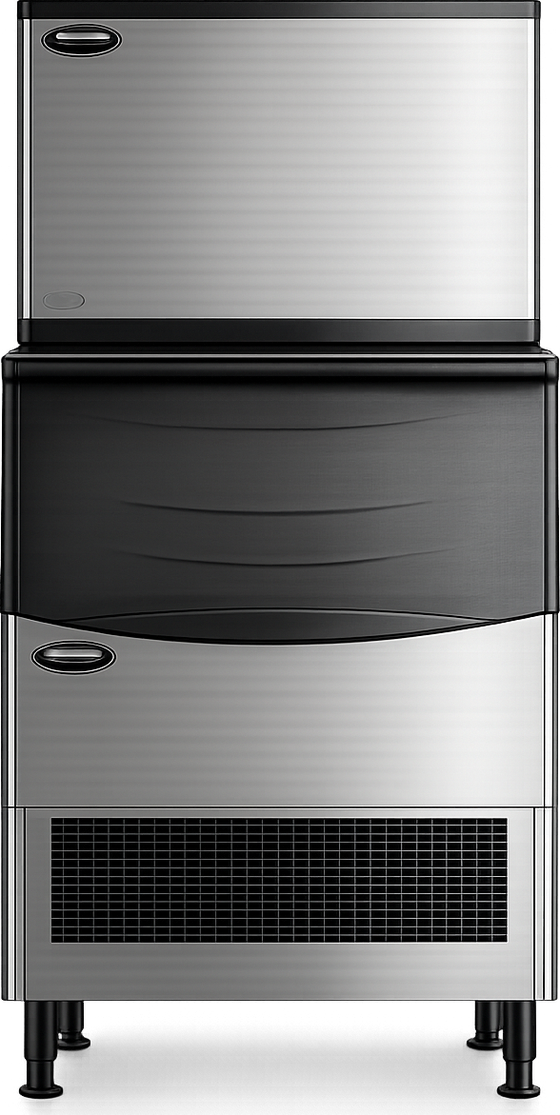
We work on modular cubers on bins, undercounter and self-contained machines, flake and nugget machines, and ice dispensers, air-cooled and water-cooled. All of it includes sealed-system work: the technician is EPA Section 608 Universal certified, which is required to handle refrigerant legally.
Brands we service in Leander: Manitowoc, Scotsman, Hoshizaki, Ice-O-Matic, Follett, Cornelius, True, Turbo Air, Maxx Ice and Atosa.
What Commercial Ice Machine Service Costs in Leander
Diagnostics are $149 for a commercial call, and that amount is credited toward the repair when you approve it. After the diagnosis you get a written estimate covering parts and labor, and nothing is replaced before you approve it. The final figure depends on what failed — a water valve, a pump, a hot gas valve, a curtain switch, a fan motor, a control board, or the sealed system — and whether the visit is a repair or a scheduled de-scale and sanitise.
Completed repairs carry a 3-month labor warranty from TakiDA LLC and a 1-year parts warranty against manufacturer defects.
Neighborhoods We Cover in Leander
We cover Leander as a whole and reach most commercial addresses in the city within about twenty minutes, including the bars and kitchens along US-183 and the businesses around Old Town. Nearby Cedar Park, Georgetown, Liberty Hill and Round Rock are also in our service area.
Common Questions About Commercial Ice Machine Service in Leander
How often does an ice machine need cleaning in Central Texas water?
More often than the baseline. The manufacturers give six months as a general interval, and Scotsman says four times a year where the water is highly mineralised. Leander water is hard enough that quarterly is the realistic number for most machines here.
My machine runs but makes much less ice than it used to.
That is almost always a longer freeze cycle rather than a failed part. We time the cycle against the manufacturer’s figure for your model and conditions, which separates a dirty condenser from scale from a refrigeration fault before anything comes apart.
Do you handle the sealed system on ice machines?
Yes. The technician is EPA Section 608 Universal certified, which is required to handle refrigerant legally, so leaks, charge and valve work are ours.
What does a commercial call cost?
The commercial diagnostic is $149, credited toward the repair when you approve the work. You get a written estimate before anything is replaced.
Book Commercial Ice Machine Service in Leander
Tell us the make and model, whether it is air or water cooled, and what it is doing — no ice, less ice than it used to make, cubes that will not drop, or water on the floor. Tell us when it was last cleaned as well; that answers more than it sounds like it should.
Reliable Commercial Ice Machine Repair in Leander, TX
-

Ice Machine Faults We Handle
- Machine makes no ice
- Thin, soft or hollow cubes
- Short production in hot weather
- Will not harvest the ice sheet
- Water leaking under the machine
- Bin fills then stops too early
- Scale and slime in the water path
-
Machines We Service
- Modular cube machines on bins
- Undercounter ice machines
- Flake and nugget machines
- Air and water cooled condensers
- Remote condenser systems
- Hoshizaki, Manitowoc, Scotsman
- Ice-O-Matic, Follett, KoolAire, True

Commercial Ice Machine Brands We Repair
If your brand is not listed, contact us — we likely service it.
Why Homeowners & Businesses Choose TakiDA
-
 Quality WorkWe deliver professional appliance repair with attention to detail, proper diagnostics, and long-lasting results you can rely on.
-
 OEM / High-Quality PartsWe use OEM or high-quality replacement parts to ensure correct operation, reliability, and extended appliance lifespan.
-
 Same-Day / Next-Day ServiceFast response with same-day or next-day service to reduce downtime and get your appliances back in working order quickly.
-
 Clear PricingUpfront estimates with transparent pricing. No hidden fees, no surprises — you know the cost before work begins.
-
 EPA Certified & InsuredEPA Section 608 Universal certified and fully insured for residential and commercial repair, giving you peace of mind and protection.
-
 Warranty on Labor & PartsAll repairs are backed by a warranty on labor and installed parts for added confidence and long-term reliability.
