
Wine Cooler Repair in Liberty Hill, TX
Out here wine coolers end up in places they were never designed for. Covered outdoor kitchens, butler pantries squeezed into cabinetry, garages and shops. A wine cooler is a small sealed system with very little margin, so where it sits usually explains the complaint better than anything inside it does.
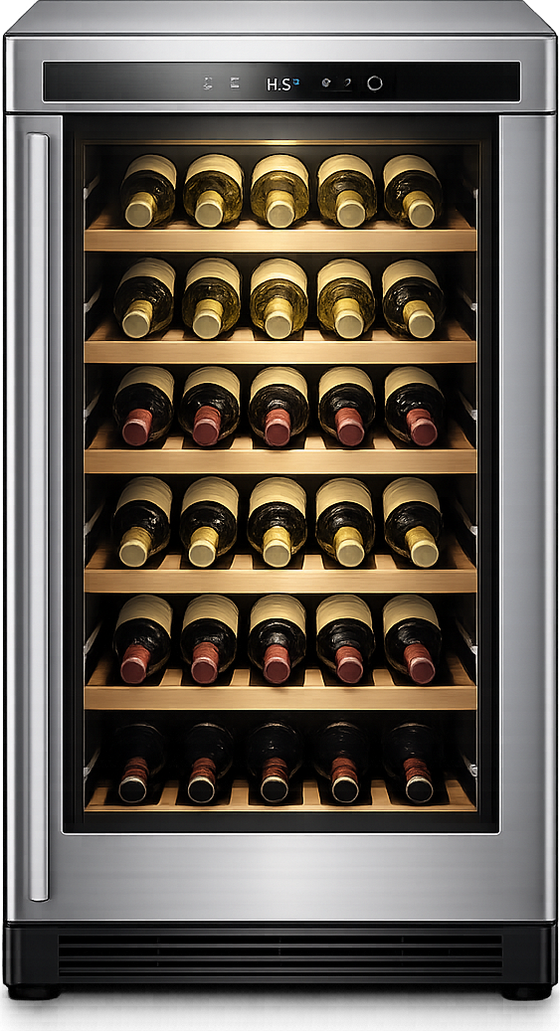
Common Wine Cooler Problems in Liberty Hill Homes
A cabinet sitting well above the set temperature
A built in wine cooler rejects its heat through the grille at the bottom of the door. Dropped into a cutout meant for a freestanding unit, or with that grille narrowed by trim or flooring, the warm air it just expelled circles straight back into the condenser. Nothing inside has failed. The installation is the fault, and it is usually correctable.
One zone holding while the other drifts
Most dual zone coolers have a single evaporator and split cold air between the zones with a damper and a second fan. When one side holds and the other does not, the short list is that damper, the zone fan, and the thermistor for that zone. Which zone failed tells us which of the three to look at first.
An outdoor kitchen unit that fails every summer
A standard indoor cooler on a covered patio in August is being asked to reject heat into air hotter than its design limit. It runs constantly and still reads warm. Outdoor rated units use different condensers and seals for exactly this reason. If the one out there is not rated for outdoors, no repair will change what happens next July, and we will tell you that plainly.
A compressor running nonstop and never satisfying
Continuous running is a symptom with two very different causes. The sealed system may have lost refrigerant, or the evaporator may be buried in frost because a tired door seal is letting humid air in all day. Those lead to completely different conversations about cost, so the system gets read properly before anyone says compressor.
Ice or condensation on the back wall
Humidity that gets in has to land somewhere, and the coldest surface is where it goes. A sagging hinge, a gasket that has taken a set, or a door opened often in a warm room will all do it. If the small drain channel behind the evaporator is blocked, water that should leave the cabinet refreezes instead and the ice builds week by week.
Fan noise or rattle behind the grille
These units are quiet by design, so new noise stands out, particularly in a house where the nearest neighbor is a quarter mile away. Usually it is the condenser fan blade touching insulation or ice, a fan bearing wearing out, or compressor mounting grommets that have hardened. All three are inexpensive compared with what people fear.
A display blank or showing a code after a storm
Control boards in wine coolers run on very little power and do not enjoy the dips and surges that rural lines deliver. An open or shorted temperature sensor also throws a code. A genuine power cycle and a sensor resistance check settle which it is before a board gets ordered.
A unit in a garage or shop that cannot hold through the afternoon
Same physics as the patio, with dust added. A condenser coated in shop dust in an uninsulated building loses capacity quickly, and the unit spends the hottest part of the day losing ground. Cleaning the coil and improving the air around it fixes more of these than any part we could install.
Wine Coolers We Repair in Liberty Hill
Built in under counter coolers, freestanding single and dual zone units, compressor based and thermoelectric designs, and outdoor rated installations. Common brands include Sub Zero, U Line, Perlick, Marvel, EdgeStar, NewAir, Danby, Avallon, Whynter, Frigidaire and GE.
Door seals, hinges, shelving and leveling matter more on a wine cooler than on almost any other appliance, so they are adjusted as part of the repair rather than treated as cosmetic.
What Wine Cooler Repair Costs in Liberty Hill
The diagnostic is ninety nine dollars for a residential call, credited toward the repair once you approve the work. A fan, a thermistor, a damper or a door seal is a modest repair. Sealed system work on a small cooler is a bigger decision, and on an inexpensive unit it is sometimes not the right spend, which we will say rather than hint at.
Pulling a built in unit out of cabinetry and reinstalling it is included in the estimate up front, so there is no surprise charge for access.
Neighborhoods We Cover in Liberty Hill
Santa Rita Ranch, Orchard Ridge, Rancho Sienna, Butler Farms, Bar W Ranch, Stonewall Ranch, Clearwater Ranch, Liberty Parke, downtown Liberty Hill, and acreage properties along 29, 183 and Ronald Reagan Boulevard.
Common Questions About Wine Cooler Repair in Liberty Hill
Can a regular wine cooler go in an outdoor kitchen?
It will work in spring and disappoint you in summer. Outdoor rated units have different condensers, seals and often different controls. If an indoor unit is already out there and failing every July, that is the explanation rather than a fault.
Why does ours struggle only in the hottest months?
Because its capacity is measured against the air around it. A unit that is marginal in April, usually from a restricted grille or a dusty condenser, falls behind as soon as the surroundings warm up. Clearing the airflow path often turns a summer only problem into no problem at all.
It was fine freestanding, then we built it in. What changed?
Almost certainly the airflow. Freestanding units vent from the back or sides and need clearance there. Built in units vent through the front. Install one the way the other wants to be installed and it will run constantly and still read warm with nothing wrong inside.
Is a wine cooler worth repairing?
Fans, sensors, dampers, seals and boards are routine and worth fixing on almost any unit. Sealed system failures are worth it on a built in from a premium brand and usually are not on a small countertop cooler. You get that assessment before you spend anything beyond the diagnostic.
Do you service built in units without damaging cabinetry?
Yes. Built in units come out on their own feet or rails and go back the same way. Stone counters, tight toe kicks and finished panels are the normal environment for this work.
Book Wine Cooler Repair in Liberty Hill
Tell us the brand, whether it is built in, freestanding or outdoors, and what the display reads against a thermometer inside, and we can usually narrow it down before we arrive. Call (737) 388-3867 or book online. The ninety nine dollar diagnostic is credited toward the repair.
Wine Cooler Repair in Liberty Hill, TX
-

Wine Cooler Problems We Get Called For
- Cabinet sitting well above the set temperature
- One zone holding while the other drifts
- Outdoor kitchen unit that fails every summer
- Compressor running nonstop and never satisfying
- Ice or condensation forming on the back wall
- Fan noise or rattle behind the grille
- Display blank or showing a code after a storm
-
Wine Coolers We Service
- Built in under counter units
- Freestanding single and dual zone coolers
- Thermoelectric coolers
- Compressor based cooling systems
- Outdoor rated and covered patio installations
- Door seal, hinge and shelf work

Wine Cooler Brands We Service in Liberty Hill
If your brand is not listed, contact us — we likely service it.
We repair all major residential appliance brands across Central Texas, including Whirlpool, GE, Samsung, LG, Maytag, Frigidaire, KitchenAid, Amana, Bosch, Electrolux, Hotpoint, Kenmore, Haier, Fisher & Paykel, Sub-Zero, Wolf, Viking, Thermador, JennAir, Dacor, U-Line, Marvel, Miele, and GE Monogram.
Why Homeowners & Businesses Choose TakiDA
-
 Quality WorkWe deliver professional appliance repair with attention to detail, proper diagnostics, and long-lasting results you can rely on.
-
 OEM / High-Quality PartsWe use OEM or high-quality replacement parts to ensure correct operation, reliability, and extended appliance lifespan.
-
 Same-Day / Next-Day ServiceFast response with same-day or next-day service to reduce downtime and get your appliances back in working order quickly.
-
 Clear PricingUpfront estimates with transparent pricing. No hidden fees, no surprises — you know the cost before work begins.
-
 EPA Certified & InsuredEPA Section 608 Universal certified and fully insured for residential and commercial repair, giving you peace of mind and protection.
-
 Warranty on Labor & PartsAll repairs are backed by a warranty on labor and installed parts for added confidence and long-term reliability.
