
Wine Cooler Repair in Leander, TX
A wine cooler that drifts warm puts a collection at risk long before anyone notices. We repair compressor and thermoelectric wine coolers, freestanding and built-in, across Leander — Crystal Falls, Travisso, Bryson and the older streets around Old Town — usually same-day or next-day. The $99 diagnostic goes toward the repair, and you get a firm price before any part is replaced.
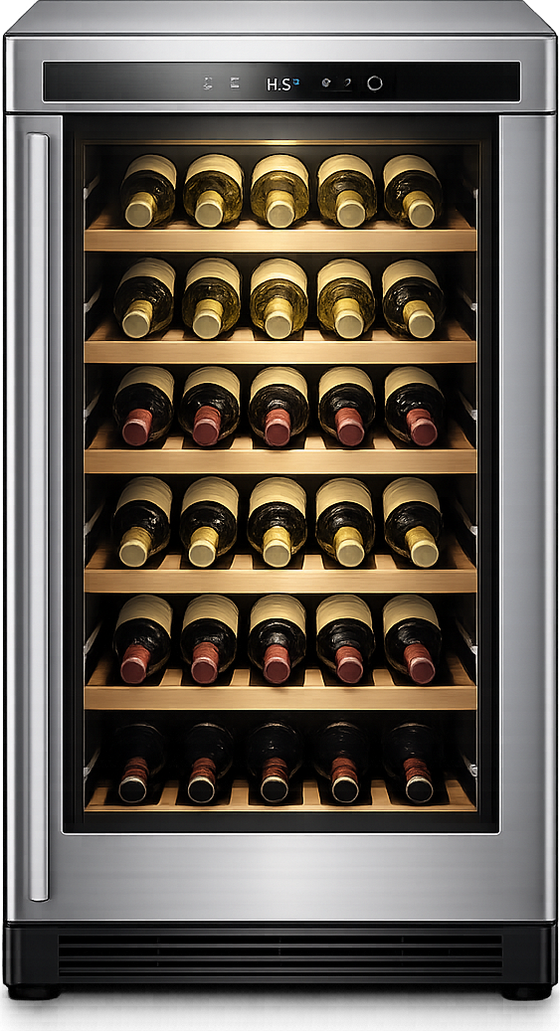
Common Wine Cooler Problems in Leander Homes
The diagnosis below follows the manufacturers’ own service documentation — the compressor-based units from the major appliance brands and the thermoelectric units from EdgeStar, Whynter, Vinotemp and similar — rather than general advice. The first question on every wine cooler call is which of those two technologies is in the cabinet, because the same symptom means different things in each.
The cooler will not reach the temperature you set
Common causes. On a thermoelectric unit this is often not a fault at all. A Peltier cooler can only pull roughly twenty to twenty-five degrees below the room around it, and the manufacturers specify an ambient range — one common service manual gives 72 to 77°F with an interior setting between 44 and 66°F. In a Texas room sitting at 80°F, that cabinet will settle somewhere around 55 to 60°F and never reach 45, with nothing wrong inside it. On a compressor unit the same complaint points at a real fault: airflow at the condenser, a door seal, or the sealed system.
What we do. We identify the technology from the data plate and by listening for a compressor before diagnosing anything. Then we measure the actual room temperature as well as the cabinet. Telling a customer their thermoelectric unit is working as designed in an 80-degree room is a cheaper and more honest outcome than replacing a module that was never faulty.
The cooler is not cooling at all
Common causes. On a thermoelectric cabinet: a failed Peltier module, or the hot-side fan that carries heat away from it. If the fan stops, the module cooks itself and the cabinet goes warm. Modules also degrade with age rather than failing cleanly. On a compressor cabinet: a start relay, a condenser fan, a control board, or a sealed-system fault.
What we do. On a thermoelectric unit we check whether the fan runs and whether there is a temperature difference across the module — that single check separates a dead module from a dead fan. On a compressor unit we work the same way we would on any refrigerator: condenser, fan, start components, and only then the sealed system.
One zone of a dual-zone cooler is warm
Common causes. Dual-zone cabinets have independent controls, and on most designs each zone has its own sensor and its own fan circuit — and on thermoelectric units, often its own module. A single warm zone therefore points at that zone’s own parts rather than at a shared failure. On shared-compressor designs it is usually a damper or a zone fan instead.
What we do. We confirm with our own thermometer in each compartment, because the display may be showing the setpoint rather than the actual temperature, and then isolate the fault to the affected zone.
The temperature swings up and down
Common causes. Wine coolers run in a narrow band, so swings show up fast. Frequent door opening, a cabinet sited in direct sun or next to an oven, a weak door seal, or restricted airflow at the vents all produce it. A drifting sensor will do the same thing while the display reads perfectly.
What we do. We log the cabinet temperature against the setpoint over a cycle rather than taking a single reading, then check the seal, the clearances and the sensor. A built-in cabinet squeezed into joinery with no front venting is a common finding and no part will fix it.
Condensation or ice inside the cabinet
Common causes. Humid air getting in is the cause, and in Central Texas there is plenty of it. A tired door gasket, a door slightly out of alignment, or a unit set colder than it needs to be will all condense moisture on the glass and the shelves. On compressor units a blocked drain will leave water in the base.
What we do. We check the gasket and door alignment first, then the drain path and the setpoint. A cooler set at 40°F because somebody thought colder was better collects water and chills the reds wrongly at the same time.
The cooler is noisy or vibrates
Common causes. Vibration matters more here than in other appliances, because it disturbs sediment in the bottles. A rattle is usually a fan blade, a loose shelf or the cabinet sitting unlevel against joinery. A compressor that has become noisy may have a broken internal mount, which the service literature describes as a failing compressor rather than something adjustable.
What we do. We level the unit and check the fans and shelves first, because that resolves most of it. If the noise is genuinely from the compressor we will say what that means for the unit’s remaining life rather than quoting a part.
An error code on the display
Common causes. Wine cooler codes typically name a sensor: cabinet sensor, ambient sensor, or the communication between zones on a dual-zone unit. Some units also carry a low-temperature or overcooling alarm. As with any appliance, the code names the circuit that failed its check, not the part that must be bought.
What we do. We read the code against the manufacturer’s list for that exact model, then measure the sensor and its wiring before ordering anything. Sensor and harness faults look identical from the display.
The door will not seal or the glass is fogged between panes
Common causes. Glass doors on wine coolers are double-glazed and often UV treated. Fogging between the panes means the seal around the glass unit has failed, which is a door assembly matter rather than a cooling one. A door that no longer pulls square is usually hinge wear or a cabinet that has shifted in its opening.
What we do. We check the hinges, the latch and the gasket, and price a door assembly against the value of the unit. On an inexpensive freestanding cabinet a failed glass unit often ends the appliance, and we will say so plainly.
Wine Cooler Types and Brands We Repair in Leander
We work on compressor and thermoelectric wine coolers, single and dual-zone, freestanding and undercounter built-ins, plus beverage centres and combination wine and beverage units. Compressor units involve sealed-system work: the technician is EPA Section 608 certified, which is required to handle refrigerant legally.
Brands we repair in Leander: Whirlpool, GE, GE Profile, Frigidaire, KitchenAid, Danby, Whynter, EdgeStar, Koldfront, NewAir, Vinotemp, Avanti, Haier, Sub-Zero, Thermador, U-Line and Marvel.
What Wine Cooler Repair Costs in Leander
Diagnostics are $99 for a residential call, and that amount is credited toward the repair when you approve it. After the diagnosis you get a written estimate covering parts and labor, and nothing is replaced before you approve it. The final figure depends on which part failed — a fan, a sensor, a thermoelectric module, a door gasket or a control board — whether the sealed system is involved, and whether the cabinet has to come out of joinery to be worked on.
Completed repairs carry a 3-month labor warranty from TakiDA LLC and a 1-year parts warranty against manufacturer defects.
Neighborhoods We Cover in Leander
We cover Leander as a whole, including Crystal Falls, Travisso, Bryson and Old Town, and we reach most addresses in the city within about twenty minutes. Built-in undercounter cabinets in the newer kitchens behave very differently from a freestanding unit in a converted space, and Texas summer ambient is what separates them. Nearby Cedar Park, Georgetown, Liberty Hill and Round Rock are also in our service area.
Common Questions About Wine Cooler Repair in Leander
Can I keep a wine cooler in the garage in Texas?
A compressor unit rated for it, yes. A thermoelectric unit, no — it can only pull twenty to twenty-five degrees below the room, so a garage at 95°F in August leaves it nowhere near wine temperature. That is physics, not a fault, and no repair changes it.
My cooler reads the right temperature but the wine feels warm.
Many displays toggle between the setpoint and the actual cabinet temperature, and it is easy to be looking at the wrong one. We put our own thermometer in the cabinet before concluding anything, and so should you.
Is a thermoelectric wine cooler worth repairing?
Sometimes. A hot-side fan is cheap and worth doing. A failed Peltier module on an inexpensive freestanding cabinet usually is not, since modules degrade with age and the next one is not far behind. Built-in and higher-end units are a different calculation and we price them properly.
How fast can you get to Leander?
Leander is our home city, so same-day is usually possible if you call in the morning, and next-day otherwise.
Book Wine Cooler Repair in Leander
Tell us the brand, whether it is freestanding or built in, single or dual zone, and what it is doing — drifting warm, not cooling at all, one zone warm, or a code on the display. If you know the room temperature where it sits, tell us that too. That is normally enough for us to arrive with the right parts on the van.
Reliable Wine Cooler Repair in Leander, TX
-

Common Wine Cooler Problems We Fix
- Not holding the set temperature
- One zone cold, the other warm
- Running constantly
- Cooling fan loud or not running
- Condensation inside the cabinet
- Door seal not sealing
- Display or controls dead
-
Wine Coolers We Repair
- Built-in undercounter coolers
- Freestanding wine cabinets
- Dual zone models
- Compressor units
- Thermoelectric units
- Beverage and dual-purpose centers
- EdgeStar, NewAir, Danby, Whynter, GE

Wine Cooler Brands We Repair
If your brand is not listed, contact us — we likely service it.
We repair all major residential appliance brands across Central Texas, including Whirlpool, GE, Samsung, LG, Maytag, Frigidaire, KitchenAid, Amana, Bosch, Electrolux, Hotpoint, Kenmore, Haier, Fisher & Paykel, Sub-Zero, Wolf, Viking, Thermador, JennAir, Dacor, U-Line, Marvel, Miele, and GE Monogram.
Why Homeowners & Businesses Choose TakiDA
-
 Quality WorkWe deliver professional appliance repair with attention to detail, proper diagnostics, and long-lasting results you can rely on.
-
 OEM / High-Quality PartsWe use OEM or high-quality replacement parts to ensure correct operation, reliability, and extended appliance lifespan.
-
 Same-Day / Next-Day ServiceFast response with same-day or next-day service to reduce downtime and get your appliances back in working order quickly.
-
 Clear PricingUpfront estimates with transparent pricing. No hidden fees, no surprises — you know the cost before work begins.
-
 EPA Certified & InsuredEPA Section 608 Universal certified and fully insured for residential and commercial repair, giving you peace of mind and protection.
-
 Warranty on Labor & PartsAll repairs are backed by a warranty on labor and installed parts for added confidence and long-term reliability.
