
Refrigerator Repair in Liberty Hill, TX
Liberty Hill is two kinds of service call. New subdivisions like Santa Rita Ranch and Orchard Ridge with recent appliances on city water, and acreage properties on a private well with a second refrigerator in a shop or a barn. The refrigerator is the same machine in both cases, but what fails and why is not, and well water in particular changes the whole water and ice side of the appliance.
Common Refrigerator Problems in Liberty Hill Homes
A warm fresh food side with a freezer that is still cold
In almost every modern refrigerator both compartments are cooled by one evaporator in the freezer, and a fan moves that cold air forward. So a cold freezer and a warm fridge is usually an air delivery problem: the evaporator fan, a damper that is not opening, or a frost build up blocking the air path. The sealed system is normally fine, which matters, because those two repairs are very different numbers.
A water dispenser that has slowed to a trickle on well water
On a private well, sediment and mineral load the filter far faster than the manufacturer interval assumes. The usual result is a dispenser that fades over a few months, an ice maker producing smaller cubes, and eventually a filter housing that restricts almost completely. Pressure gets checked before and after the filter rather than guessing, because a weak well pressure tank produces exactly the same symptom.
A garage or shop refrigerator that fails every summer
A second refrigerator in a barn, a shop or an uninsulated garage is working in air far hotter than it was designed for. Standard units are rated for a normal room, and above that the condenser cannot shed heat, so the unit runs continuously and still loses temperature. Garage ready models exist for this reason, and if the one out there is not one of them, no repair will make it behave like one.
Ice and frost building on the back wall
Frost on the interior back wall means moisture is getting in, or defrost is not clearing the coil. A door gasket that has taken a set, a door left ajar on a full load, or a failed defrost heater, thermostat or control. On a property where the door gets opened in and out all day, the gasket is the first place to look and the cheapest to fix.
A compressor running nonstop and never catching up
Continuous running is a symptom with two very different causes. A condenser coil packed with dust, and out here very often with pet hair or hay dust, means the heat has nowhere to go. A refrigerant or restriction problem in the sealed system means the same thing for a completely different reason. Pressures and the coil get checked together before anyone says compressor.
Water pooling under the crisper drawers
Defrost water is supposed to drain through a small channel and tube into a pan under the unit, where it evaporates. When that drain blocks with debris, or freezes solid at the top, the water backs up into the bottom of the fresh food compartment. It is a straightforward repair and worth doing early, because standing water eventually reaches the floor and the liner.
Odd behavior after a power flicker
Rural lines flicker, and refrigerator control boards do not enjoy it. A unit that has started behaving strangely after a storm, ignoring settings, showing odd displays, or failing to restart the compressor, often needs nothing more than a proper power cycle, and sometimes needs a board. The two are separated in a few minutes rather than by replacing parts in order.
A standalone freezer in an outbuilding that has quietly warmed up
Deep freezers out in a shop or a barn rarely announce a problem until something is thawed. A condenser coated in dust, a lid gasket that has hardened in the heat, or a start component that has given up will all take a freezer from zero to twenty degrees without anybody noticing. If you keep meat or game out there, a thermometer with an alarm is worth more than any repair we could sell you.
Refrigerator Types and Brands We Repair in Liberty Hill
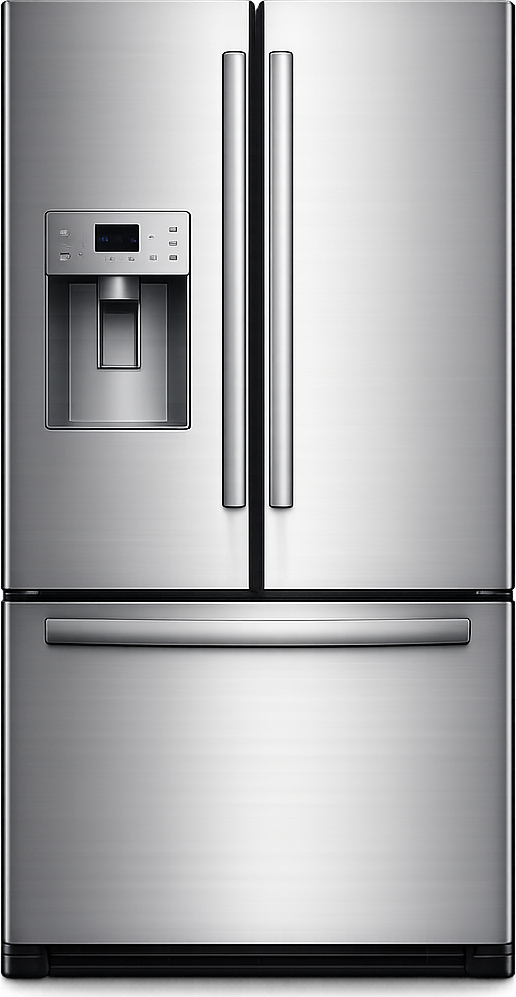
French door and side by side units, top and bottom freezer models, built in and counter depth refrigerators, garage and shop units, and standalone and deep freezers. Common brands include Whirlpool, Samsung, LG, GE, KitchenAid, Frigidaire, Maytag, Bosch, Sub Zero and Electrolux.
Built in units come out and go back into their cabinetry as part of the job, and on a counter depth install we check the clearances, because a unit crowded into an opening runs hot regardless of its condition.
What Refrigerator Repair Costs in Liberty Hill
The diagnostic is ninety nine dollars for a residential call, credited toward the repair once you approve the work. Fans, dampers, defrost components, gaskets, valves and filters are routine repairs. Sealed system work or a compressor is a much larger decision, and on an older unit we will tell you plainly when it stops making sense against a replacement.
If the real issue is water pressure or filtration coming off a well rather than the refrigerator itself, we will say so, because a new valve on a restricted supply changes nothing.
Neighborhoods We Cover in Liberty Hill
Santa Rita Ranch, Orchard Ridge, Rancho Sienna, Butler Farms, Bar W Ranch, Stonewall Ranch, Clearwater Ranch, Liberty Parke, downtown Liberty Hill, and the acreage properties along 29, 183 and Ronald Reagan Boulevard.
Common Questions About Refrigerator Repair in Liberty Hill
How often should the water filter be changed on well water?
More often than the label says. Six month intervals assume treated city water. On a private well with any sediment or mineral load, three to four months is realistic, and the dispenser slowing down is the sign to look at it. Whole house filtration ahead of the refrigerator extends everything downstream.
Is a garage refrigerator worth repairing?
It depends on whether it is garage rated. If it is, repairing is normal and worthwhile. If it is a standard indoor unit living in an uninsulated building, it will keep failing in the summer no matter what we replace, and the honest answer is a different unit rather than another repair.
Our fridge got strange after a storm. Do we need a new board?
Not necessarily. Many control boards simply need to be fully powered down, which means unplugged rather than switched off at the panel, for several minutes. If it comes back correctly, you have saved a part. If it does not, then we look at the board.
How long should a refrigerator last out here?
Ten to fifteen years is normal for a unit in a conditioned kitchen. A second refrigerator in a hot shop lives a much shorter life, and the difference is almost entirely heat on the condenser. Cleaning that coil twice a year is the single best thing you can do for it.
Do you come out to acreage properties?
Yes. Properties off 29, 183 and Ronald Reagan are a normal part of the route. When you book, a note about a gate code, a long driveway or a dog in the yard saves everyone time on the day.
Book Refrigerator Repair in Liberty Hill
Tell us the brand, whether the freezer is still cold, and whether you are on a well or on city water, and we can usually narrow it down before we arrive. Call (737) 388-3867 or book online. The ninety nine dollar diagnostic is credited toward the repair.
Refrigerator Repair in Liberty Hill, TX
-

Refrigerator Problems We Get Called For
- Fresh food side warm while the freezer stays cold
- Water dispenser slowing to a trickle on well water
- Garage or shop refrigerator failing in the heat
- Ice and frost building on the back wall
- Compressor running nonstop and never satisfying
- Water pooling under the crisper drawers
- Unit cycling oddly after a power flicker
-
Refrigerators We Service
- French door and side by side units
- Top and bottom freezer refrigerators
- Built in and counter depth units
- Garage, shop and barn refrigerators
- Standalone freezers and deep freezers
- Water, filter and ice system diagnostics

Refrigerator Brands We Service in Liberty Hill
If your brand is not listed, contact us — we likely service it.
We repair all major residential appliance brands across Central Texas, including Whirlpool, GE, Samsung, LG, Maytag, Frigidaire, KitchenAid, Amana, Bosch, Electrolux, Hotpoint, Kenmore, Haier, Fisher & Paykel, Sub-Zero, Wolf, Viking, Thermador, JennAir, Dacor, U-Line, Marvel, Miele, and GE Monogram.
Why Homeowners & Businesses Choose TakiDA
-
 Quality WorkWe deliver professional appliance repair with attention to detail, proper diagnostics, and long-lasting results you can rely on.
-
 OEM / High-Quality PartsWe use OEM or high-quality replacement parts to ensure correct operation, reliability, and extended appliance lifespan.
-
 Same-Day / Next-Day ServiceFast response with same-day or next-day service to reduce downtime and get your appliances back in working order quickly.
-
 Clear PricingUpfront estimates with transparent pricing. No hidden fees, no surprises — you know the cost before work begins.
-
 EPA Certified & InsuredEPA Section 608 Universal certified and fully insured for residential and commercial repair, giving you peace of mind and protection.
-
 Warranty on Labor & PartsAll repairs are backed by a warranty on labor and installed parts for added confidence and long-term reliability.
