
Wine Cooler Repair in Cedar Park, TX
A cooler that will not hold its setting, runs without stopping, or keeps one zone warm. We repair thermoelectric and compressor wine coolers across Cedar Park, built-in and freestanding. The $99 diagnostic comes off the repair — and we check the installation and the room temperature before quoting a part, because a good number of these turn out not to be faults at all.
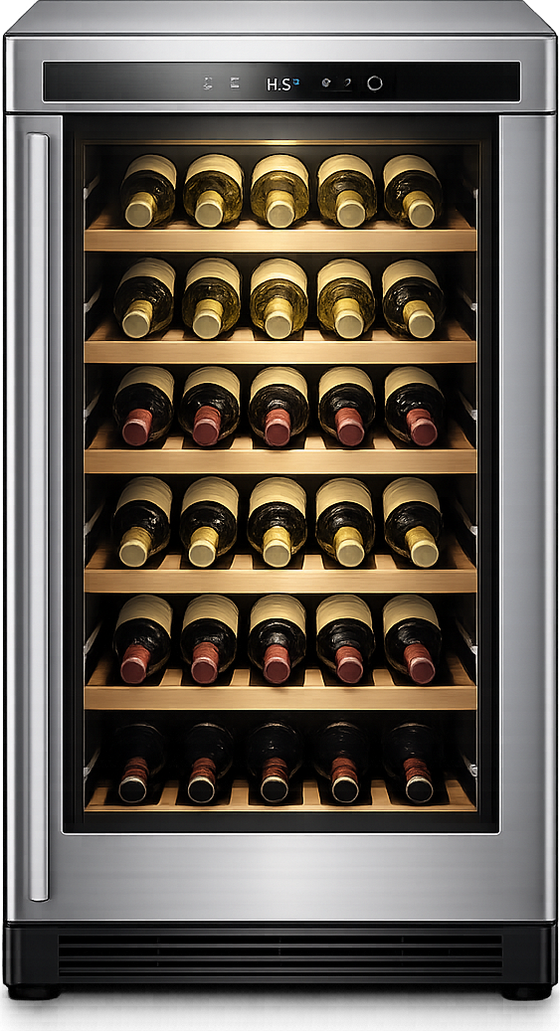
Common Wine Cooler Problems in Cedar Park Homes
It was fine until it was built into a cabinet
This is the most common wine cooler call we take and it is not a fault in the appliance. Freestanding coolers dump their heat out of the back and need clear space behind and above. Built-in models vent through a grille at the front specifically so they can be enclosed. Put a freestanding unit into a cabinet and it will run constantly, never reach its setting, and fail early — and no part will fix it. We check the model and the installation before anything else, because the answer is sometimes a vent rather than a repair.
The top shelves are noticeably warmer than the bottom
Some stratification is normal and some models are built for it. What is not normal is a wide gap that keeps growing, and on most coolers that points at the circulation fan rather than the cooling system. On dual-zone units each zone has its own sensor and fan, and sometimes its own cooling module, so one zone drifting while the other holds is a narrow and inexpensive fault rather than a dead cooler.
It runs constantly and never cycles off
Before condemning anything, the ambient temperature has to go into the calculation. Thermoelectric coolers can only pull the cabinet twenty to twenty-five degrees below the room, and the manufacturers publish an ambient range — typically around 72 to 77°F — within which their setting range is achievable. In an 80°F room a thermoelectric cooler will settle in the mid to high fifties and run without stopping, and that is the physics rather than a fault. On a compressor cooler, constant running is a real symptom and points at the seal, the fan or the sealed system.
The fan is running but the back of the unit is cold
On a thermoelectric cooler this is the single most useful observation you can make. The module works by moving heat from inside to outside, so when it is working the heat sink at the back is noticeably warm. A fan spinning over a cold heat sink means the module is not moving heat at all. Peltier modules degrade over roughly three to seven years, and once they do the cooler holds a temperature only slightly below the room.
Labels are peeling and corks look damp
Wine coolers run higher humidity than a refrigerator on purpose, because dry corks shrink. Too much humidity is still a problem, and it usually means the door seal has stopped sealing or the drain channel at the back of the cabinet is blocked and water is sitting in the base. Both are modest repairs. Peeling labels are the early sign people notice first.
The display dims, or the interior light stays on
Interior lighting in a wine cooler is on a timer or a door switch, and a light left burning adds heat inside a cabinet that has very little cooling capacity to spare. A light that will not switch off is usually the door switch, and that is worth fixing promptly rather than living with. A display that dims or flickers points at the control board or its supply.
The door springs back open
Wine cooler doors are heavy glass, and the hinge cams that hold them shut wear or fall out of adjustment. A door that does not pull itself closed the last inch leaves a gap you cannot see, the cooler runs constantly, and the humidity goes up. Hinges are adjustable and replaceable, and this is a cheap fix for what looks like a cooling problem.
It was moved and has not cooled properly since
A compressor cooler transported on its side needs to stand upright for several hours before it is powered up, so that the oil drains back out of the lines. Powered up too soon, it can run for days without cooling properly. If it has been standing and still will not cool, we look at the sealed system — the technician is EPA Section 608 certified, which is required for that work.
Wine Coolers We Repair in Cedar Park
Thermoelectric and compressor coolers, freestanding and built-in, single and dual zone, undercounter and full-height cabinets, including units built into kitchen islands and bar areas.
Brands we repair in Cedar Park: Frigidaire, Whirlpool, GE, Danby, EdgeStar, NewAir, Kalamera, Koolatron, Avanti, Haier and Insignia.
What Wine Cooler Repair Costs in Cedar Park
The residential diagnostic is $99 and comes off the repair when you approve it. Fans, door switches, hinges, seals, thermostats and drain clearing are modest jobs. A thermoelectric module on a small cooler often costs more than the cooler is worth, and we will say so. Built-in cabinets are a different calculation — replacing one means matching the opening, so the repair usually makes sense.
Before any part is quoted we check the installation and the room temperature, because a surprising number of these calls have nothing wrong with the appliance.
Neighborhoods We Cover in Cedar Park
Most of the wine coolers we see in Cedar Park are undercounter units in kitchen islands and bar areas — Twin Creeks, Ranch at Brushy Creek and the newer builds off Whitestone Boulevard in particular. The other half are freestanding units standing in dining rooms and garages around Buttercup Creek and Carriage Hills, and the garage ones are where Texas ambient temperature does most of the damage. We cover all of it from Leander.
Common Questions About Wine Cooler Repair in Cedar Park
Can a wine cooler live in a Texas garage?
A thermoelectric one, no. It can only hold the cabinet twenty to twenty-five degrees below the room, so in a garage at a hundred degrees it will be nowhere near a serving temperature. A compressor cooler rated for higher ambient will manage, at the cost of running hard and wearing out faster.
My cooler reads 55 but the bottles feel warmer. Why?
The display usually reads air temperature at the sensor, and glass and liquid lag a long way behind. Put a thermometer in a bottle of water on a middle shelf and leave it a day before concluding anything is wrong.
Is a thermoelectric cooler worth repairing?
Often not, and we would rather tell you than take the job. The modules degrade with age, and on a small cooler the part plus the labor approaches the price of a new unit. On a built-in cabinet the answer usually flips the other way.
Why does it make a quiet buzzing all the time?
Thermoelectric coolers have no compressor, so what you hear is the fan over the heat sink, and it runs continuously by design. A change in that noise matters more than the noise itself.
How quickly can you get to Cedar Park?
Usually the same day. Call (737) 388-3867 and tell us the brand, whether it is built in or freestanding, and what the display reads against what the room is — that pair of numbers answers a lot before we arrive.
Book Wine Cooler Repair in Cedar Park
Tell us the brand, whether it is built in or freestanding, and what the display reads against the room temperature. That pair of numbers answers a lot before we arrive.
Wine Cooler Repair in Cedar Park, TX
-

Wine Cooler Symptoms We Sort Out
- Cabinet sitting well above the setting
- Upper zone warm, lower zone fine
- Compressor never cycling off
- Fan noise from the back of the unit
- Moisture beading inside the door
- Seal letting warm air in
- Panel dark or buttons dead
-
Wine Coolers We Work On
- Built-in undercounter coolers
- Freestanding wine cabinets
- Dual zone models
- Compressor units
- Thermoelectric units
- Beverage and dual-purpose centers
- EdgeStar, NewAir, Danby, Whynter, GE

Wine Cooler Brands We Service in Cedar Park
If your brand is not listed, contact us — we likely service it.
We repair all major residential appliance brands across Central Texas, including Whirlpool, GE, Samsung, LG, Maytag, Frigidaire, KitchenAid, Amana, Bosch, Electrolux, Hotpoint, Kenmore, Haier, Fisher & Paykel, Sub-Zero, Wolf, Viking, Thermador, JennAir, Dacor, U-Line, Marvel, Miele, and GE Monogram.
Why Homeowners & Businesses Choose TakiDA
-
 Quality WorkWe deliver professional appliance repair with attention to detail, proper diagnostics, and long-lasting results you can rely on.
-
 OEM / High-Quality PartsWe use OEM or high-quality replacement parts to ensure correct operation, reliability, and extended appliance lifespan.
-
 Same-Day / Next-Day ServiceFast response with same-day or next-day service to reduce downtime and get your appliances back in working order quickly.
-
 Clear PricingUpfront estimates with transparent pricing. No hidden fees, no surprises — you know the cost before work begins.
-
 EPA Certified & InsuredEPA Section 608 Universal certified and fully insured for residential and commercial repair, giving you peace of mind and protection.
-
 Warranty on Labor & PartsAll repairs are backed by a warranty on labor and installed parts for added confidence and long-term reliability.
