
Washer Repair in Bee Cave, TX
Almost every laundry room we work in around Bee Cave is upstairs, over a finished ceiling, and usually over something expensive. That raises the stakes on two faults that are ordinary anywhere else: a slow leak nobody sees, and a machine that is allowed to keep banging through its spin.
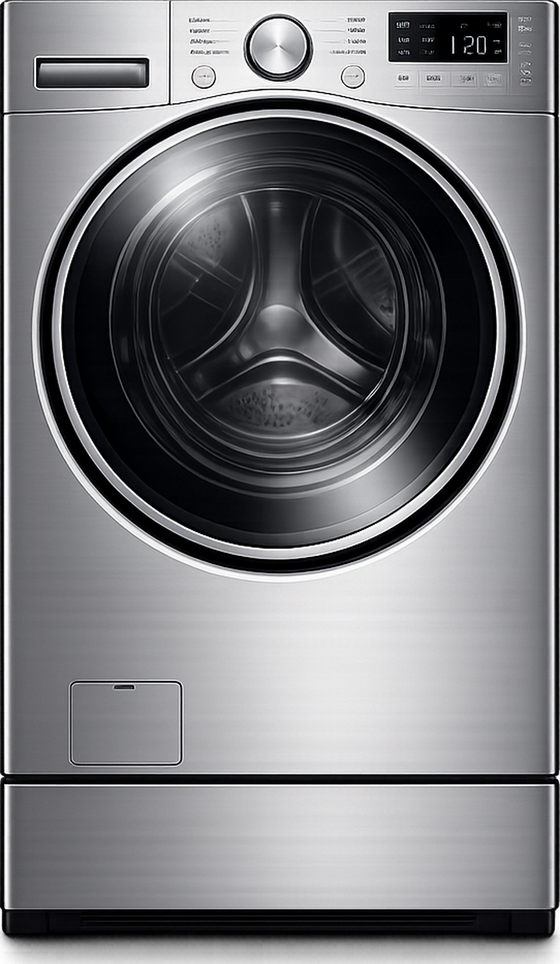
Common Washer Problems in Bee Cave Homes
Water left in the drum at the end of the cycle
The pump is not moving water out. The order is the pump filter, then the drain hose, then the pump itself, and finally the standpipe. On a second-floor laundry the drain line runs a long way inside the wall, so a partial blockage there affects only this machine and looks exactly like a failing pump until it is checked.
Banging and walking during the spin
Shock absorbers or suspension rods, a load that will not distribute, or a machine not level on its feet. Upstairs this is the one to deal with immediately rather than live with: the vibration goes straight into the framing, and a machine that is allowed to walk eventually damages its own drum bearing as well as the floor.
A slow leak that shows up on the ceiling below
By the time a stain appears downstairs the leak has usually been there for weeks. The common sources are the inlet hoses, the door boot on a front load machine, the pump seal and the drain connection. A drain pan under the machine with a plumbed outlet is the protection that stops the next one from becoming a ceiling repair.
A door that will not unlock at the end of the cycle
The door lock assembly on front load machines is one of the most replaced parts there is. It can also stay locked because the machine thinks there is still water in the drum, which puts you back at the drain. Most control panels have a manual release procedure, and we will show you yours while we are there.
Will not fill, or fills very slowly
Inlet valves and their screens, or a supply shutoff that is only partly open. Washers on a hard water supply collect sediment in those screens over the years. A machine that fills slowly often throws a timing fault rather than a fill fault, which sends people looking at the control instead.
Smell and mildew in a front load machine
Residue in the door boot, in the detergent drawer and in the drain hose. It is almost always too much detergent plus the door left closed between loads. This is maintenance rather than repair, and the fix is a routine rather than a part.
Clothes coming out still soaking after the spin
Either the machine is not reaching spin speed or it never drained properly to begin with. Unbalanced loads, a worn belt, a motor control fault or the same drain problem as above. The useful detail to tell us is whether it is every load or only large items.
Error codes and a panel that has gone dark
Codes point at fill, drain, door, motor or heat circuits and each has its own test. A panel that is completely dark is usually power or the main board, but it can also be a lid or door switch telling the machine it is unsafe to start. Reading the code first is what keeps this from becoming a guessing game.
Washers We Repair in Bee Cave
Front load and top load machines, stacked washer and dryer units, high-efficiency and agitator models, compact units, and machines on pedestals. Common brands include LG, Samsung, Whirlpool, Maytag, GE, Bosch, Electrolux, Speed Queen, Miele and Asko.
We check the hoses, the drain connection and the leveling on every visit, because those three are what turn a small fault upstairs into a large one downstairs.
What Washer Repair Costs in Bee Cave
The diagnostic is ninety nine dollars for a residential call and it is credited toward the repair once you approve the work. Drain pumps, door locks, shocks and suspension, inlet valves, belts and door boots are routine parts. A failed drum bearing is where the labor starts to approach the value of the machine, and we will give you both numbers rather than quoting the repair and leaving you to work it out.
On premium and European machines parts are sometimes brand-specific and ordered, and we will tell you the lead time before you commit.
Neighborhoods We Cover in Bee Cave
Spanish Oaks, Falconhead, Lake Pointe, Uplands, Homestead, Ladera, Bella Colinas, Sweetwater, Rough Hollow nearby, and the homes along Bee Cave Road and Highway 71.
Common Questions About Washer Repair in Bee Cave
Should I have a drain pan under an upstairs washer?
Yes, and it should be plumbed to a drain rather than just sitting there. A pan with nowhere to go buys you a few minutes. A plumbed pan turns a hose failure into a non-event instead of a ceiling repair.
How often should inlet hoses be replaced?
Every five years, and braided stainless rather than rubber. A burst inlet hose is the single most expensive washer failure there is, and it has nothing to do with the machine itself.
Why does my front load machine smell?
Too much detergent and a door kept closed. Use the amount the manufacturer specifies rather than the cap line, wipe the boot, and leave the door ajar between loads. A monthly clean cycle handles the rest.
Is it worth repairing a machine that bangs on spin?
Almost always, and quickly. Shocks and suspension rods are inexpensive parts, and leaving it means the bearing goes next, which is the repair that is not worth doing.
Do you work on Miele, Asko and other European machines?
Yes. Tell us the model and serial when you book so parts availability can be checked before the visit rather than after.
Book Washer Repair in Bee Cave
Tell us the brand, whether it is front load or top load, and any code on the display, and we can usually narrow it down before we arrive. Call (737) 388-3867 or book online. The ninety nine dollar diagnostic is credited toward the repair.
Washer Repair in Bee Cave, TX
-

What We Repair
- Will not drain or spin
- Leaks from the door, hoses or pump
- Loud banging and walking on spin
- Door locks that will not release
- Will not fill or fills slowly
- Error codes and dead control panels
- Odor and mildew in front load machines
-
Washers We Service
- Front load and top load machines
- Stacked washer and dryer units
- Laundry pedestals and drain pans
- High-efficiency and agitator models
- Compact and apartment-size units
- All major and premium brands

Washer Brands We Service in Bee Cave
If your brand is not listed, contact us — we likely service it.
We repair all major residential appliance brands across Central Texas, including Whirlpool, GE, Samsung, LG, Maytag, Frigidaire, KitchenAid, Amana, Bosch, Electrolux, Hotpoint, Kenmore, Haier, Fisher & Paykel, Sub-Zero, Wolf, Viking, Thermador, JennAir, Dacor, U-Line, Marvel, Miele, and GE Monogram.
Why Homeowners & Businesses Choose TakiDA
-
 Quality WorkWe deliver professional appliance repair with attention to detail, proper diagnostics, and long-lasting results you can rely on.
-
 OEM / High-Quality PartsWe use OEM or high-quality replacement parts to ensure correct operation, reliability, and extended appliance lifespan.
-
 Same-Day / Next-Day ServiceFast response with same-day or next-day service to reduce downtime and get your appliances back in working order quickly.
-
 Clear PricingUpfront estimates with transparent pricing. No hidden fees, no surprises — you know the cost before work begins.
-
 EPA Certified & InsuredEPA Section 608 Universal certified and fully insured for residential and commercial repair, giving you peace of mind and protection.
-
 Warranty on Labor & PartsAll repairs are backed by a warranty on labor and installed parts for added confidence and long-term reliability.
