
Refrigerator Repair in Georgetown, TX
Warm fridge, cold freezer, a dispenser that quit, water under the crispers or a unit that has got loud. We diagnose and repair refrigerators across Georgetown, from Sun City to Wolf Ranch. The $99 residential diagnostic is credited toward the repair.
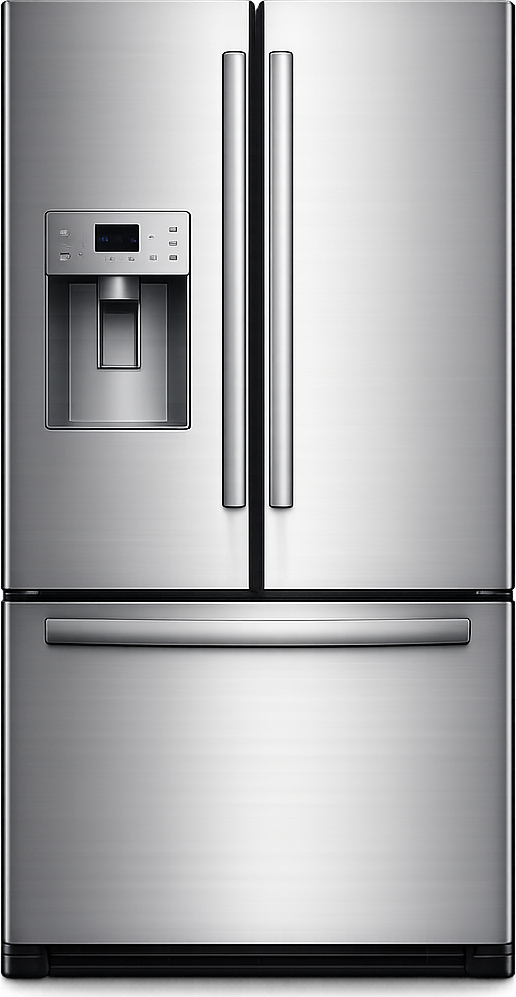
Common Refrigerator Problems in Georgetown Homes
The fridge is still cold but the ice and water dispenser quit
Cooling and dispensing are two separate systems that happen to share a cabinet, so one can fail while the other is fine. We work the water side on its own: supply pressure at the valve, the inlet valve itself, the dispenser switch and the fill tube. In winter the most common cause is a line that froze where it runs through the door, and that needs thawing and a look at why it froze rather than a new valve.
The temperature wanders — fine for days, then warm
An intermittent fault is harder to catch than a dead unit, and it is usually the defrost system or a sensor drifting rather than the compressor. Modern refrigerators decide when to defrost based on what the sensors report, so a thermistor reading a few degrees off sends the whole cycle wrong. We measure the sensors against their published resistance curve instead of swapping parts and hoping.
Water collecting in the bottom of the fresh food side
That water came off the evaporator during defrost and should have gone out the drain tube to the pan underneath. When the tube ices up or the trough fills with debris, the melt has nowhere to go and runs forward under the crispers. Clearing it is straightforward, but we also check why it iced, because a drain that plugs every few months is telling you something else.
The unit has got noticeably louder over a few weeks
Noise that creeps in gradually is nearly always a bearing. The evaporator fan behind the freezer wall and the condenser fan underneath both wear, and each sounds different. A compressor that is genuinely failing sounds different again, and that is a conversation we would rather have after listening to the machine than before.
Door seals not pulling shut, condensation around the frame
A gasket that has taken a set, a door that has dropped on its hinge, or a failed heater in the frame will all show up as sweating around the opening and a unit that runs far more than it should. On a long run of hot Texas afternoons that extra running time is what you see on the power bill.
A built-in or counter-depth unit showing a service code
Built-ins put the control and the sensors in places that are awkward to reach, and the codes they throw are specific. We read the code against the manufacturer’s own service literature for that model before anything comes apart, because a code points at a circuit, not at a part.
It only cools properly after the freezer door has been opened
That is a useful clue. On many designs the evaporator fan is switched by the door, so a fan that only runs when the door activates it, or an air damper that is sticking, will leave the fresh food side warm until something disturbs it. It is a cheap fault to find and a cheap one to fix once it is identified.
Produce freezing in the crisper drawers
Cold air reaches the fresh food side through a baffle, and when that baffle sticks open the bottom of the cabinet goes below freezing while the top reads normal. People often turn the whole fridge warmer to compensate, which spoils food higher up and hides the real fault.
Refrigerator Brands We Repair in Georgetown
We work on side-by-side, French door, top and bottom freezer, counter-depth and built-in refrigerators, plus the beverage and dual-purpose units people put in garages and outdoor kitchens. Common brands in Georgetown homes include Whirlpool, GE, Samsung, LG, KitchenAid, Frigidaire, Maytag, Bosch, Electrolux and Amana.
Have the model and serial number ready when you call — they are on a plate inside the fresh food compartment, usually on the left wall or behind a crisper. With those we can check parts availability before the visit instead of after it.
What Refrigerator Repair Costs in Georgetown
The residential diagnostic is $99 and comes off the repair when you approve it. Thermistors, door switches, dampers, fans, inlet valves, gaskets and control components are modest. A compressor or a sealed system repair is a different conversation, and we tell you which one you are looking at before anything is ordered.
On a refrigerator that is past ten years old we will say plainly when the repair is not worth the money. That is a short conversation with a number in it, not a sales pitch for a new unit.
Neighborhoods We Cover in Georgetown
Refrigerator calls take us right across Georgetown — the Del Webb homes in Sun City, the newer builds in Wolf Ranch and Water Oak, the established streets in Berry Creek and Serenada, the older houses around the Square and San Gabriel, and out toward Cimarron Hills. Sun City alone keeps us busy: thousands of homes, most of them with the original kitchen appliances still in service, and a lot of built-in and counter-depth units that need a technician who has seen them before.
Common Questions About Refrigerator Repair in Georgetown
My fridge is cold but the water dispenser stopped. Is that one repair or two?
Usually one, and usually a small one. The water system is separate from the cooling system, so the rest of the refrigerator being fine is normal and not a sign of anything worse.
How long should a refrigerator last?
Twelve to fifteen years is a fair expectation, and plenty run longer. What matters more than the number is which part failed. A control board on a nine-year-old unit is worth fixing; a sealed system fault on the same unit usually is not.
Do you work on built-in refrigerators?
Yes. They take longer, the parts cost more, and the diagnosis has to be right the first time because pulling a built-in apart twice is nobody’s idea of a good day.
Can you come out to Sun City?
Often same day. We know the layout, and we know the appliances that went into those homes, which usually shortens the visit.
Should I defrost it myself before you come?
Please do not. A unit frozen solid tells us something; a unit that was thawed last night tells us nothing, and we may have to come back when it ices again.
Book Refrigerator Repair in Georgetown
Tell us the brand, the model number off the plate inside, and what you are seeing. That decides what goes on the van.
Refrigerator Repair in Georgetown, TX
-

What Georgetown Owners Call Us About
- Dispenser quit but the fridge is cold
- Temperature wandering day to day
- Water pooling under the crispers
- Unit getting louder week by week
- Condensation around the door frame
- Service code on a built-in
- Produce freezing in the drawers
-
Refrigerators We Service
- Side-by-side models
- French door models
- Top and bottom freezer models
- Counter-depth and built-in units
- Garage and outdoor-kitchen fridges
- Whirlpool, GE, Samsung, LG, KitchenAid
- Frigidaire, Maytag, Bosch, Electrolux

Refrigerator Brands We Service in Georgetown
If your brand is not listed, contact us — we likely service it.
We repair all major residential appliance brands across Central Texas, including Whirlpool, GE, Samsung, LG, Maytag, Frigidaire, KitchenAid, Amana, Bosch, Electrolux, Hotpoint, Kenmore, Haier, Fisher & Paykel, Sub-Zero, Wolf, Viking, Thermador, JennAir, Dacor, U-Line, Marvel, Miele, and GE Monogram.
Why Homeowners & Businesses Choose TakiDA
-
 Quality WorkWe deliver professional appliance repair with attention to detail, proper diagnostics, and long-lasting results you can rely on.
-
 OEM / High-Quality PartsWe use OEM or high-quality replacement parts to ensure correct operation, reliability, and extended appliance lifespan.
-
 Same-Day / Next-Day ServiceFast response with same-day or next-day service to reduce downtime and get your appliances back in working order quickly.
-
 Clear PricingUpfront estimates with transparent pricing. No hidden fees, no surprises — you know the cost before work begins.
-
 EPA Certified & InsuredEPA Section 608 Universal certified and fully insured for residential and commercial repair, giving you peace of mind and protection.
-
 Warranty on Labor & PartsAll repairs are backed by a warranty on labor and installed parts for added confidence and long-term reliability.
