
Oven and Range Repair in Pflugerville, TX
Ovens are the appliance people live with broken the longest. Nothing fails loudly, the food just starts coming out wrong, and six months later nobody remembers when it changed. In Pflugerville a lot of these are builder installed ranges from the same package, which means the same fault turns up on the same street, and that is useful information before we even open the back panel.
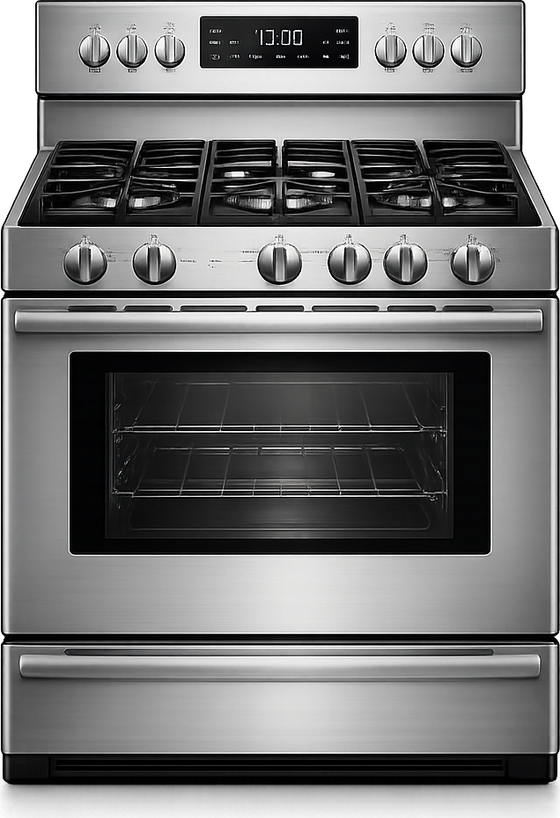
Common Oven and Range Problems in Pflugerville Homes
An oven baking slow while the display reads correctly
Nearly every modern oven measures the cavity with a resistance sensor, and that sensor drifts as it ages. Reading high, it tells the control the oven is hotter than it is, the heat shuts off early, and everything bakes pale and slow. One thermometer reading proves nothing, because ovens are designed to swing either side of the set point. The sensor gets measured cold and the cavity watched through a full cycle before anything is replaced.
A completely dead oven after a self clean cycle
Self clean drives the cavity to roughly eight hundred and eighty degrees and everything behind the back panel lives through it. The usual casualty is an inexpensive thermal fuse that opens and never resets, and sometimes the control board goes with it. If the oven worked an hour before the clean cycle and nothing responds afterward, that is where we look first, and it is also why we suggest never running self clean the week before a holiday.
A bake element doing nothing while the broiler works
Two possibilities at very different prices. Either the bake element has burned open, which can often be seen as a break or a blister, or the relay switching the bake circuit on the control board has failed. Resistance across the element settles it in a minute. Replacing a board because an element failed, or the other way round, is exactly the guess worth avoiding.
A slide in range that bakes unevenly front to back
Slide in and front control ranges are sensitive to how they sit. Pushed too tight into the cabinet run, sitting proud of the counter, or with the vent path under the control panel blocked, they bake unevenly no matter how healthy the elements are. Slabs move here too, so a range that was level at move in may not be now. Installation and airflow get checked alongside the electrical side.
A touch panel where only some buttons respond
The control panel is a printed membrane, and when one trace opens a whole row or column of keys goes dead while everything else works. On ranges the panel sits directly above the oven vent, which is why heat kills these. The pattern of which keys still respond tells us whether the panel alone will fix it or whether the board behind it is involved too.
A gas oven that is slow to light and puffs on ignition
That puff is delayed ignition: gas has been entering the cavity for longer than it should before the flame catches. The usual cause is a weak igniter that still glows but no longer draws enough current to open the valve promptly, or a dirty burner port. It is not something to live with. The igniter current gets measured, not judged by how bright it looks.
A convection fan grinding or no longer turning
The convection motor sits in the hottest moving air in the appliance and its bearing dries out. It starts as a whine on convection settings and ends in silence. What makes it sneaky is that the oven usually throws no error code at all, so people chase recipes and rack positions for months before anyone listens to the fan.
The same model failing up and down the street
Whole subdivisions here were finished with one appliance package, so the same weak component reaches the end of its life at about the same time across dozens of houses. That means we often know the likely failure, the part number and the lead time before arriving, and we can tell you honestly whether that part is worth putting into a range of that age.
Ovens and Ranges We Repair in Pflugerville
Freestanding gas and electric ranges, slide in and front control ranges, single and double wall ovens, and convection and true convection models, including builder installed appliance packages. Common brands include Whirlpool, Maytag, GE, KitchenAid, Samsung, LG, Frigidaire, Bosch, Electrolux and Amana.
Wall ovens get pulled from their cabinet when the work requires it and set back in properly, which on a double oven is a two person job we plan for rather than discover.
What Oven and Range Repair Costs in Pflugerville
The diagnostic is ninety nine dollars for a residential call and it is credited toward the repair once you approve the work. A thermal fuse, an igniter, a bake element, a sensor or a hinge set are all modest repairs. A control board or a glass door assembly costs more, and you will see that number in writing before anything is ordered.
On a builder grade range that is already ten years old we will also tell you plainly when the repair is approaching the cost of a replacement, and what we would do in your position.
Neighborhoods We Cover in Pflugerville
Blackhawk, Falcon Pointe, Avalon, Sorento, Highland Park, Commons at Rowe Lane, Lake Pflugerville, Windermere, Heatherwilde, Springbrook, Verona, Villages of Hidden Lake, and the newer streets along Toll 45 and SH 130.
Common Questions About Oven and Range Repair in Pflugerville
My oven is off by thirty degrees. Can it just be calibrated?
Most ovens allow an offset of a limited number of degrees, and that is the right answer when the sensor itself is still accurate. When the sensor has drifted, calibration just moves the error around. Measuring the sensor is what tells us which of the two we are dealing with.
Is it safe to run the self clean cycle?
On a healthy oven yes, but it is the hardest thing you will ever ask the appliance to do. On an older range, or one already showing temperature trouble, a manual clean is kinder. And do not run it the week you are cooking for a crowd.
Our gas oven makes a small whoomph when it lights. Should we worry?
Yes, enough to get it looked at. That is delayed ignition and it means gas is collecting before the flame catches. It is usually a weak igniter or a dirty burner, both inexpensive, and both worth fixing promptly rather than living with.
Can a built in wall oven be repaired, or is it a replacement?
Almost always repaired. Wall ovens are expensive to replace and often leave a cabinet opening that no current model fits, so repair is usually the better economics by a wide margin. Parts availability is the main thing we check first.
Our neighbor had the same oven fault. Does that help?
It does. If the street was built with the same package, the model and the failure are often predictable, which shortens the diagnosis and tells us whether the part is on the shelf or on back order before we commit you to anything.
Book Oven or Range Repair in Pflugerville
Tell us the brand, whether it is gas or electric, and what the oven actually does rather than what the display says, and we can usually narrow it down before we arrive. Call (737) 388-3867 or book online. The ninety nine dollar diagnostic is credited toward the repair.
Oven and Range Repair in Pflugerville, TX
-

Oven and Range Problems We Get Called For
- Oven baking slow while the display reads correctly
- Completely dead oven after a self clean cycle
- Bake element doing nothing while the broiler works
- Slide in range that bakes unevenly front to back
- Touch panel where only some buttons respond
- Gas oven that is slow to light and puffs on ignition
- Convection fan grinding or no longer turning
-
Ovens and Ranges We Service
- Freestanding gas and electric ranges
- Slide in and front control ranges
- Single and double wall ovens
- Convection and true convection ovens
- Builder installed appliance packages
- Door, hinge and gasket work

Oven and Range Brands We Service in Pflugerville
If your brand is not listed, contact us — we likely service it.
We repair all major residential appliance brands across Central Texas, including Whirlpool, GE, Samsung, LG, Maytag, Frigidaire, KitchenAid, Amana, Bosch, Electrolux, Hotpoint, Kenmore, Haier, Fisher & Paykel, Sub-Zero, Wolf, Viking, Thermador, JennAir, Dacor, U-Line, Marvel, Miele, and GE Monogram.
Why Homeowners & Businesses Choose TakiDA
-
 Quality WorkWe deliver professional appliance repair with attention to detail, proper diagnostics, and long-lasting results you can rely on.
-
 OEM / High-Quality PartsWe use OEM or high-quality replacement parts to ensure correct operation, reliability, and extended appliance lifespan.
-
 Same-Day / Next-Day ServiceFast response with same-day or next-day service to reduce downtime and get your appliances back in working order quickly.
-
 Clear PricingUpfront estimates with transparent pricing. No hidden fees, no surprises — you know the cost before work begins.
-
 EPA Certified & InsuredEPA Section 608 Universal certified and fully insured for residential and commercial repair, giving you peace of mind and protection.
-
 Warranty on Labor & PartsAll repairs are backed by a warranty on labor and installed parts for added confidence and long-term reliability.
