
Cooktop and Vent Hood Repair in Pflugerville, TX
Most Pflugerville kitchens built in the last twenty years have an open plan, which means the hood is either a microwave combination unit or a shallow builder hood, and the duct runs up through the attic to a cap on the roof. That layout is behind most of the hood calls here, and the cooktops below them are a mix of sealed gas burners, radiant glass and newer induction.
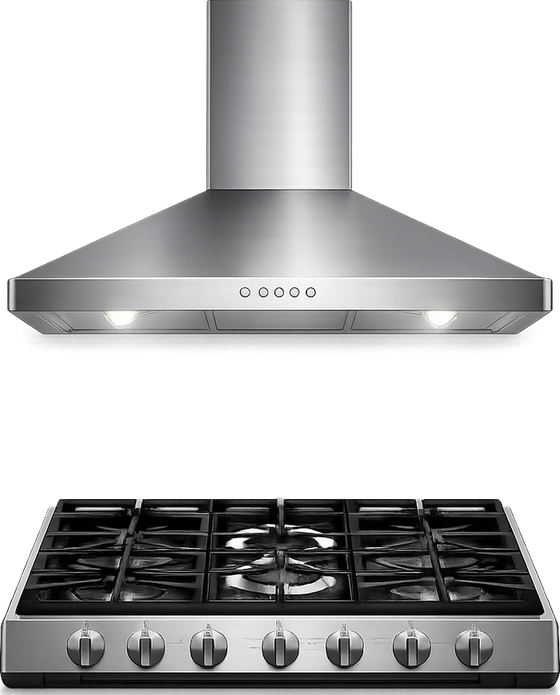
Common Cooktop and Vent Hood Problems in Pflugerville Homes
A gas burner that clicks but will not light
The igniter is working and either the gas is not arriving at that burner or the spark is landing in the wrong place. Food debris in the burner port, a spark electrode wet from cleaning, a cracked ceramic igniter or a failed spark module all look the same from above. If every burner clicks continuously instead of one, the problem is usually a shorted switch or a spill that reached the harness rather than the burners themselves.
A gas burner with a yellow, lazy flame
A clean natural gas flame is blue with a crisp cone. Yellow and soft means the air to gas mixture is off, usually a partly blocked port, a shifted burner cap or a cooktop installed on propane without the right orifices. Yellow flames soot pans and put carbon monoxide into a kitchen, so this one gets looked at rather than lived with.
A radiant glass element that heats only part of the time
That is cycling, and on a radiant top it is normal up to a point: the element switches on and off to hold the setting. When it cycles far more than it used to, the element is failing, the infinite switch is worn, or the surface limiter is cutting in because the glass is running hot. Glowing on high and barely warm on low is a switch rather than an element.
An induction top that reports an error and shuts down
Induction tops are electronics under glass, and they protect themselves. Most shutdowns are the cooling fan, a blocked air inlet or a temperature sensor, not the generator board. The pan matters too: a pan that is not magnetic or is smaller than the ring will read as no pan at all. Codes point somewhere specific, so the code gets read before anything is ordered.
Cracked or chipped glass
A chip at the edge spreads under heat, and a crack across the surface means the top is no longer sealed against spills reaching the wiring below. That is a replacement rather than a repair, and it is not worth running until it fails. Dropped pans and lids are the usual cause, not a defect.
A hood blower that stopped or runs slowly
Either the motor, the capacitor, the speed switch or the control board. A blower that hums but barely turns is usually the capacitor or a bearing loaded with grease. One that runs only on high has lost a speed tap or a switch contact. On a microwave combination unit the fan runs off the same board as the microwave, so a dead fan can mean a board rather than a motor.
A hood that runs but does not pull anything out
In Pflugerville this is usually the duct rather than the hood. The run goes up through the attic and out a roof cap, and the cap has a screen or a damper that grease and insects close off over the years. Flexible duct that sagged in the attic collects grease at the low point. A hood pulling against a blocked cap sounds exactly like a working hood, which is why people blame the motor.
A recirculating hood that smells and leaves the kitchen greasy
Plenty of builder hoods and microwave combinations were never ducted outdoors at all: they filter and blow the air back into the room. Those depend on a charcoal filter that has to be replaced rather than washed, and on a clean grease filter underneath. When nobody knew it was recirculating, both have usually been in place for years and the hood is simply moving greasy air around.
Cooktops and Hoods We Repair in Pflugerville
Sealed gas burner cooktops, radiant glass and ceramic tops, induction, electric coil, downdraft island cooktops, and the ducted, recirculating and microwave combination hoods above them. Common brands include Whirlpool, GE, Frigidaire, Samsung, LG, Bosch, KitchenAid, Maytag and Electrolux.
Gas work is done to manufacturer specification, and a cooktop that was converted between natural gas and propane gets checked for the correct orifices rather than assumed to be right.
What Cooktop and Hood Repair Costs in Pflugerville
The diagnostic is ninety nine dollars for a residential call and it is credited toward the repair once you approve the work. Igniters, spark modules, infinite switches, radiant elements, blower motors, capacitors and filters are all routine parts. A cracked glass top or a failed induction generator board is where the cost of the part starts to approach the cost of a new cooktop, and we will say so plainly instead of quoting it and leaving the decision to you without the numbers.
If the real problem is a blocked roof cap or a collapsed attic duct, you will hear that too rather than paying for a blower you did not need.
Neighborhoods We Cover in Pflugerville
Blackhawk, Falcon Pointe, Avalon, Sorento, Highland Park, Commons at Rowe Lane, Lake Pflugerville, Windermere, Heatherwilde, Springbrook, Verona, Villages of Hidden Lake, and the newer streets along Toll 45 and SH 130.
Common Questions About Cooktop and Vent Hood Repair in Pflugerville
How do I know whether my hood vents outside?
Look for a cap on the roof or an exterior wall above the kitchen, and look inside the hood: if there is a charcoal filter above the grease filter, it is recirculating. Microwave combination units are often switchable and were frequently left on recirculating when the house was built.
How often should the filters be cleaned?
The metal grease filter every one to three months, in hot water with dish soap or in the dishwasher. The charcoal filter in a recirculating hood is replaced rather than washed, usually every six to twelve months. This is the single cheapest thing you can do for hood performance.
Is a yellow gas flame dangerous?
It should be corrected. Yellow means incomplete combustion, which produces carbon monoxide and soot. It is usually a blocked port or a wrong orifice rather than something exotic, but it is not something to keep cooking on while you wait.
Can a radiant glass top be repaired, or does it get replaced?
Elements, switches and limiters are replaceable and the repair is routine. The glass itself is the part that decides: a crack or a chip that has started to spread means the top is finished. Scratches and discoloration are cosmetic and do not affect function.
Do you work on cooktops in rentals and turnovers?
Regularly. On a turnover the three worth checking together are the burners or elements, the hood filters, and the duct run, because those are what a new tenant notices in the first week and what a landlord usually hears about twice.
Book Cooktop or Hood Repair in Pflugerville
Tell us the brand, whether it is gas, radiant glass or induction, and what the hood does when you turn it on, and we can usually narrow it down before we arrive. Call (737) 388-3867 or book online. The ninety nine dollar diagnostic is credited toward the repair.
Cooktop & Vent Hood Repair in Pflugerville, TX
-

Cooktops We Repair
- Sealed gas burner cooktops
- Radiant glass and ceramic tops
- Induction cooktops
- Downdraft island cooktops
- Electric coil cooktops
- Griddle and bridge-element models
- Cooktops in builder appliance packages
-
Vent Hood Work
- Blowers that stopped or run slow
- Ducted hoods with blocked roof caps
- Recirculating hoods and filter conversion
- Microwave-hood combination units
- Downdraft blowers and dampers
- Lighting, switches and control boards

Cooktop and Vent Hood Brands We Service in Pflugerville
If your brand is not listed, contact us — we likely service it.
We repair all major residential appliance brands across Central Texas, including Whirlpool, GE, Samsung, LG, Maytag, Frigidaire, KitchenAid, Amana, Bosch, Electrolux, Hotpoint, Kenmore, Haier, Fisher & Paykel, Sub-Zero, Wolf, Viking, Thermador, JennAir, Dacor, U-Line, Marvel, Miele, and GE Monogram.
Why Homeowners & Businesses Choose TakiDA
-
 Quality WorkWe deliver professional appliance repair with attention to detail, proper diagnostics, and long-lasting results you can rely on.
-
 OEM / High-Quality PartsWe use OEM or high-quality replacement parts to ensure correct operation, reliability, and extended appliance lifespan.
-
 Same-Day / Next-Day ServiceFast response with same-day or next-day service to reduce downtime and get your appliances back in working order quickly.
-
 Clear PricingUpfront estimates with transparent pricing. No hidden fees, no surprises — you know the cost before work begins.
-
 EPA Certified & InsuredEPA Section 608 Universal certified and fully insured for residential and commercial repair, giving you peace of mind and protection.
-
 Warranty on Labor & PartsAll repairs are backed by a warranty on labor and installed parts for added confidence and long-term reliability.
