
Oven and Range Repair in Lakeway, TX
Plenty of Lakeway homes sit off the natural gas main and run on propane, which changes a range in a way people rarely think about until something is wrong. Propane needs different orifices and a different regulator setting, and a range that was converted carelessly looks like a faulty appliance for years before anyone checks.
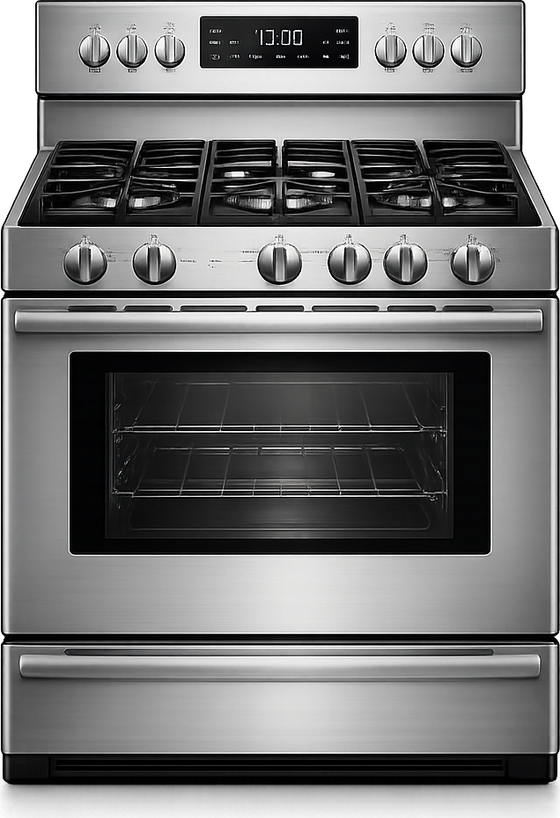
Common Oven and Range Problems in Lakeway Homes
A propane range that never seems quite right
Propane burns at a different pressure than natural gas and needs its own orifices. A range converted with the wrong parts, or one where the regulator was never switched over, gives tall yellow-tipped flames, soot on pans, uneven oven heat, or burners that will not turn down. It is not a failing appliance, and replacing parts does not fix it. The conversion itself is what gets checked.
Bakes are off even though the display shows the right number
Calibration drift. The oven sensor reads slightly high or low and the control heats to the wrong actual temperature. The test is a measurement in the cavity against the setpoint rather than a judgment about the food. Most ovens can be offset in the control once the real number is known, and that is often the whole repair.
Oven will not heat at all
On electric, a bake or broil element, a relay on the control board, or one leg of the supply lost. On gas or propane, the igniter, the safety valve or the ignition control. An igniter can glow brightly and still draw too little current to open the valve, so it gets measured rather than judged by eye.
One oven of a double wall oven works and the other does not
That isolates the fault to the dead cavity: its element, its relay or its sensor. A shared control board is possible but it is the less likely answer when one cavity behaves perfectly. On built-in pairs this matters because pulling the unit out of the cabinet is most of the labor.
Long preheat and poor recovery when the door opens
Door seal and hinges first. A heavy professional range door that has dropped on its hinges no longer seals along the bottom and the oven loses heat continuously. It is a cheap repair with a large effect and it is routinely mistaken for a failing element.
A self-clean cycle that ended with a dead oven
Self-clean runs the cavity far hotter than baking and it is hard on thermal fuses, door locks and control boards. An oven that worked before the cycle and not after usually lost one of those three. On high-end units we will often suggest cleaning by hand instead and explain why.
A steam or combination oven throwing water faults
Scale in the generator and on the probes. Lake Travis area water is hard, and a steam oven boils it continuously. Descaling on the schedule in the manual is what keeps these alive; a unit that has never been descaled keeps reporting faults no matter which part is replaced.
Controls responding intermittently or a display gone dark
On wall ovens the control sits above the cavity and takes years of heat. Membrane keypads fail trace by trace and displays dim before they quit. Before a board is ordered we check whether a sensor is reporting out of range, because that mimics a control fault closely.
Ovens and Ranges We Repair in Lakeway
Single and double wall ovens, professional and dual-fuel ranges, gas, propane, electric and induction ranges, steam and combination-steam ovens, speed and convection microwaves, warming drawers and second ovens. Common brands include Wolf, Sub-Zero, Thermador, Monogram, Viking, Miele, Bosch, JennAir, KitchenAid, Whirlpool, GE and Frigidaire.
Gas and propane work is done to manufacturer specification, and a conversion between the two gets verified rather than assumed.
What Oven Repair Costs in Lakeway
The diagnostic is ninety nine dollars for a residential call and it is credited toward the repair once you approve the work. Elements, igniters, sensors, thermostats, door seals, hinges, orifices and relays are routine parts. On professional and European equipment some parts are brand-specific and ordered, and we will give you the lead time before you commit rather than after.
Replacing a built-in wall oven means matching the cutout and the trim, so repairs are often clearly worth doing on units where a freestanding equivalent would be replaced.
Neighborhoods We Cover in Lakeway
Rough Hollow, Flintrock Falls, The Hills, Lakeway Highlands, Tuscan Village, Lohmans Crossing, Serene Hills, and the waterfront streets along Lake Travis.
Common Questions About Oven Repair in Lakeway
How do I know whether my range was converted to propane correctly?
Look at the flames: propane burning through natural gas orifices runs tall and yellow-tipped and sooty. Correct conversion means the right orifices in every burner and the regulator switched over. We check all of it rather than assuming the installer did.
How far off does an oven have to be to matter?
Fifteen degrees is noticeable in baking; twenty five changes the result. Most controls allow a calibration offset, and setting it correctly is a short visit rather than a parts job.
Should I use the self-clean cycle?
Sparingly, and never the night before you need the oven. The cycle is the most common cause of a sudden oven failure. On high-end units manual cleaning is gentler and avoids the risk.
Do you work on Wolf, Thermador, Miele and Viking?
Yes. Give us the model and serial when booking so parts availability and lead time can be checked before the visit.
Is a sagging oven door worth fixing?
Yes. Hinges and seals are inexpensive and a door that does not seal changes every bake, lengthens preheat and makes the oven look like it has a heating fault when it does not.
Book Oven or Range Repair in Lakeway
Tell us the brand and model, whether it runs on natural gas, propane or electric, and what the oven is actually reading against the setpoint, and we can usually narrow it down and check parts before we arrive. Call (737) 388-3867 or book online. The ninety nine dollar diagnostic is credited toward the repair.
Oven and Range Repair in Lakeway, TX
-

What We Repair
- Oven not heating or heating unevenly
- Temperature well off the setting
- Bake or broil element failures
- Igniters, gas valves and burners
- Propane conversion and orifice problems
- Self-clean cycles and locked doors
- Control boards, probes and displays
-
Ovens and Ranges We Service
- Single and double wall ovens
- Professional and dual-fuel ranges
- Gas, propane, electric and induction ranges
- Steam and combination-steam ovens
- Speed and convection microwaves
- Warming drawers and second ovens

Oven and Range Brands We Service in Lakeway
If your brand is not listed, contact us — we likely service it.
We repair all major residential appliance brands across Central Texas, including Whirlpool, GE, Samsung, LG, Maytag, Frigidaire, KitchenAid, Amana, Bosch, Electrolux, Hotpoint, Kenmore, Haier, Fisher & Paykel, Sub-Zero, Wolf, Viking, Thermador, JennAir, Dacor, U-Line, Marvel, Miele, and GE Monogram.
Why Homeowners & Businesses Choose TakiDA
-
 Quality WorkWe deliver professional appliance repair with attention to detail, proper diagnostics, and long-lasting results you can rely on.
-
 OEM / High-Quality PartsWe use OEM or high-quality replacement parts to ensure correct operation, reliability, and extended appliance lifespan.
-
 Same-Day / Next-Day ServiceFast response with same-day or next-day service to reduce downtime and get your appliances back in working order quickly.
-
 Clear PricingUpfront estimates with transparent pricing. No hidden fees, no surprises — you know the cost before work begins.
-
 EPA Certified & InsuredEPA Section 608 Universal certified and fully insured for residential and commercial repair, giving you peace of mind and protection.
-
 Warranty on Labor & PartsAll repairs are backed by a warranty on labor and installed parts for added confidence and long-term reliability.
