
Commercial Washer Repair in Cedar Park, TX
Loads coming out wet, a breaker that trips on spin, a machine that takes money and will not start, or a washer walking across the floor. We repair commercial washer-extractors and apartment laundry room machines in Cedar Park. The $149 commercial diagnostic is credited toward the repair.
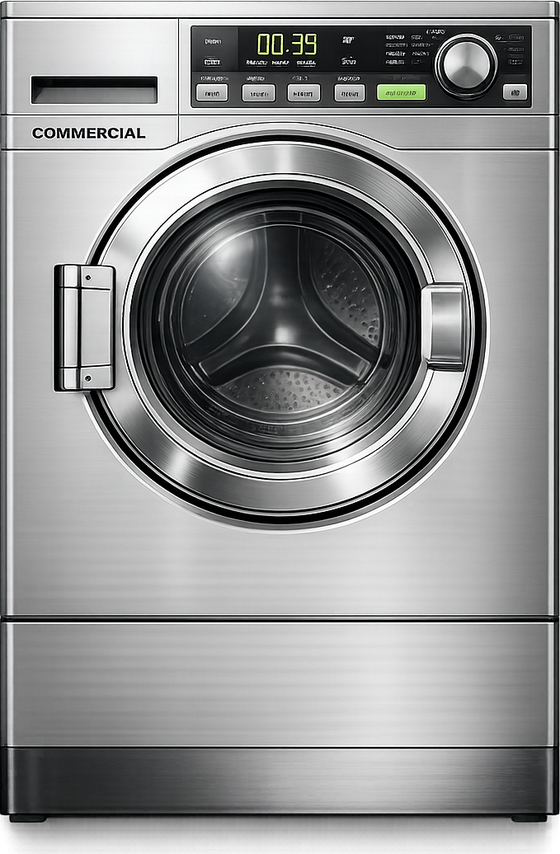
Common Commercial Washer Problems in Cedar Park
Loads come out soaking wet after the final spin
A commercial washer-extractor is rated by the G-force it reaches on extract, and that number decides how much water actually leaves the load. When extract speed drops, the dryers downstream run twice as long and the whole laundry backs up behind them. We check whether the inverter is commanding full extract speed or quietly derating itself because of a fault, whether the belt is slipping, and whether drag in the bearings or the balance system is cutting extract short before it gets there.
The breaker trips when the machine goes into spin
Extract is where the motor pulls the hardest, so a breaker that holds all the way through wash and lets go on spin is pointing straight at the motor circuit. We measure the inrush with a clamp meter and compare it against the machine’s own rating, then check the motor windings and the inverter output. A tired breaker is possible too, but that is a conclusion we reach after the measurement, not before it.
The hot wash is not actually hot
Commercial wash formulas rely on temperature to do part of the cleaning. If the water arriving at the machine is well under what the program calls for, linens come out grey no matter how much chemical goes in. We measure the water temperature at the machine rather than at the heater, then work back through the mixing valve, the supply line and the machine’s own temperature sensor.
Detergent is not reaching the drum
On machines fed by external supply pumps the washer only sends a signal — the chemical system does the rest. A load that comes out unwashed can mean a blocked flush manifold, a dry line, or a supply output on the machine that never fired. We confirm whether the signal leaves the machine before anyone starts replacing pumps, and we work alongside your chemical supplier on their side of the equipment.
The machine takes payment but will not start
In vended rooms the payment system and the washer are two separate things talking to each other. Money going in with nothing happening usually means the start signal is not getting through, or the machine is still waiting on the door lock to prove itself closed. We separate the two before touching either one, so you are not paying to replace a card reader that was working fine.
The drum only turns one way during the wash
Wash action depends on the drum reversing. When it stops reversing, the load ropes up on one side, comes out unevenly washed and throws the machine out of balance on extract. The reversing command comes from the control and is carried out by the inverter or by contactors, and each of those fails in its own way.
The machine walks or shifts on the floor
A hardmount washer passes everything it feels straight into the floor, which is why it has to stay bolted down properly. A softmount absorbs it in its own suspension instead. Either way, a machine that moves is telling you something is loose or worn, and running it like that damages plumbing, the frame and eventually the floor itself.
The display is dark or the machine will not begin a cycle
A blank screen is not always the control board. Control power comes through a transformer, and before the machine will do anything at all it wants to see the emergency stop released and the door circuit made up. We work that chain in order, cheapest first, instead of starting at the most expensive part in the machine.
Machines and Brands We Repair in Cedar Park
We work on hardmount and softmount washer-extractors, stacked washer-dryer units in apartment laundry rooms, and the vended machines in coin and card laundries. Common brands in Cedar Park rooms include Speed Queen, Huebsch, Unimac, Wascomat, Continental Girbau, Dexter, Maytag Commercial and Whirlpool Commercial Laundry.
If your machine is tied into a chemical supply system or a card payment network, tell us when you book. Those are separate systems from the washer, and knowing which one is involved saves a trip.
What Commercial Washer Repair Costs in Cedar Park
The commercial diagnostic is $149 and comes off the repair when you approve it. Valves, switches, belts, door locks, hinges, pumps and control components are modest. Bearings, a drum seal or an inverter are a different conversation, and we tell you which one you are looking at before any work starts.
In a laundry room downtime costs more than the part. When a machine is out of service we will say plainly whether it is worth repairing or whether the money is better spent elsewhere.
Neighborhoods We Cover in Cedar Park
Commercial laundry work takes us to apartment complexes and businesses across Cedar Park — the rooms in the communities off Cypress Creek and Lakeline, the properties along Parmer and Brushy Creek, the gyms and salons in the retail strips on Whitestone, and the laundries near the Bell Boulevard corridor. We are based in Leander, about twenty minutes out, so a room with a machine down is not waiting on a trip across the metro.
Common Questions About Commercial Washer Repair in Cedar Park
Why do loads come out wetter than they used to?
Almost always because the machine is no longer reaching its rated extract speed. That is measurable, and it points at the inverter, the belt or the drive rather than at the machine simply being old.
Do you work on both hardmount and softmount machines?
Yes. They behave very differently when something goes wrong — a hardmount sends vibration into the floor, a softmount absorbs it in its suspension — and that changes what we look at first.
Is it worth repairing a machine that is fifteen years old?
Sometimes yes, sometimes no. Commercial machines are built to be rebuilt, so age alone does not settle it. What settles it is which part failed, what the rest of the machine looks like, and how many hours a week that machine runs.
Will you work with our chemical supply company?
Yes. We draw the line clearly: the washer sends the signal, the supply system delivers the chemical. We will show you which side the fault is on so nobody is replacing the wrong equipment.
How quickly can you reach a laundry room in Cedar Park?
Same-day is often possible. Tell us the make, the model and what the display is showing when you call, and we will bring the likely parts with us.
Book Commercial Washer Repair in Cedar Park
Tell us the make and model, whether the machine is hardmount or softmount, and what the display is showing. That decides what goes on the van.
Commercial Washer Repair in Cedar Park, TX
-

What Brings Us Out to a Laundry Room
- Loads coming out soaking wet
- Breaker letting go on the spin
- Hot wash arriving lukewarm
- Detergent never reaching the drum
- Money going in with nothing starting
- Drum turning one way only
- Machine shifting across the floor
-
Washers We Cover
- Hardmount washer-extractors
- Softmount washer-extractors
- Stacked washer and dryer units
- Vended coin and card machines
- Apartment laundry room machines
- Speed Queen, Huebsch, Unimac
- Wascomat, Continental Girbau, Dexter

Commercial Laundry Brands We Service in Cedar Park
If your brand is not listed, contact us — we likely service it.
Why Homeowners & Businesses Choose TakiDA
-
 Quality WorkWe deliver professional appliance repair with attention to detail, proper diagnostics, and long-lasting results you can rely on.
-
 OEM / High-Quality PartsWe use OEM or high-quality replacement parts to ensure correct operation, reliability, and extended appliance lifespan.
-
 Same-Day / Next-Day ServiceFast response with same-day or next-day service to reduce downtime and get your appliances back in working order quickly.
-
 Clear PricingUpfront estimates with transparent pricing. No hidden fees, no surprises — you know the cost before work begins.
-
 EPA Certified & InsuredEPA Section 608 Universal certified and fully insured for residential and commercial repair, giving you peace of mind and protection.
-
 Warranty on Labor & PartsAll repairs are backed by a warranty on labor and installed parts for added confidence and long-term reliability.
