
Commercial Refrigeration and Walk-In Repair in Georgetown, TX
A walk-in that drifts in the afternoon, a coil icing over, water on the floor or product failing temperature checks — we service commercial refrigeration across Georgetown, from the Square and Austin Avenue to the I-35 corridor, Wolf Ranch and the institutional kitchens on the Sun City side. EPA Section 608 Universal certified and insured. Commercial diagnostic $149, credited toward the repair.
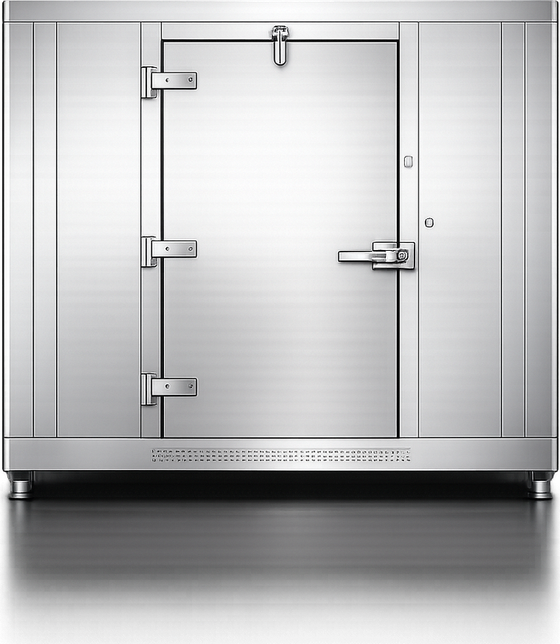
Common Commercial Refrigeration Problems in Georgetown Kitchens
The walk-in climbs through the afternoon and recovers overnight
A box that holds fine at eight in the morning and drifts up by three in the afternoon is almost always a head pressure problem, not a compressor problem. The condensing unit has to reject heat into whatever air surrounds it, and in a Georgetown summer that is a roof deck or a back room running well over a hundred degrees. Add a condenser coil carrying a season of dust and fryer grease and the system loses capacity exactly when the kitchen needs it most. We take head and suction pressures with the box under real load, work out the condenser approach and the superheat, and that tells us whether we are looking at airflow, a fouled coil, charge, or a metering device that is not keeping up.
Ice building across the evaporator coil
A coil that frosts solid has stopped breathing, and the cabinet gets warmer the worse it gets, which is why this is so often reported as a cooling failure. There are three separate causes and they need telling apart rather than guessing: a defrost that is not happening, meaning the timer or control, the defrost heater or the termination thermostat; a system running low on charge, so the coil operates below its design temperature and pulls frost out of the air continuously; or airflow blocked by product stacked tight against the coil, which happens in every busy kitchen. The fix is cheap in one case and not in another, so the diagnosis matters.
Water on the floor inside the box
Condensate has to leave the box, and on a walk-in freezer the drain line runs through a wall that is below freezing, so it has a heater in it. When that heater fails the line plugs with ice, the pan overflows and you get water and then ice on the floor, which is a slip hazard and a health inspection finding before it is a refrigeration problem. On coolers it is usually a blocked drain or a P trap that has dried out and is letting warm air back up the line. Both are inexpensive to put right and both get ignored until somebody falls.
The compressor runs continuously and never cycles off
Continuous running means the system cannot satisfy the thermostat, and the list of reasons is short: the box is gaining heat faster than the system removes it, the charge is low, the metering device is restricted, or the condenser cannot reject what it is picking up. The first thing we look at is the door, because a walk-in door left propped during prep, or a gasket that has gone hard, will defeat a perfectly healthy system. The second is run time history if the controller logs it. Running constantly is not just a cost problem, it is what shortens the compressor's life.
Frost around the door frame, or a door that freezes shut
Freezer doors have a heater wire running around the frame and often through the glass, and its job is to keep the gasket from freezing to the jamb. When the perimeter heater fails you get frost building around the frame, the door sticks, and then somebody pulls it hard enough to tear the gasket or bend the hinge. Gaskets, hinges, closers and heater wire are all serviceable parts. What they are not is optional, because a door that does not seal puts moisture into the box continuously and that is where coil icing comes from.
A reach-in that holds in the cooler section but not the freezer
On dual temperature reach-ins the two sections usually share one system, with a damper or a second evaporator splitting the duty. When one half fails and the other is fine, the common parts are already proven good, which narrows the job quickly to the damper motor, the evaporator fan for that section, or its defrost circuit. The expensive assumption to avoid is that the sealed system is at fault, because a sealed system problem would show up in both halves.
Short cycling, or tripping out on overload
A compressor that starts, runs briefly and trips is telling you it is drawing more current than it should, and the reasons split between electrical and mechanical. Voltage at the unit under load is where we start, because a long run or a loose lug at the disconnect drops voltage exactly when the compressor needs it most, and low voltage is the fastest way to kill one. After that the start components, the condenser fan, and running current measured against the figure on the nameplate. Resetting a breaker on equipment that has tripped twice is not a repair.
Product temperature is failing inspection even though the display reads correctly
This one is worth taking seriously because it is the version that costs you on an inspection. Air temperature at the controller probe and the temperature of food in a pan are two different things, and the gap between them is airflow. A box reading thirty eight degrees with product at forty five usually means air is not reaching the product: pans stacked over the return, a shelf blocking the coil discharge, an evaporator fan that has failed quietly, or a probe sitting somewhere that does not represent the box. We check product temperature where the inspector would, not just the display.
Equipment We Service in Georgetown
We service walk-in coolers and freezers, reach-in and under-counter refrigerators and freezers, glass door merchandisers, refrigerated prep tables, back bar coolers, keg coolers and display cases, from True, Turbo Air, Beverage-Air, Continental, Traulsen, Delfield, Hoshizaki, Arctic Air, Avantco, Atosa and the Heatcraft, Bohn, Copeland and Tecumseh components behind them. That covers self contained units and remote condensing systems, electronic and mechanical controls, and defrost systems of all types. Work on sealed systems is done under EPA Section 608 Universal certification, and we are insured for commercial premises.
What Commercial Refrigeration Repair Costs in Georgetown
The commercial diagnostic is $149 and it comes off the repair when you approve it. You get a written price covering parts and labor before anything is replaced. Fan motors, defrost heaters, termination thermostats, controls, gaskets, hinges, door heaters, drain line heaters and contactors are modest parts. Compressors, condensing units and evaporator coil replacements are not, and on a unit that is nearing the end of its service life we will give you the repair price next to what a replacement would cost rather than letting you find out afterwards.
For a kitchen, downtime is the real cost, so we will tell you on the first visit what can be made to hold overnight and what cannot, so you can plan service around a shift rather than losing one.
Neighborhoods We Cover in Georgetown
Most of our Georgetown commercial refrigeration work is downtown around the Square. Those kitchens are small, often in buildings that were never designed for them, and the condensing units end up in back rooms, alleys and on roofs with very little air around them. That is why the same model performs differently two doors apart, and why head pressure is the first thing we measure rather than the last. We cover the Square, Austin Avenue, Main Street and the surrounding blocks.
Along the I-35 corridor and Williams Drive we work on convenience stores, gas stations, coffee shops and the chain kitchens, where the equipment is newer but runs harder and the merchandiser doors take a beating. Around Wolf Ranch and the Rivery the kitchens are purpose built and the problems are closer to controls and defrost than to installation. We also serve the institutional kitchens: schools, churches, assisted living and senior facilities on the Sun City side, where a walk-in going down over a weekend is a serious matter. Georgetown is a short run from Leander, and for a kitchen with product at risk we will tell you honestly how quickly we can be there rather than booking a window we cannot hold.
Common Questions About Commercial Refrigeration Repair in Georgetown
My walk-in only struggles in the afternoon. Is the compressor failing?
Usually not. A box that recovers overnight and drifts in the heat of the day is losing capacity to head pressure, which points at the condenser, the air around it and the charge, long before it points at the compressor.
Can you work on sealed systems and refrigerant?
Yes. Sealed system work is done under EPA Section 608 Universal certification, and we carry commercial general liability insurance, so we can provide a certificate of insurance if your landlord or management company asks for one.
My controller shows the right temperature but the inspector measured product too warm. Why?
Air temperature and product temperature are not the same thing, and the difference is airflow. Blocked returns, overloaded shelving, a failed evaporator fan or a badly placed probe all produce exactly that result, and all of them are fixable.
Can you come outside service hours?
Where the schedule allows, yes, and for refrigeration we would usually rather do it that way. Tell us your service hours when you call and we will work around them where we can.
How quickly can you get to Georgetown?
Often the same day, and Georgetown is a short run for us. Call (737) 388-3867, tell us whether product is at risk, and we will give you a straight answer about timing rather than an optimistic one.
Book Commercial Refrigeration Service in Georgetown
Tell us what the equipment is, what it is doing, and whether product is at risk right now. Your service hours help too, because for refrigeration we would usually rather work around a shift than through one. Call (737) 388-3867 or book online and we will confirm a time for Georgetown.
Commercial Refrigeration and Walk-In Repair in Georgetown, TX
-

Symptoms We Sort Out
- Box climbing through the afternoon
- Ice building on the evaporator
- Water on the floor inside
- Compressor never cycling off
- Frost around the door frame
- Freezer side out, cooler side fine
- Short cycling and tripping out
- Product failing temperature checks
-
Equipment We Service
- Walk-in coolers and freezers
- Reach-in and under-counter units
- Glass door merchandisers
- Refrigerated prep tables
- Back bar and keg coolers
- Remote condensing systems

Commercial Refrigeration Brands We Service in Georgetown
If your brand is not listed, contact us — we likely service it.
Why Homeowners & Businesses Choose TakiDA
-
 Quality WorkWe deliver professional appliance repair with attention to detail, proper diagnostics, and long-lasting results you can rely on.
-
 OEM / High-Quality PartsWe use OEM or high-quality replacement parts to ensure correct operation, reliability, and extended appliance lifespan.
-
 Same-Day / Next-Day ServiceFast response with same-day or next-day service to reduce downtime and get your appliances back in working order quickly.
-
 Clear PricingUpfront estimates with transparent pricing. No hidden fees, no surprises — you know the cost before work begins.
-
 EPA Certified & InsuredEPA Section 608 Universal certified and fully insured for residential and commercial repair, giving you peace of mind and protection.
-
 Warranty on Labor & PartsAll repairs are backed by a warranty on labor and installed parts for added confidence and long-term reliability.
