
Commercial Ice Machine Repair in Georgetown, TX
Low production in the heat, thin cloudy cubes, a bin that never fills, water on the floor or a fault light you cannot clear — we service commercial ice machines across Georgetown, from the Square and Austin Avenue to the I-35 corridor and Wolf Ranch. Descale and sanitation included. EPA Section 608 Universal certified and insured. Commercial diagnostic $149, credited toward the repair.
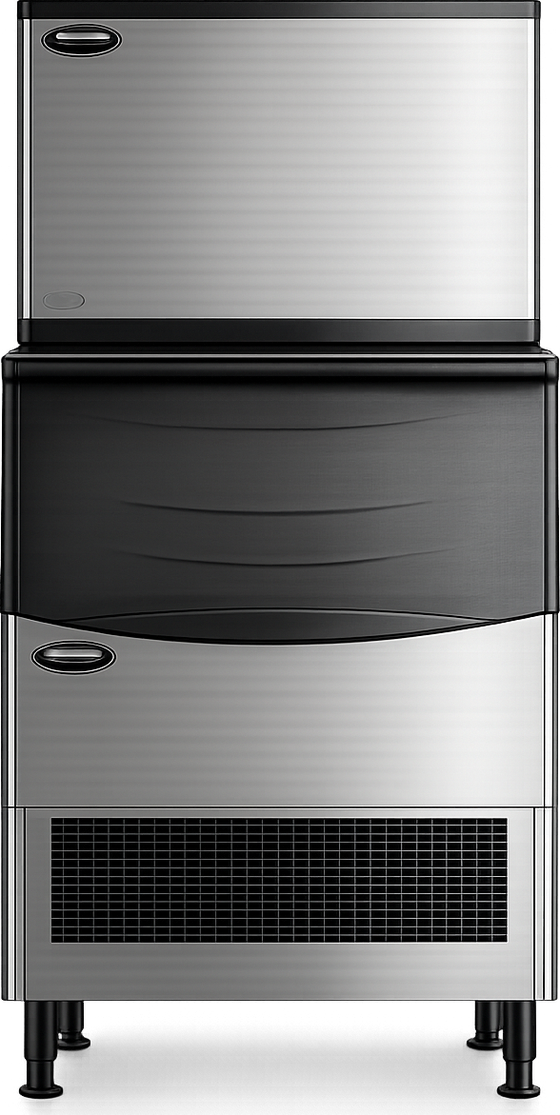
Common Commercial Ice Machine Problems in Georgetown Kitchens
Production falls off a cliff in summer
Every ice machine has a rated output, and that rating is measured at seventy degree air and fifty degree incoming water. A Georgetown kitchen in July gives it neither. Back room air in the nineties and supply water in the high seventies can cut real production close to half of the number on the data plate, and nothing is broken. Before replacing anything we take the air temperature at the condenser inlet, the water temperature at the machine, and the actual harvest cycle time, then compare them against the manufacturer's performance table for those conditions. That tells us whether you have a failing machine or a machine in a bad spot.
Thin, cloudy or hollow cubes
Cube quality is a water problem far more often than a refrigeration problem. On Georgetown water, scale builds on the evaporator surface, and scale is an insulator: the ice forms more slowly, the cube never reaches full thickness before the cycle ends, and it comes out thin and cloudy. The other causes are a water inlet valve that is not filling fully, a float or water level sensor reading wrong, and a distributor tube with blocked holes putting water down only part of the plate. All of those are serviceable, and a proper descale often puts the machine back to its original output.
It makes ice but the bin never fills
If the machine cycles normally and the bin stays half empty, the usual answer is the ice level control telling the machine to stop. On mechanical designs that is a paddle or a bail arm that has stuck; on newer machines it is an infrared or thermostatic sensor that has been fooled by splash, frost or a dirty lens. The other possibility is cycle time: a machine taking thirty five minutes to do what it used to do in eighteen will never keep up with service, and that is a capacity problem rather than a control problem.
Water on the floor around the machine
Ice machines leak for mundane reasons: a drain line that is not properly vented, a bin drain plugged with the sediment that comes off the ice, a dirty water trough overflowing, or a curtain and seal that has distorted so water escapes during harvest. The part people get wrong is the drain. It has to be a gravity run with an air gap and a vent, and when it is plumbed hard into a sink tailpiece or run uphill, it will back up sooner or later. We will tell you when that is what we are looking at, because clearing it once without fixing it is a repeat visit.
Slime or a dark film inside the machine
This is a health inspection problem before it is a mechanical one. Ice is a food, the interior of an ice machine is warm and damp between cycles, and biofilm will establish itself in the trough, on the curtain and around the distributor unless the machine is cleaned on a schedule. It also costs you production, because the film insulates exactly the surfaces that need to transfer heat. Cleaning has to be done with the right chemical for the machine, because nickel plated evaporators take a different cleaner from stainless ones, and the wrong one damages the plate.
The machine has shut itself down with a fault or service light
Modern machines protect themselves and then tell you why, if you know how to read them. Hoshizaki, Manitowoc, Scotsman and Ice-O-Matic each use their own scheme of lights, beeps or codes, and they point at specific conditions: harvest taking too long, freeze cycle too long, water not detected, high discharge pressure. Those codes shorten the job considerably, so if yours is flashing a pattern, note it before cycling the power. Clearing the fault without finding what caused it just means the machine stops again during service.
The ice tastes or smells wrong
Ice picks up whatever the air around it carries, so the first question is where the bin is and what is stored near it. After that, the water filter is the usual answer, and filters get left in long past their rated volume because nobody writes down when they were changed. Scale, biofilm and a stagnant trough all contribute. If the taste only appears after the machine has sat over a weekend, that points at the trough and the curtain rather than at the supply.
The cubes come out fused in a sheet, or the plate will not release
Harvest is a separate cycle, and when it fails you get a slab instead of cubes or a machine that stalls with ice stuck on the plate. The parts involved are the hot gas valve that warms the evaporator to release the ice, the harvest sensor or thermostat that decides when to stop, and the curtain switch that tells the control the ice has left. A hot gas valve that is not seating also lets the machine run poorly all through the freeze cycle, so this fault often arrives alongside low production.
Equipment We Service in Georgetown
We service modular cube machines on bins, under-counter and self-contained units, flake and nugget machines, and the remote condenser systems used where the heat has to go outside, from Hoshizaki, Manitowoc, Scotsman, Ice-O-Matic, Follett, Cornelius and the Avantco and Atosa units common in smaller kitchens and bars. That includes water systems and filtration, drain and vent work, ice level controls, harvest systems and full descale and sanitation service. Sealed system work is done under EPA Section 608 Universal certification, and we are insured for commercial premises.
What Commercial Ice Machine Repair Costs in Georgetown
The commercial diagnostic is $149 and it comes off the repair when you approve it. You get a written price covering parts and labor before anything is replaced. Water inlet valves, float and level sensors, ice level controls, curtains, seals, distributor tubes, filters, contactors, fan motors and descale service are all modest. Hot gas valves, condensers and compressors are the expensive end. On an older machine that has lost capacity we will measure what it is actually producing and tell you honestly whether the money is better spent on the repair or on a replacement.
Scheduled descaling is the single thing that makes the most difference to these machines on our water, and we would rather sell you that than a compressor.
Neighborhoods We Cover in Georgetown
Around the Square and along Austin Avenue and Main Street the machines are mostly under-counter and small modular units in bars, coffee shops and restaurants where space is tight and the machine ends up in a corner with very little air. That placement is the single biggest reason for lost production downtown, and it is worth knowing before you replace a machine that is working as well as its surroundings allow.
Along the I-35 corridor and Williams Drive we work on convenience stores, hotels and chain kitchens with larger modular machines and higher duty, where filtration and descale schedules matter most. Around Wolf Ranch and the Rivery the installations are newer and better ventilated, and the complaints are more often harvest systems, level controls and water quality. We also look after ice machines in schools, churches and senior facilities on the Sun City side. Georgetown is a short run from Leander and for an ice machine down in service we will give you a straight answer on timing.
Common Questions About Commercial Ice Machine Repair in Georgetown
My machine makes much less ice in summer. Is it failing?
Not necessarily. Rated production assumes seventy degree air and fifty degree water, and a hot back room with warm supply water can cut real output close to half. We measure the conditions before condemning the machine.
How often should an ice machine be cleaned?
Most manufacturers say every six months as a minimum, and on our water three to four months is more realistic. Descaling protects production, and sanitation is a health inspection matter, so the two go together.
Why are my cubes thin and cloudy?
Usually scale on the evaporator, a water valve not filling fully, or a blocked distributor tube. Cube quality is a water system question far more often than a refrigeration one.
Do you handle the water filter and the drain as well?
Yes. Filtration, drain and vent work are part of ice machine service, and on a lot of calls the drain is the actual fault rather than the machine.
How quickly can you get to Georgetown?
Often the same day. Call (737) 388-3867, tell us the brand and any fault light pattern it is showing, and we will tell you honestly what the day looks like.
Book Commercial Ice Machine Service in Georgetown
Tell us the brand and model, what the machine is doing, and any light pattern or code it is showing before you cycle the power, because that narrows the job considerably. Your service hours help too. Call (737) 388-3867 or book online and we will confirm a time for Georgetown.
Commercial Ice Machine Repair in Georgetown, TX
-

Symptoms We Sort Out
- Production dropping off in the heat
- Thin, cloudy or hollow cubes
- Bin that never fills
- Water on the floor
- Slime or film inside the machine
- Fault or service light showing
- Ice that tastes or smells wrong
- Cubes fused into a sheet
-
Equipment We Service
- Modular cube machines on bins
- Under-counter and self-contained units
- Flake and nugget machines
- Remote condenser systems
- Water filtration and drains
- Descale and sanitation service

Ice Machine Brands We Service in Georgetown
If your brand is not listed, contact us — we likely service it.
Why Homeowners & Businesses Choose TakiDA
-
 Quality WorkWe deliver professional appliance repair with attention to detail, proper diagnostics, and long-lasting results you can rely on.
-
 OEM / High-Quality PartsWe use OEM or high-quality replacement parts to ensure correct operation, reliability, and extended appliance lifespan.
-
 Same-Day / Next-Day ServiceFast response with same-day or next-day service to reduce downtime and get your appliances back in working order quickly.
-
 Clear PricingUpfront estimates with transparent pricing. No hidden fees, no surprises — you know the cost before work begins.
-
 EPA Certified & InsuredEPA Section 608 Universal certified and fully insured for residential and commercial repair, giving you peace of mind and protection.
-
 Warranty on Labor & PartsAll repairs are backed by a warranty on labor and installed parts for added confidence and long-term reliability.
