
Commercial Refrigeration and Walk-In Repair in Lakeway, TX
Food service in Lakeway runs in bursts. A quiet Tuesday and then a Saturday where the patio is full from eleven in the morning until close, or a club kitchen that does nothing all week and then feeds two hundred people at an event. Equipment sized for the average gets punished by the peak, and most kitchens out here have exactly one of everything: one walk-in, one reach-in line, one prep cooler. When one goes down there is no second unit to shift product into. We service walk-in coolers and freezers, reach-ins, undercounter and back-bar units, prep tables and merchandisers, and we work on the sealed system as well as the electrical and the controls. EPA Section 608 certified and insured.
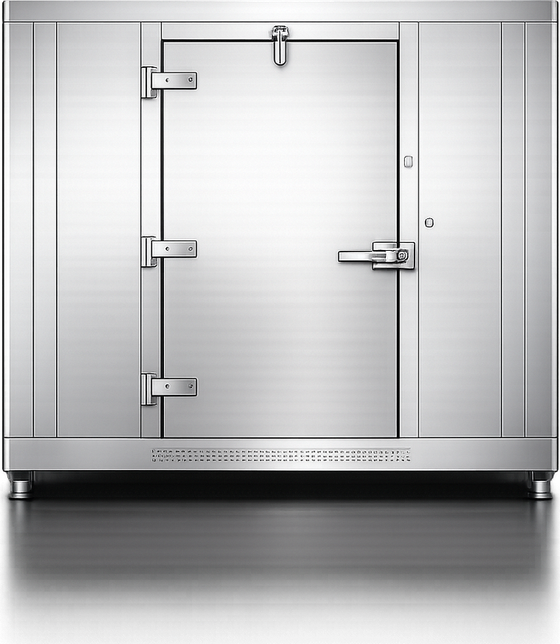
Common commercial refrigeration problems we fix in Lakeway
Walk-in not holding temperature
A walk-in drifting warm is the call we move to the front of the queue, because product is on the clock. The common causes in this order: a condenser coil packed with dust and grease, a condenser fan that has stopped, a failed defrost cycle leaving the evaporator iced over, a door that no longer seals, or a sealed-system problem. We check the easy and the free causes first, then measure superheat and subcooling if the airside is clean, because adding refrigerant to a system that is not low is how a small problem becomes an expensive one.
Evaporator iced over inside the box
A solid sheet of ice on the evaporator coil means the defrost cycle is not doing its job. The fault is usually the defrost timer or control, the defrost heater, or the termination thermostat. It can also be a door left open or a gasket that no longer seals, which loads the coil with humid air faster than defrost can clear it. We thaw the coil, confirm the defrost cycle actually runs, and then fix the cause, because clearing the ice without finding the reason just buys a day or two.
Rooftop or outdoor condenser running hot
Plenty of Lakeway kitchens have the condensing unit on the roof or in a side alley, and in July that unit is rejecting heat into air that is already over a hundred degrees. A coil that would be fine in March loses its margin completely in summer. Head pressure climbs, the compressor runs longer and hotter, and the box drifts up during the hottest part of the day while holding fine overnight. That overnight recovery is the clue, and it means airflow and coil cleanliness, not a dying compressor.
Reach-in that cycles short or runs constantly
A reach-in that short cycles is usually tripping on a pressure or thermal limit, which points at airflow, a stuck contactor, or a system problem. One that runs constantly without reaching temperature points at a dirty condenser, a failing fan, a bad gasket or a low charge. Reach-ins in a busy Lakeway kitchen get opened constantly on a Saturday, so we also look at whether the unit is simply being asked for more than it was specified to do.
Door gaskets, hinges and closers
This is the cheapest and most neglected repair in commercial refrigeration. A torn gasket or a door that no longer self-closes costs the compressor runtime every single hour. On a walk-in, a hinge that has sagged leaves a gap at the top corner that will ice the box and run the bill up. We replace gaskets, adjust and replace hinges and closers, and it usually pays for itself quickly in a kitchen the size of most Lakeway operations.
Prep table and sandwich unit not holding pan temperature
Prep tables fail differently from other boxes because the top is exposed. A unit that holds in the base but lets the pans warm up usually has an airflow problem under the rail, a blocked return, or pans sitting too high. Add a summer patio service where the lid is open constantly and a marginal unit becomes a failing one. We check the airflow path and the lid seal before assuming the system.
Water on the floor or a backed-up drain
Condensate has to get out of the box and down a drain that is not in the cold. A blocked drain line, a failed drain heater on a freezer, or a condensate pump that has given up all show up as water on the kitchen floor, which is a slip hazard and a health inspection problem. These are inexpensive repairs and worth doing promptly.
Temperature alarms and failed controls
Digital controllers fail, sensors drift, and alarms get muted and forgotten. A unit reading 38 on the display and actually sitting at 46 is worse than one that has obviously quit, because nobody acts on it. We verify the display against an independent measurement on every call, and we will tell you if your controller is lying to you.
Why Lakeway kitchens get hurt by one failure
In a dense restaurant district an operator with a dead walk-in can borrow space from the place next door for a night. Out here that is rarely an option, and the nearest replacement unit is not local either. That means two things for how we work. First, we carry the parts that fail most and we try to get a box holding on the first visit rather than leaving it dark while a part ships. Second, when we cannot fully repair the same day, we will tell you what the box will and will not hold overnight so you can make a decision about product instead of guessing. A temporary fix that keeps a cooler at 40 while a part arrives is often worth more to a kitchen than a perfect repair two days later.
Summer, and the cost of a dirty coil
The single highest-value maintenance item on commercial refrigeration here is condenser coil cleaning, and the second is door gaskets. A coil that is half blocked raises head pressure, raises the power bill every hour the compressor runs, and shortens compressor life. In Hill Country summers, the difference between a clean coil and a dirty one is often the difference between a box that holds through a Saturday service and one that does not. We clean coils as part of service calls and we will tell you honestly how often yours needs it based on where it sits, since a rooftop unit near a kitchen exhaust loads up far faster than one in a clean side yard.
Seasonal and event kitchens
Clubs, event venues and marina bars around Lakeway have a usage pattern that most refrigeration is not designed around: weeks of idle followed by a night at full load. Equipment that sits idle develops its own faults, dried gaskets, stuck contactors, condensate traps that have gone dry and now vent cold air. The worst time to discover that is the afternoon of an event. If you run a venue on that pattern, a check in the week before a busy stretch is worth far more than an emergency call during one, and we would rather do that work on a Tuesday than at seven on a Saturday evening.
Commercial refrigeration questions from Lakeway operators
My walk-in holds overnight but drifts warm in the afternoon
That pattern almost always means the condenser cannot reject heat when the outside air is hottest, so the cause is a dirty coil, a failed condenser fan, or restricted airflow around the unit. It is rarely a dying compressor, and that is good news.
How fast can you get here?
We prioritize commercial refrigeration with product at risk and offer same-day service when the schedule allows. Tell us when you call whether the box is holding and roughly what temperature it is reading now, so we can tell you where you stand before we arrive.
Do you work on the sealed system, or only the electrical side?
Both. We are EPA Section 608 Universal certified, so refrigerant work, leak repair and recharging are part of what we do rather than something we hand off.
Is it worth replacing gaskets that are only a little torn?
Yes. A gasket is one of the cheapest parts on the box and a leaking one costs you compressor runtime every hour of every day. On a walk-in it also ices the evaporator, which turns a small cost into a defrost problem.
What does commercial refrigeration repair cost in Lakeway?
The commercial diagnostic is $149 and it is credited toward the repair when you approve it. After diagnosis you get a written estimate with parts, labor and tax before work begins. For a kitchen with product at risk we will also tell you what we can do today versus what needs a part ordered, so you can plan around it.
Book Commercial Refrigeration Service in Lakeway
Tell us the type of equipment, the brand, and what temperature the box is actually holding. We serve restaurants, clubs, bars, marinas and event kitchens in Lakeway, Bee Cave, Lago Vista, Leander, Lakeway and the surrounding Hill Country, with same-day service when the schedule allows.
Commercial Refrigeration and Walk-In Repair in Lakeway, TX
-

What we service
- Walk-in coolers and walk-in freezers
- Reach-in refrigerators and freezers
- Undercounter and back-bar units
- Refrigerated prep tables and sandwich units
- Glass door merchandisers and display cases
- Remote and self-contained condensing units
- Temperature alarms, controls and defrost timers
-
Lakeway specifics
- Rooftop condensers working through Hill Country summers
- Lakeside and patio bars with outdoor coolers
- Seasonal swings between quiet weeks and packed weekends
- Clubs and event kitchens that load up for one night
- Marina and boat-dock service bars
- Single-unit kitchens where one failure stops service

Commercial Refrigeration Brands We Service in Lakeway
If your brand is not listed, contact us — we likely service it.
Why Homeowners & Businesses Choose TakiDA
-
 Quality WorkWe deliver professional appliance repair with attention to detail, proper diagnostics, and long-lasting results you can rely on.
-
 OEM / High-Quality PartsWe use OEM or high-quality replacement parts to ensure correct operation, reliability, and extended appliance lifespan.
-
 Same-Day / Next-Day ServiceFast response with same-day or next-day service to reduce downtime and get your appliances back in working order quickly.
-
 Clear PricingUpfront estimates with transparent pricing. No hidden fees, no surprises — you know the cost before work begins.
-
 EPA Certified & InsuredEPA Section 608 Universal certified and fully insured for residential and commercial repair, giving you peace of mind and protection.
-
 Warranty on Labor & PartsAll repairs are backed by a warranty on labor and installed parts for added confidence and long-term reliability.
