
Commercial Ice Machine Repair in Lakeway, TX
Ice is a seasonal business in Lakeway and the season is brutal. A machine that comfortably covers a March dinner service is undersized by June, and the same heat that drives the demand is what cuts the machine production. Published capacity figures assume a cool room and cool incoming water; a machine sitting in a hot bar or a back room in July can lose a third of its rated output. Add Hill Country water, which scales an evaporator faster than most operators expect, and you have the two reasons we get called. We service cubers, nugget and flake machines, remote condenser systems, bins and dispensers, and we handle the water treatment side as well as the machine.
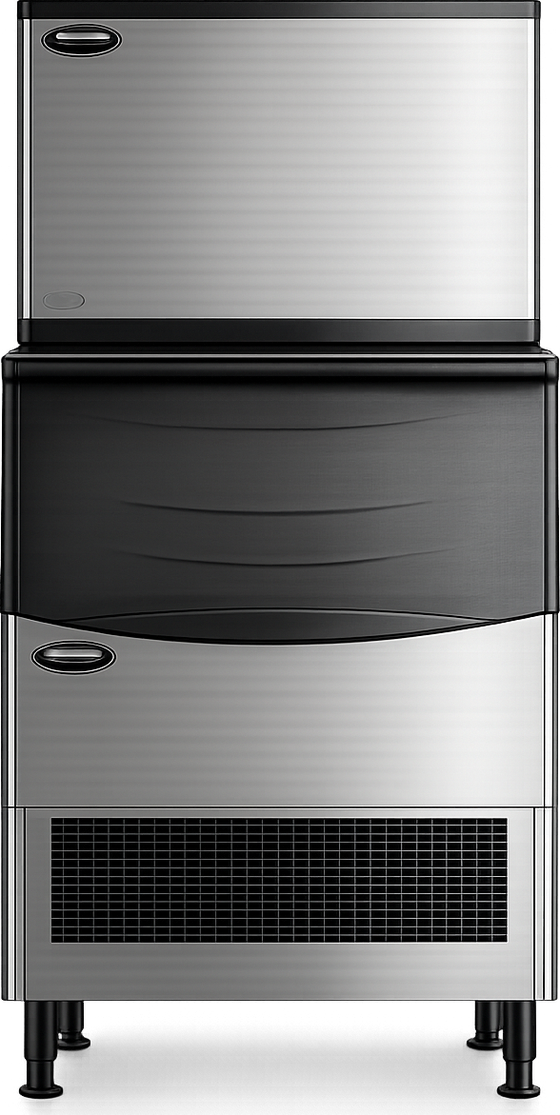
Common ice machine problems we fix in Lakeway
Producing far less ice than it should
Low production is the most common summer call and it is usually not a failed machine. The three big causes are a dirty condenser, a scaled evaporator, and ambient conditions outside what the machine was built for. We measure production against the nameplate at the actual room and water temperature, not the catalogue figure, because a machine rated at 500 pounds a day in a 70 degree room will not make 500 pounds in a 95 degree bar and that is not a fault. Once we know whether the machine is underperforming or just being asked too much, the repair path is clear.
Machine making no ice at all
Complete stoppage points at water supply, the control board, a safety limit, or the sealed system. We check the inlet valve and filter first because a clogged filter is cheap and common, then the float or water level sensor, then the high pressure safety which trips when the condenser cannot reject heat. Only after that do we look at the compressor or the charge, because no-ice is the symptom most often blamed on the expensive parts and least often caused by them.
Cubes that are soft, cloudy, small or hollow
Ice quality tells you about the harvest cycle and the water. Soft or wet cubes usually mean the freeze cycle is being cut short. Hollow or incomplete cubes point at low water flow over the evaporator, which is often scale. Cloudy ice is a water quality issue rather than a mechanical one. For a Lakeway bar that serves cocktails, clear ice matters commercially, and the fix is usually filtration plus a descale rather than anything in the refrigeration circuit.
Scale on the evaporator
The water here is hard, and every freeze cycle leaves minerals behind on the evaporator plate. Scale insulates the plate, so the machine runs longer for less ice, and eventually cubes stop releasing cleanly. This is the single most common underlying cause of the low-production call in Lakeway. A proper descale restores most of the lost capacity, and a correctly specified filter slows the rate at which it comes back. We will tell you realistically how often your machine needs it based on your water, not on a generic schedule.
Machine will not harvest, ice stuck on the plate
A failed harvest leaves a slab of ice frozen to the evaporator and the machine stuck in a loop. The causes are the hot gas valve, the harvest thermostat or sensor, the water distribution, or scale holding the cubes on. This one gets worse quickly because the machine keeps running without producing, so it is worth calling as soon as you see it rather than waiting through a weekend.
Water leaking around or under the machine
Leaks come from the water inlet, the distribution tube, the drain line or the bin drain. On a machine in a bar, a slow bin drain leak is also a hygiene issue because the water pools where nobody looks. We trace the actual source instead of resealing the obvious joint, since the water often travels along the frame before it appears.
Bin not holding ice, or ice melting fast in the bin
A bin is insulated but not refrigerated, so some melt is normal. Excessive melt means a failed door gasket, a bin drain that lets warm air up, or a bin sitting somewhere hot. In an outdoor or patio installation around Lakeway, a bin in afternoon sun will lose ice faster than the machine can replace it, and no repair changes that. Relocating or shading the bin is the real answer and we will say so.
Dirty machine, slime or biofilm
Ice machines are food equipment and they need cleaning and sanitizing on a schedule. Pink or black slime in the bin or on the distribution parts is a health inspection failure waiting to happen, and it also affects taste and production. We clean and sanitize as part of service, and we can set you up with an interval that matches your actual use rather than a generic one.
Sizing, summer, and what the nameplate really means
Every ice machine is rated at specific conditions, typically around 70 degree air and 50 degree water. In a Lakeway bar in July the air at the machine can be 90 or higher and the incoming water is warm, and production drops accordingly, often by a quarter to a third. Operators see a machine that kept up all spring and assume it has broken. Sometimes it has. Often it is doing exactly what it was always going to do under those conditions. We measure first and tell you which it is, because if the machine is healthy and simply undersized for your summer peak, the money is better spent on a larger machine, a second unit or a bin top-up arrangement than on parts.
Water treatment is half the job
Hard water is the background condition for every ice machine in this area. Without filtration, scale builds on the evaporator continuously, and a scaled machine burns electricity to make less ice. Filtration pays for itself in capacity and in machine life, but the filter has to be specified for the water and changed on schedule, and we see plenty of machines with a filter housing that has not been opened in two years. On every ice machine call we check the filter and the scale condition, and we will tell you straight whether your treatment is doing anything.
Seasonal venues and machines that sit idle
Clubs, event venues and seasonal lakeside operations around Lakeway shut machines down for stretches and then bring them back for a busy weekend. A machine that has been sitting needs more than switching on: stagnant water in the sump and lines grows biofilm, and the first ice out of it is not something you want in a drink. If you run seasonally, start the machine several days before you need it, run and discard the first batches, and have it cleaned before the season rather than during it. We would rather do that work in a quiet week than get the call on the afternoon of an event.
Ice machine questions from Lakeway operators
Our machine kept up all spring and now it cannot. Is it broken?
Maybe, and maybe not. Heat and warm incoming water cut production substantially, and summer demand rises at the same time. We measure actual production against what the machine should do at today conditions, then tell you whether you have a fault or a capacity problem.
How often should an ice machine be descaled and sanitized?
It depends on your water and your use. With the water here, most machines need attention more often than the generic recommendation. We will give you an interval based on what we find in your machine rather than a number from a manual.
Our ice is cloudy. Can that be fixed?
Usually yes, and usually with filtration rather than refrigeration work. Cloudiness comes from dissolved solids in the water. For a bar that cares about cocktail presentation it is worth addressing properly.
The machine runs but the ice will not drop off the plate
That is a harvest failure, from the hot gas valve, a sensor, or scale holding the cubes. The machine will keep running and producing nothing, so it is worth calling right away rather than letting it cycle all weekend.
What does ice machine repair cost in Lakeway?
The commercial diagnostic is $149 and it is credited toward the repair when you approve it. Cleaning and descaling are quoted separately and are often the whole fix. You get a written estimate with parts, labor and tax before any work starts.
Book Ice Machine Service in Lakeway
Tell us the brand, the machine type, and roughly how much ice it is making now against what you need. We serve restaurants, bars, clubs, marinas and event venues in Lakeway, Bee Cave, Lago Vista, Leander, Lakeway and the surrounding Hill Country, with same-day service when the schedule allows.
Commercial Ice Machine Repair in Lakeway, TX
-

What we service
- Modular cubers on bins
- Undercounter and self-contained machines
- Nugget and flake ice machines
- Remote condenser systems
- Water-cooled and air-cooled machines
- Bins, dispensers and ice transport systems
- Water filtration and scale treatment
-
Lakeway specifics
- Hard Hill Country water scaling evaporators fast
- Machines in hot bars, patios and storage rooms
- Summer demand that outruns the machine rating
- Marina and dock bars with outdoor installations
- Clubs and venues that need clear ice for cocktails
- Seasonal venues idle for weeks then at full load

Ice Machine Brands We Service in Lakeway
If your brand is not listed, contact us — we likely service it.
Why Homeowners & Businesses Choose TakiDA
-
 Quality WorkWe deliver professional appliance repair with attention to detail, proper diagnostics, and long-lasting results you can rely on.
-
 OEM / High-Quality PartsWe use OEM or high-quality replacement parts to ensure correct operation, reliability, and extended appliance lifespan.
-
 Same-Day / Next-Day ServiceFast response with same-day or next-day service to reduce downtime and get your appliances back in working order quickly.
-
 Clear PricingUpfront estimates with transparent pricing. No hidden fees, no surprises — you know the cost before work begins.
-
 EPA Certified & InsuredEPA Section 608 Universal certified and fully insured for residential and commercial repair, giving you peace of mind and protection.
-
 Warranty on Labor & PartsAll repairs are backed by a warranty on labor and installed parts for added confidence and long-term reliability.
