
Commercial Ice Machine Repair in Round Rock, TX
A machine running all day and still short of ice, cubes clumping in the bin, harvest cycles stretching out or film that comes back days after cleaning — we service commercial ice machines across Round Rock, from Old Town and Main Street to La Frontera and the I-35 corridor. Descale and sanitation included. EPA Section 608 Universal certified and insured. Commercial diagnostic $149, credited toward the repair.
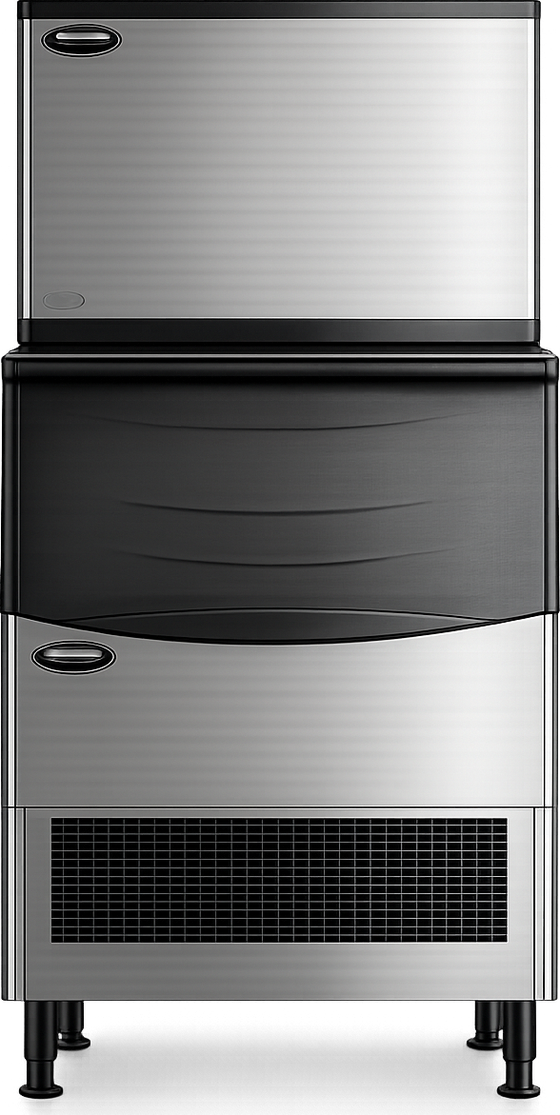
Common Commercial Ice Machine Problems in Round Rock Kitchens
The machine runs almost continuously and still cannot keep up
A machine running all day is not necessarily broken, it may simply be undersized for what the business has become. Ice demand grows quietly: another dining room, a drive through, a bar that got busier, and the machine that was comfortable three years ago is now flat out. Before replacing anything we measure what it is actually producing in a cycle and compare that against the manufacturer's table for the air and water temperatures on the day. That tells us whether you have a machine that has lost capacity, which is a repair, or a machine that never had enough, which is a sizing conversation.
Cubes sticking together into clumps in the bin
Ice that fuses in the bin is usually wet ice coming off the evaporator rather than anything wrong with the bin. That happens when harvest is ending early, so the cubes leave the plate with water still on them, or when the machine is over producing into a bin with poor drainage so meltwater refreezes. A failing bin thermostat that lets the machine keep making ice into a full bin does the same thing. The giveaway is whether the clumps are at the top or throughout, and we will ask you that before we arrive.
Harvest cycles getting longer and longer
Harvest is the part of the cycle where the machine warms the evaporator just enough to release the ice, and when it stretches out, production falls with it. The causes are scale on the evaporator plate holding the cubes on, a hot gas valve that is not fully opening, or a harvest sensor reading the plate late. On Round Rock water, scale is the one we see most, and a proper descale often restores the cycle time completely. We time the cycle before and after so you can see the difference rather than take our word for it.
The bin empties faster than it fills during service
If production is normal but you still run out at peak, the problem is storage and timing rather than the machine. A bin sized for overnight build up cannot carry a lunch rush if staff are filling buckets from it in the morning, and ice taken out early never gets replaced during the busiest hours. We will look at the production rate, the bin capacity and when the ice is actually being drawn, and tell you honestly if the fix is a larger bin or a change in routine rather than a repair.
A new machine that has never hit its rating
Installation decides a great deal on ice machines. Air cooled units need clearance and an air path that is not drawing heat from a nearby fryer or condenser. Water cooled units need the right flow. Remote condensers need correct line lengths. Drains must be vented gravity runs. When a machine has underperformed since the day it went in, we go through those first and give you a written account of what we find, which is useful whether the next conversation is with us or with whoever installed it.
Banging or water hammer in the supply line
The fill valve on an ice machine closes quickly, and in plumbing without an arrestor that produces a bang you can hear through the wall. It is more than a noise: the shock loosens fittings and shortens the life of the valve itself. On a long supply run shared with other equipment it gets worse. An arrestor at the machine is an inexpensive fix, and it is worth doing before the banging turns into a leak behind the machine.
Pink or grey film coming back within days of cleaning
Film that returns quickly means the cleaning is not reaching where it lives. Biofilm establishes in the trough, under the curtain, around the distributor and inside the drain, and a surface wipe leaves most of it in place. It is also a food safety matter, because ice is a food and this is exactly what an inspector looks for. We clean the machine properly, with the right chemical for your evaporator type, and set a realistic interval for your water and your volume rather than quoting the manual.
The machine shuts down on a safety in the middle of service
Modern machines stop themselves rather than run into damage, and the condition that triggered it matters more than the shutdown. High discharge pressure points at the condenser or the air around it. A long freeze cycle points at charge or scale. A water fault points at supply or the float. If the machine is showing a code or a light pattern, note it before anyone cycles the power, because clearing the fault without finding the cause just means it stops again at the next rush.
Equipment We Service in Round Rock
We service modular cube machines on bins, under-counter and self contained units, flake and nugget machines, and remote condenser systems, from Hoshizaki, Manitowoc, Scotsman, Ice-O-Matic, Follett, Cornelius and the Avantco and Atosa units common in smaller kitchens and bars. That includes water systems and filtration, drain and vent work, bin thermostats and ice level controls, harvest systems, and full descale and sanitation service. Sealed system work is done under EPA Section 608 Universal certification and we are insured for commercial premises.
What Commercial Ice Machine Repair Costs in Round Rock
The commercial diagnostic is $149 and it comes off the repair when you approve it. You get a written price covering parts and labor before anything is replaced. Water inlet valves, floats and level sensors, bin thermostats, curtains, seals, distributor tubes, filters, contactors, fan motors and descale service are all modest. Hot gas valves, condensers and compressors are the expensive end. On an older machine that has lost capacity we will measure what it is actually producing and tell you honestly whether the money is better spent on the repair or on a replacement.
Scheduled descaling is the single thing that makes the most difference on our water, and we would rather sell you that than a compressor.
Neighborhoods We Cover in Round Rock
Along the I-35 corridor, around La Frontera and the outlets, and out toward the entertainment and hospitality venues on the east side, the machines are larger, the duty is high and ice demand is seasonal in a way that catches people out: a unit that coped all winter runs out every afternoon in July. Those are the sites where production measurement, filtration and a real descale schedule pay for themselves.
Around Old Town, Main Street and Mays the kitchens and bars are smaller, with under counter and compact modular machines wedged into spaces with very little air, and placement is the first thing we look at there. We also service ice machines in school and institutional kitchens, medical offices and clinics around town, where a machine down is a documented problem rather than an inconvenience. Round Rock is an easy run from Leander, and for an ice machine down in service we will give you a straight answer on timing.
Common Questions About Commercial Ice Machine Repair in Round Rock
My machine runs constantly. Is it failing or too small?
We measure actual production in a cycle and compare it with the manufacturer's table for the conditions that day. That separates a machine that has lost capacity from one that never had enough.
Why is the ice clumping in the bin?
Usually wet ice coming off the plate because harvest is ending early, or a bin control letting the machine overfill. Poor bin drainage does the same thing.
How often does an ice machine need descaling here?
More often than the manual assumes, because of the water. Six months is a minimum and three to four is more realistic on a busy machine. It protects production and the parts that scale eventually destroys.
The film keeps coming back a few days after cleaning. Why?
Because the cleaning is not reaching the trough, the curtain and the drain where biofilm actually lives. A proper service with the right chemical for your evaporator deals with it.
How quickly can you get to Round Rock?
Often the same day. Call (737) 388-3867 with the brand and any fault light pattern it is showing before you cycle the power, and we will give you a straight answer on timing.
Book Commercial Ice Machine Service in Round Rock
Tell us the brand and model, what the machine is doing, and any light pattern or code it is showing before you cycle the power. If you know roughly how much ice you need in a day, that helps too. Call (737) 388-3867 or book online and we will confirm a time for Round Rock.
Commercial Ice Machine Repair in Round Rock, TX
-

Symptoms We Sort Out
- Running non-stop and still short of ice
- Cubes sticking together in the bin
- Harvest taking longer and longer
- Bin emptying faster than it fills
- A new machine never meeting its rating
- Water hammer or banging in the line
- Pink or grey film returning quickly
- Shutting down on a safety during service
-
Equipment We Service
- Modular cube machines on bins
- Under-counter and self-contained units
- Flake and nugget machines
- Remote condenser systems
- Water filtration and drains
- Descale and sanitation service

Ice Machine Brands We Service in Round Rock
If your brand is not listed, contact us — we likely service it.
Why Homeowners & Businesses Choose TakiDA
-
 Quality WorkWe deliver professional appliance repair with attention to detail, proper diagnostics, and long-lasting results you can rely on.
-
 OEM / High-Quality PartsWe use OEM or high-quality replacement parts to ensure correct operation, reliability, and extended appliance lifespan.
-
 Same-Day / Next-Day ServiceFast response with same-day or next-day service to reduce downtime and get your appliances back in working order quickly.
-
 Clear PricingUpfront estimates with transparent pricing. No hidden fees, no surprises — you know the cost before work begins.
-
 EPA Certified & InsuredEPA Section 608 Universal certified and fully insured for residential and commercial repair, giving you peace of mind and protection.
-
 Warranty on Labor & PartsAll repairs are backed by a warranty on labor and installed parts for added confidence and long-term reliability.
