
Commercial Cooktop and Vent Hood Repair in Georgetown, TX
Smoke rolling out the front of the hood, doors hard to open, pilots blowing out, a roof fan gone noisy or a griddle that will not hold a zone — we service commercial cooking lines and ventilation across Georgetown, from the Square and Austin Avenue to the I-35 corridor and Wolf Ranch. Insured for commercial premises. Commercial diagnostic $149, credited toward the repair.
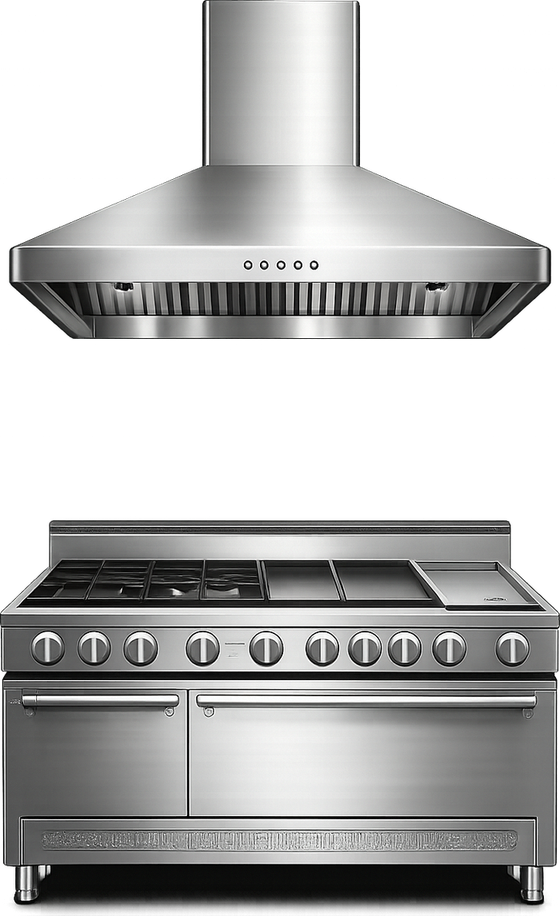
Common Commercial Cooktop and Hood Problems in Georgetown Kitchens
The hood is running but smoke is rolling out the front
What you are describing is a capture and containment failure, and the fan is only one of the things that can cause it. A hood has to extend far enough over the appliances, move enough air for the duty of what is under it, and be given air to replace what it removes. A broiler or a charbroiler asks for considerably more airflow per foot than a range does, so a hood that worked perfectly over the old equipment line can fail the day a heavier appliance moves in underneath it. We look at the fan, the filters and the duct, and we also look at what is under the hood and how far it overhangs, because that is often the real answer.
The kitchen doors are hard to open and the pilots keep blowing out
These two symptoms travel together and they point at the same thing: the kitchen is running at negative pressure because more air is being exhausted than is being brought back in. When the makeup air unit fails, is switched off, or was never commissioned properly, the hood starts pulling its air from wherever it can find it, which means under the doors and down the flues of the gas appliances. That is why pilots go out and burners run yellow. It also means the hood is not moving the air it thinks it is. Fixing a pilot in that situation is treating a symptom.
Grease dripping from the hood or standing in the duct
Grease ends up in three places: the filters, the grease cup, and the duct beyond them. If it is dripping, the filters are either saturated, the wrong type, or missing. Commercial hoods over grease producing appliances need listed baffle filters, and mesh filters are not a substitute. Beyond the filters, cleaning the duct and the roof fan on a proper schedule for your cooking volume is both a fire matter and an insurance matter. We handle the equipment side and will tell you plainly when what you need is a certified hood cleaning rather than a repair.
The roof fan is noisy, or has stopped
Upblast roof fans are belt driven on most installations, and the belt, the bearings and the motor are what fail, usually with plenty of warning in the form of noise or vibration. The hinge kit seizes so nobody can open the fan to service it, and the grease containment cup overflows and runs down the roof. None of these parts are expensive. Leaving them is, because a fan that fails mid service shuts the line down and a grease saturated roof is a fire and a liability problem.
Burners that will not light, or burn yellow and sooty
On a commercial range the burner ports block with boil over and carbon, and the air shutters get knocked out of adjustment during cleaning. The result is a lazy yellow flame that sooties pans, wastes gas and puts carbon monoxide into the kitchen. Orifice sizing matters as well: an appliance converted between natural gas and propane needs the right orifices and the right regulator spring, and we do find equipment that was moved between buildings and never converted properly. These are small parts and adjustment work with a real effect on both safety and cooking.
Griddle plates that will not hold an even temperature
Griddles are controlled zone by zone, with either snap action thermostats or capillary bulbs clamped to the underside of the plate. A bulb that has worked loose from its clip reads the air instead of the steel and the zone overshoots badly. Beyond the controls, a plate that has warped from being shocked with cold water while hot will never cook evenly again, and that is worth knowing before anybody buys thermostats. We check calibration zone by zone against the plate surface.
The hood lights are out or the control panel is dead
Hood control panels live in heat and grease, and switches, contactors and light sockets corrode. On many installations the hood controls are interlocked with the makeup air unit and sometimes with the gas supply, so a failed control panel can stop more than just the fan. The interlock is also what shuts the gas off if the fire suppression system discharges, which is why we trace the wiring properly rather than bypassing anything to get a kitchen running.
Anything involving the fire suppression system
We will say this plainly: the wet chemical suppression system over your line is not ours to service, and it should not be anyone's except a licensed fire protection contractor. We work around it, we will tell you if we see a nozzle out of position, a missing blow off cap or a fusible link that looks past its date, and we will coordinate with your suppression company when a repair needs the system isolated. What we will not do is adjust, bypass or recharge it.
Equipment We Service in Georgetown
We service commercial gas and electric ranges and hot tops, charbroilers, griddles, salamanders and cheesemelters, wok ranges and stock pot ranges, along with Type I and Type II hoods, upblast roof fans, inline fans and makeup air interlocks, from Vulcan, Garland, Imperial, Southbend, Wolf, Star, Montague, Avantco and Atosa on the cooking side and CaptiveAire and similar on the ventilation side. That covers burners and orifices, pilots and ignition, valves, griddle thermostats and bulbs, hood fans, belts, bearings, filters, dampers, lights and control panels. We are insured for commercial premises.
What Commercial Cooktop and Hood Repair Costs in Georgetown
The commercial diagnostic is $149 and it comes off the repair when you approve it. You get a written price for parts and labor before anything is replaced. Burners, orifices, pilots, valves, griddle thermostats, fan belts, bearings, filters, light assemblies and switches are all modest parts. Hood fan motors, full control panels and ductwork are the expensive end, and ducting and certified hood cleaning are specialist jobs we will point you to rather than pretend otherwise.
A good share of cooking line calls come down to burner cleaning, air shutter adjustment or a fan belt, and those are inexpensive fixes that change how the line runs.
Neighborhoods We Cover in Georgetown
Downtown around the Square is where ventilation problems concentrate. Those kitchens are in older buildings, the hoods were often sized for a different equipment line, and makeup air was an afterthought or never fitted. A hood that will not capture in a kitchen like that is usually telling you about air supply rather than about the fan, and we will tell you that honestly rather than selling you a motor. We cover the Square, Austin Avenue, Main Street and the blocks around them.
Along the I-35 corridor and Williams Drive the kitchens are newer, with properly commissioned hoods and makeup air units, and the faults there are more often belts, bearings, thermostats and controls. Around Wolf Ranch and the Rivery the installations are the newest in town and the work is mostly routine. We also service cooking lines in schools, churches and senior living kitchens on the Sun City side. Georgetown is a short run from Leander, and for a line down in service we will give you a straight answer on timing.
Common Questions About Commercial Cooktop and Hood Repair in Georgetown
My hood will not pull smoke. Is the fan bad?
Sometimes, but just as often the kitchen has no air to give it. If your doors are hard to open and pilots blow out, you are running negative and the makeup air side is where to look first.
Do you clean hoods and ducts?
Certified hood and duct cleaning is a specialist trade and we will point you to it rather than do it badly. We service the equipment: fans, belts, bearings, filters, dampers, lights and controls.
Can you service our fire suppression system?
No, and nobody should except a licensed fire protection contractor. We work around it, flag anything that looks wrong and coordinate with your suppression company when a repair needs the system isolated.
Why is my burner flame yellow?
Usually blocked burner ports or an air shutter knocked out of adjustment, sometimes the wrong orifices after a gas conversion, and sometimes a kitchen running negative. All of them are worth sorting out, because incomplete combustion is a carbon monoxide question.
How quickly can you get to Georgetown?
Often the same day. Call (737) 388-3867, tell us what is on the line and what it is doing, and we will give you a straight answer on timing.
Book Commercial Cooking Line Service in Georgetown
Tell us what is on the line, what it is doing, and whether the ventilation side is involved — smoke not capturing, doors hard to open, a noisy roof fan. If pilots are blowing out, mention it, because that points somewhere specific. Call (737) 388-3867 or book online and we will confirm a time for Georgetown.
Commercial Cooktop and Vent Hood Repair in Georgetown, TX
-

Symptoms We Sort Out
- Smoke rolling out the front of the hood
- Doors hard to open, pilots blowing out
- Grease dripping from the hood
- Roof fan noisy or stopped
- Burners yellow and sooty
- Griddle zones not holding
- Hood lights or controls dead
- Burners that will not light
-
Equipment We Service
- Commercial ranges and hot tops
- Charbroilers and griddles
- Salamanders and cheesemelters
- Type I and Type II hoods
- Upblast roof and inline fans
- Makeup air interlocks and controls

Cookline and Hood Brands We Service in Georgetown
If your brand is not listed, contact us — we likely service it.
Why Homeowners & Businesses Choose TakiDA
-
 Quality WorkWe deliver professional appliance repair with attention to detail, proper diagnostics, and long-lasting results you can rely on.
-
 OEM / High-Quality PartsWe use OEM or high-quality replacement parts to ensure correct operation, reliability, and extended appliance lifespan.
-
 Same-Day / Next-Day ServiceFast response with same-day or next-day service to reduce downtime and get your appliances back in working order quickly.
-
 Clear PricingUpfront estimates with transparent pricing. No hidden fees, no surprises — you know the cost before work begins.
-
 EPA Certified & InsuredEPA Section 608 Universal certified and fully insured for residential and commercial repair, giving you peace of mind and protection.
-
 Warranty on Labor & PartsAll repairs are backed by a warranty on labor and installed parts for added confidence and long-term reliability.
