
Commercial Oven Repair in Georgetown, TX
An oven that will not hold at peak, uneven bakes across the sheet, a blower gone noisy or a combi fighting scale — we service convection, combi, deck and conveyor ovens across Georgetown, from the Square and Austin Avenue to the I-35 corridor and Wolf Ranch. Insured for commercial premises. Commercial diagnostic $149, credited toward the repair.
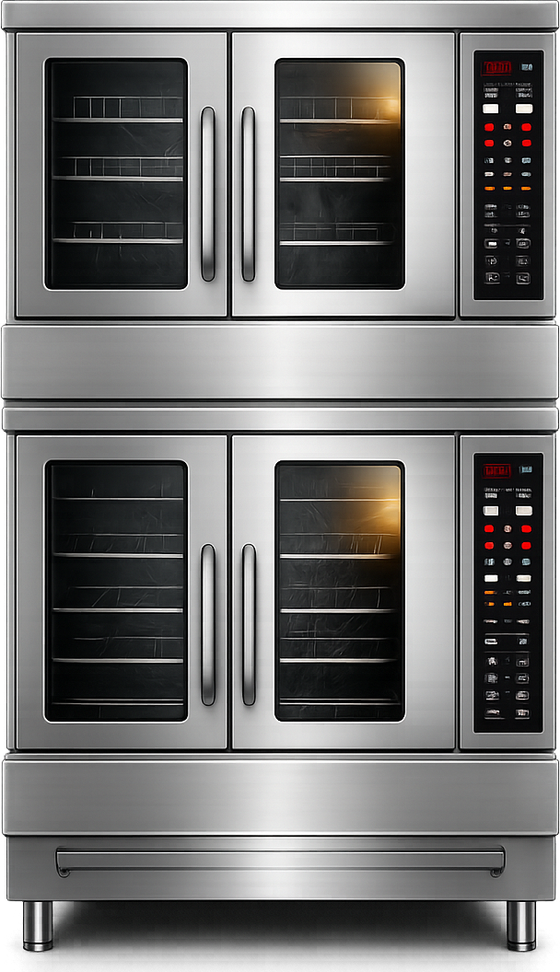
Common Commercial Oven Problems in Georgetown Kitchens
The oven will not reach temperature, or takes far too long
The first thing worth knowing is whether the oven is short of heat or short of gas. In a kitchen where the fryer, the range and the oven can all call at once, manifold pressure sags when everything fires together, and an oven that performs fine first thing in the morning struggles at eleven. We measure gas pressure at the appliance under full load rather than at rest, and that single reading settles a lot of arguments. On electric ovens we check all legs under load, because a three element oven running on two heats slowly and still looks alive.
Product bakes unevenly across the sheet
On a convection oven, even bake comes from the blower, and most commercial blowers reverse direction between cycles for exactly this reason. When the reversing function stops working, or the fan slows because of bearing wear or a slipping belt, you get one side or one corner consistently darker, and the kitchen starts rotating pans to compensate. The other causes are a door that no longer seals evenly, and air baffles or fingers that have been removed during cleaning and put back in the wrong place. It is worth checking the simple things before concluding the oven is tired.
The thermostat is reading well away from the real temperature
Commercial oven thermostats drift, and most of them have a calibration adjustment for that reason. A drift of thirty or forty degrees is common on an oven that has been in service for years, and it shows up as product that is dark on the outside and raw inside, or bakes that suddenly need a different time than the recipe says. We check the cavity against a calibrated thermometer at the shelf position you actually use, then adjust or replace, which is a small job with a large effect on what comes out.
The blower is noisy, or has stopped turning
Convection blower motors live in heat, and their bearings are what give out. The usual progression is a hum, then a rattle, then a motor that stops or trips its overload, and the oven becomes a very poor conventional oven in the meantime. On belt driven designs the belt and idler go first and are cheap. Motors are a bigger part but a straightforward replacement, and they are worth doing because running a convection oven without airflow heats unevenly and wastes gas.
Doors out of alignment, heat escaping at the seal
Commercial oven doors take a hard life, and a hinge that has dropped or a rope seal that has gone hard will let a surprising amount of heat out. The signs are a hot spot you can feel at the top or one side of the door, bakes that have slowed without any fault code, and a kitchen that is hotter than it should be. Hinges, springs, latches and seals are all serviceable, and they are among the cheapest ways to get performance back on an older oven.
Combi ovens: steam faults, scale and drain problems
A combi oven asks more of the water than any other appliance in the kitchen. Steam generators scale quickly on Georgetown water, and scale shows up as weak steam, longer cycles, error codes on the boiler circuit and eventually a failed level probe or element. Most manufacturers specify a water quality range and a descale schedule, and the ones that get both are the ones still working in ten years. The other common fault is the drain and condensate path, which has to stay clear and vented or the cabinet ends up full of steam it cannot expel.
Conveyor ovens: inconsistent bake end to end
On a conveyor oven the three variables are belt speed, temperature and the air finger arrangement inside the chamber, and the last one is the one that gets disturbed. Fingers come out for cleaning and go back in a different order, and from then on the bake is wrong in a way no amount of adjusting the dial will fix. After that, the drive motor and speed control, the blower, and the thermostat are the usual faults. We check the finger layout against the manufacturer's chart for what you are baking before changing anything else.
Deck ovens that will not hold under load
Deck ovens store heat in the stone, and that is both their strength and the way they fail. A deck that recovers slowly is usually short of burner input, has burner tiles or ports fouled, or has lost heat through a door seal or a cracked deck. They are also unforgiving of gas pressure problems because the recovery demand is high. The fix is normally burner service and seal work rather than anything dramatic, but it does need measuring rather than guessing.
Equipment We Service in Georgetown
We service gas and electric convection ovens, full and half size, double stacks, combi ovens, deck and pizza ovens, conveyor ovens, cook and hold cabinets and commercial ranges with oven bases, from Vulcan, Blodgett, Garland, Southbend, Imperial, Bakers Pride, Middleby Marshall, Rational, Henny Penny, Montague and the Avantco and Atosa equipment common in smaller kitchens. That covers thermostats and probes, gas valves, pilots and ignition systems, burners and orifices, elements and contactors, blower motors and belts, door hinges and seals, and the steam and water side on combi units. We are insured for commercial premises.
What Commercial Oven Repair Costs in Georgetown
The commercial diagnostic is $149 and it comes off the repair when you approve it. You get a written price covering parts and labor before anything is replaced. Thermostats, probes, igniters, thermocouples, door seals, hinges, belts, contactors and calibration are modest. Blower motors, gas valves, control boards, combi boiler components and deck work are the expensive end. Where an older oven needs several of those together, we will put the total next to a replacement so you can make the call with real numbers.
A good number of oven calls end at calibration or a door seal, and that is a cheap fix that changes what the kitchen puts out.
Neighborhoods We Cover in Georgetown
Downtown around the Square is bakeries, pizza, breakfast and dinner service in buildings that were not built as restaurants. Gas supply shared across a tight equipment line is the recurring theme there, and an oven that underperforms at peak is often telling you about the manifold rather than about itself. We cover the Square, Austin Avenue, Main Street and the blocks around them.
Along the I-35 corridor and Williams Drive the kitchens are higher volume, with conveyor and combi equipment that runs all day, and there the faults cluster around blowers, controls and water quality. Around Wolf Ranch and the Rivery the installations are newer and better supplied, and the work is more often calibration, seals and sensors. We also service ovens in schools, churches and senior living kitchens on the Sun City side, where a double stack going down before a meal service is an urgent matter. Georgetown is a short run from Leander, and we will tell you straight how soon we can be there.
Common Questions About Commercial Oven Repair in Georgetown
My oven is fine in the morning and struggles at peak. Why?
Usually gas pressure. When several appliances fire together the manifold pressure sags, and the oven is the one that shows it first. It is measured at the appliance under full load, not at rest.
One side of every sheet bakes darker. Is the oven finished?
Almost never. On a convection oven that is normally the reversing function, the blower speed, or baffles and fingers that went back in the wrong place after cleaning. All of those are fixable.
How often should a combi oven be descaled?
Follow the manufacturer's schedule, and on Georgetown water assume you are at the frequent end of it. Scale in the steam generator is the single biggest cause of combi failures and it is entirely preventable.
Can you calibrate rather than replace the thermostat?
Often yes. Most commercial thermostats have a calibration adjustment, and a drift of thirty or forty degrees can usually be corrected rather than replaced. We check against a calibrated thermometer at the shelf you actually use.
How quickly can you get to Georgetown?
Often the same day. Call (737) 388-3867 with the make, model and what the oven is doing, and we will give you a straight answer on timing.
Book Commercial Oven Service in Georgetown
Tell us the make and model, whether it is gas or electric, and what it is doing — slow to heat, uneven bake, noisy blower, weak steam or an error code. If it only misbehaves at peak, say so, because that points somewhere specific. Call (737) 388-3867 or book online and we will confirm a time for Georgetown.
Commercial Oven Repair in Georgetown, TX
-

Symptoms We Sort Out
- Will not hold temperature at peak
- Uneven bake across the sheet
- Thermostat reading well off
- Blower noisy or stopped
- Heat escaping at the door seal
- Weak steam on a combi
- Inconsistent bake on a conveyor
- Deck oven slow to recover
-
Equipment We Service
- Gas and electric convection ovens
- Combi ovens and steam generators
- Deck and pizza ovens
- Conveyor ovens
- Cook and hold cabinets
- Ranges with oven bases

Commercial Oven Brands We Service in Georgetown
If your brand is not listed, contact us — we likely service it.
Why Homeowners & Businesses Choose TakiDA
-
 Quality WorkWe deliver professional appliance repair with attention to detail, proper diagnostics, and long-lasting results you can rely on.
-
 OEM / High-Quality PartsWe use OEM or high-quality replacement parts to ensure correct operation, reliability, and extended appliance lifespan.
-
 Same-Day / Next-Day ServiceFast response with same-day or next-day service to reduce downtime and get your appliances back in working order quickly.
-
 Clear PricingUpfront estimates with transparent pricing. No hidden fees, no surprises — you know the cost before work begins.
-
 EPA Certified & InsuredEPA Section 608 Universal certified and fully insured for residential and commercial repair, giving you peace of mind and protection.
-
 Warranty on Labor & PartsAll repairs are backed by a warranty on labor and installed parts for added confidence and long-term reliability.
