
Commercial Cooktop and Vent Hood Repair in Dripping Springs, TX
A range burner that will not light before service, a griddle with a cold spot down the middle, a char broiler burning uneven, or an exhaust hood that no longer clears smoke off the line. TakiDA services commercial cooktops, ranges, griddles, char broilers and the hood systems above them for restaurants, taprooms, food trailers and event venues across Dripping Springs and the surrounding Hill Country, including propane units out past the city gas lines. Insured and certified. Commercial diagnostic $149, applied toward the repair.
Call (737) 388-3867 | Request a visit
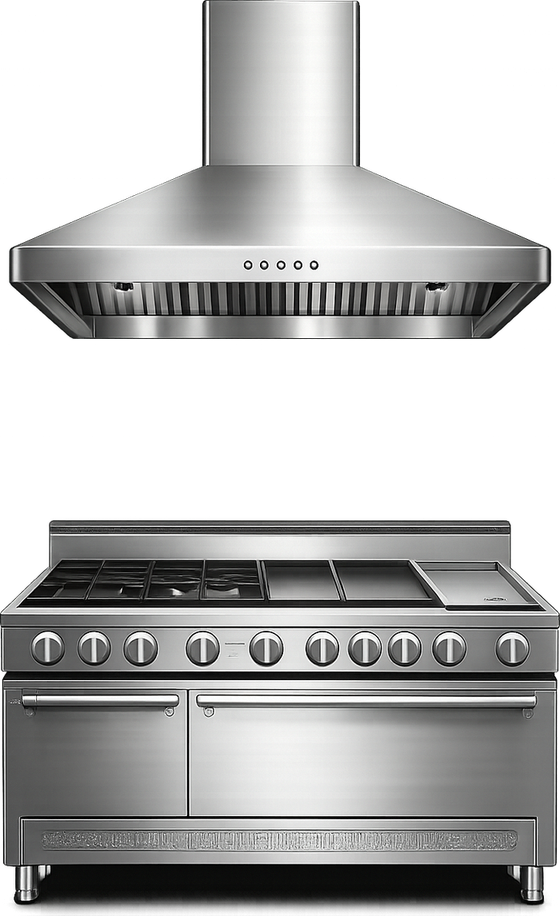
Cooktop and Hood Symptoms We Sort Out
A burner will not light or keeps going out
Common causes. A dirty pilot or burner port, a weak thermopile that cannot hold the safety valve, a failed spark module, a hood pulling the pilot flame off its sensor, or on propane an orifice and regulator still set for natural gas.
What we do. We clean and gauge the ports, measure thermopile output hot, verify the regulator and orifices match the fuel, and check hood draft at the pilot. On propane properties that fuel check is routine and it explains a lot of chronic burner complaints.
Flames are yellow, lazy or sooting the pans
Common causes. Wrong orifices for the fuel, air shutters knocked out of adjustment during cleaning, grease-blocked ports, or a hood that moves too little air for the burners to breathe.
What we do. We set the air so the inner cone is sharp and blue, clear the ports, and measure hood draw. Yellow flames in a commercial kitchen are incomplete combustion, which is a carbon monoxide question and not only an efficiency one.
A griddle has cold spots or will not hold temperature
Common causes. One burner section out, a thermostat bulb that has lost contact with the plate, a snap-action control that has failed, a plate warped from thermal shock, or on electric units a failed element.
What we do. We map the plate temperature across its surface with an infrared thermometer, test each thermostat and element, and reseat the sensing bulb. A griddle that is genuinely even but reads wrong is a thermostat job, and one that is uneven across its surface is a burner or plate issue.
A char broiler burns unevenly
Common causes. Burners blocked with carbon, radiants broken or misplaced, low manifold pressure, or orifices eroded after years of service.
What we do. We clean the burners, replace cracked radiants, and measure manifold pressure under load with all burners firing. Broilers are mostly a cleaning and pressure problem, and they come back to spec more often than people expect.
The exhaust hood roars but clears nothing
Common causes. A blower wheel loaded with grease, filters never properly degreased, a belt slipping on a belt-driven fan, a damper stuck shut, or makeup air starving the hood so it cannot pull.
What we do. We measure draw at the hood face, clean the wheel and filters, check belt and bearings, and look at makeup air. A hood that sounds strong and clears nothing is almost always a blocked path or a makeup air problem rather than a dead motor.
The hood fan will not start or trips its breaker
Common causes. A seized bearing, a motor drawing over its rating, a failed starter or contactor, a bad switch, or moisture in a rooftop junction box.
What we do. We measure motor current against the nameplate with the clamp meter, test the contactor and switch, and inspect the rooftop wiring. We will not simply reset a breaker on a motor that is pulling over its rating.
Grease dripping from the hood onto the line
Common causes. Filters missing, installed backwards or saturated, a grease cup overflowing, or a hood that has gone too long between cleanings.
What we do. We replace or correct the filters and service the collection system, and tell you what cleaning interval your volume actually needs. Grease dripping onto an open flame is a fire risk, and it is the kind of thing an inspector notices immediately.
A range oven under the cooktop will not heat
Common causes. A separate igniter and safety valve from the cooktop burners, a failed thermostat, or a high-limit that has opened.
What we do. We test the oven circuit on its own, because cooktop burners and the oven below them are independent systems. Burners working tells you nothing about the oven, and we check it that way around.
Cooking and Ventilation Equipment We Work On
Commercial ranges and range ovens, open-burner and hot-top cooktops, flat-top griddles, char broilers and salamanders, stock pot ranges, countertop units in food trailers, and the ventilation above them: exhaust hoods, grease filters, upblast rooftop fans, belt and direct-drive blowers and makeup air units. We service Vulcan, Garland, Imperial, Southbend, Wolf, Star, Captive Aire and Accurex equipment on natural gas, propane and electric.
What a Cooktop or Hood Repair Costs
The commercial diagnostic is $149 and it is credited toward the repair when you approve it. Pilots, thermopiles, orifices, radiants, filters, belts, switches and a proper blower cleaning are the moderate end, and they resolve most of these calls. Gas valves, thermostats, griddle plates and hood fan motors are the expensive end, and on an aging line we will give you the repair number against a replacement. You get a written estimate with parts, labor and tax before any work starts, and it stays good for 30 days. Labor carries a 3 month warranty and installed parts carry one year against manufacturer defects.
Where We Work in Dripping Springs
We cover Dripping Springs and the businesses around it, from the restaurants and taprooms along Mercer Street to the wineries, distilleries and event venues out along Ranch Road 12 and Highway 290 West, plus the retail along the 290 corridor. Nearby Driftwood, Henly and Wimberley are inside our normal route, and Bee Cave, Lakeway and Austin are a short run from here.
Frequently Asked Questions
Do you do hood cleaning as well as repair?
We service and clean the blower, filters and mechanical path as part of a repair, and we measure the draw so you know the hood actually works afterward. A full certified grease-duct cleaning to the fire code schedule is a separate specialty, and we will tell you plainly when that is what you need.
Our kitchen gets smoky even with the hood running. Why?
Usually makeup air. A hood can only exhaust what the building lets back in, and a tightly sealed kitchen will starve it. We measure draw and look at the makeup air path rather than just blaming the fan.
Our building runs on propane. Does that change anything?
Yes. Orifices, regulator setting and manifold pressure all differ, and a unit converted incorrectly will soot and underperform permanently. We verify it on every propane call out here.
How fast can you come out?
Commercial calls take priority and same-day is usually possible. Anything involving a gas smell or grease dripping onto a flame is treated as urgent.
Book Cooktop or Hood Service in Dripping Springs
Tell us the equipment, the brand, whether it runs on natural gas, propane or electric, and what it is doing, and we will arrive with the parts most likely to get you back on the line.
Commercial Cooktop and Hood Repair in Dripping Springs, TX
-

What Brings Us Out to a Cookline
- Smoke hanging in the kitchen with the hood on
- Burner flames lifting away from the ports
- Pilot blowing out when the fans start
- Weak pull at the back of the hood
- Hood switching itself off mid service
- Gas equipment going out under the hood
- Charbroiler radiants cracked through
-
Cookline Equipment We Cover
- Gas and electric range tops
- Charbroilers and griddles
- Salamanders and cheese melters
- Wall and island exhaust hoods
- Makeup air diagnostics
- Vulcan, Garland, Imperial, Southbend
- Star, Montague, CaptiveAire, Greenheck

Cookline and Hood Brands We Service in Dripping Springs
If your brand is not listed, contact us — we likely service it.
Why Homeowners & Businesses Choose TakiDA
-
 Quality WorkWe deliver professional appliance repair with attention to detail, proper diagnostics, and long-lasting results you can rely on.
-
 OEM / High-Quality PartsWe use OEM or high-quality replacement parts to ensure correct operation, reliability, and extended appliance lifespan.
-
 Same-Day / Next-Day ServiceFast response with same-day or next-day service to reduce downtime and get your appliances back in working order quickly.
-
 Clear PricingUpfront estimates with transparent pricing. No hidden fees, no surprises — you know the cost before work begins.
-
 EPA Certified & InsuredEPA Section 608 Universal certified and fully insured for residential and commercial repair, giving you peace of mind and protection.
-
 Warranty on Labor & PartsAll repairs are backed by a warranty on labor and installed parts for added confidence and long-term reliability.
