
Commercial Cooktop and Vent Hood Repair in Cedar Park, TX
Smoke staying in the kitchen, flames lifting off the burners, pilots blowing out when the fans start, or a hood that will not run. We repair commercial range tops and the exhaust hoods above them for restaurants, schools and church kitchens in Cedar Park. The $149 commercial diagnostic is credited toward the repair.
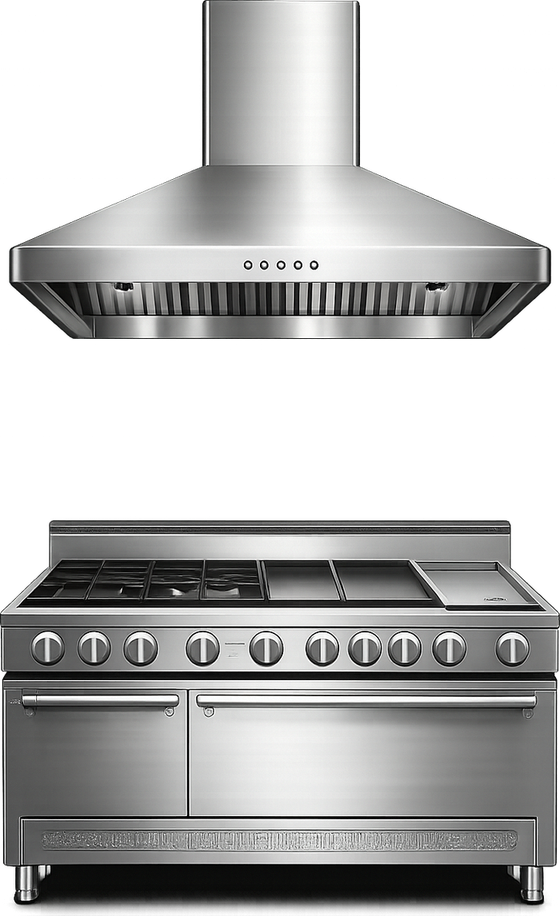
Common Cookline and Hood Problems in Cedar Park Kitchens
The hood is on but the kitchen is still full of smoke
Capture failure comes down to three things and they are quick to separate: grease-loaded baffle filters, a slipping or stretched fan belt, and makeup air. The first two are visible and cheap. The third is the one people miss — if the building cannot bring in as much air as the hood is throwing out, the hood cannot move its rated volume whatever the fan is doing. NFPA 96 requires makeup air sized so the building does not go more than 0.02 inches water column negative, and a kitchen past that will not capture.
Flames lift off the burner or roll out at the front
A flame that lifts away from the port is getting too much air or too much pressure; one that rolls out the front is usually starved of combustion air or fighting a draught. Both are worth stopping for rather than working around. We check manifold pressure at the tap against the rating plate, look at the air shutter settings, and consider what the hood and the makeup air are doing to the room, because a cookline can be set perfectly and still misbehave in a kitchen running too negative.
Charbroiler radiants are cracked or sitting unevenly
Radiants, flame tamers and grates are consumables that quietly change how a broiler cooks. A cracked radiant creates a hot line down the grill and a cold patch beside it, and the cook compensates by turning everything up, which shortens the life of the rest. These are inexpensive parts and replacing them often fixes a "this broiler is dying" complaint completely.
The fan runs but barely pulls at the back of the hood
Uneven pull along a long hood usually means the filters are not sized or seated evenly, or the duct is partly restricted beyond the point where the hood changes direction. NFPA 96 sets a minimum duct velocity of 500 feet per minute specifically so grease does not settle on the way out, and a duct carrying deposits is both a capture problem and a fire risk. Where that is the finding, the work belongs with a certified exhaust cleaning contractor and we will say so.
The hood turns itself off, or will not start
Modern hoods are interlocked. On many installations the fan is tied to the fire suppression system and to the makeup air unit, and a signal from any of them can shut the hood down or stop it starting. Before anyone condemns a motor, the interlocks get traced. Anything inside the suppression system itself is for a licensed fire protection contractor, and we hand that over rather than opening it.
Gas appliances go out when the hood is switched on
This is a negative pressure symptom and it should be treated seriously. When exhaust outruns makeup air, the building pulls replacement air down whatever opening it can find, including appliance flues, and that can bring combustion products into the kitchen. The quick tell is doors that become hard to open when the hood runs. We check the makeup air unit, its interlock and whether anything has been switched off or belt-stripped.
The pilot on a range or broiler will not stay lit
On standing pilot equipment the pilot has to hold enough millivolts on the safety magnet to keep the valve open, and a pilot drifting out of the thermocouple flame or an orifice fouled with grease drops that signal. We measure the output under load instead of judging the flame by eye, because a weak thermocouple and a weak pilot look identical from across the line.
Grease is collecting on the cookline below the hood
Filters only work installed the right way round and seated so grease drains into the collection track. A filter put back the wrong way after a wash, a bent baffle, or a missing end cap sends grease down the face of the hood onto the equipment below. NFPA 96 requires filters that are broken, distorted or missing components to be replaced rather than kept in service, and requires that the system never run with filters taken out at all.
Equipment We Service in Cedar Park
Commercial gas and electric range tops, hot tops and French tops, charbroilers and griddles on the same line, countertop and heavy-duty ranges, and the exhaust hood above them — canopy and low-proximity, wall-mount and island, direct-drive and belt-driven fans, and the makeup air unit tied to the hood.
Brands we service in Cedar Park: Vulcan, Garland, Southbend, Imperial, Montague, Star, Atosa, Cooking Performance Group, American Range, Captive-Aire and Greenheck.
What we do not do, and will say on the phone: certified NFPA 96 exhaust cleaning to bare metal, and anything inside the fire suppression system. Both are licensed specialist work.
What Commercial Cookline and Hood Repair Costs in Cedar Park
The commercial diagnostic is $149, credited toward the repair when you approve it. After the diagnosis you get a written estimate covering parts and labor, and nothing is replaced before you approve it. Valves, thermocouples, radiants, belts, bearings, switches and controls are modest. Roof work and makeup air units take longer, and we will tell you which one you are looking at before we start.
Gas work finishes with a leak check on anything we opened, and we leave the manifold pressure reading with you in writing.
Neighborhoods We Cover in Cedar Park
Cooklines and hoods take us to the busiest kitchens in Cedar Park — the restaurants and bars along Bell Boulevard, the barbecue and taqueria space on Whitestone, the newer build-outs near Lakeline, and the school and church kitchens around Brushy Creek. Roof access matters on this work, and being twenty minutes away in Leander means a second trip to the roof is not a second week.
Common Questions About Cookline and Hood Repair in Cedar Park
Do you clean kitchen exhaust hoods?
Not the full NFPA 96 cleaning — that has to be done to bare metal by a trained and certified crew covering the hood, the duct run and the rooftop fan. We repair the equipment: fans, motors, belts, controls, lights, dampers and the cooking appliances underneath.
How do I know if my kitchen is running too negative?
The doors tell you. If the back door is hard to open when the hood is running, or pilots blow out when the fans start, the building is short of makeup air. It is worth fixing properly rather than propping a door open.
Our range was converted to propane years ago. Does it matter?
Yes, and it is one of the first things we check. Orifices and regulator settings are specific to the gas type, and a conversion done partly or reversed when equipment moved shows up as yellow flames, soot and burners that never reach temperature.
Can you work on the rooftop fan too?
Yes for repair — belts, bearings, motors, wiring and controls. If what the fan needs is grease removal, we will tell you that rather than charging you to replace a wheel that loads up again in a month.
How fast can you get to Cedar Park?
Usually same-day. Call (737) 388-3867 and say whether you are down completely or running limited — a cookline that cannot serve gets priority over a hood light.
Book Cookline or Hood Service in Cedar Park
Tell us whether the problem is at the cookline or the hood, whether the equipment is natural gas or propane, and what you are seeing. That decides what goes on the van.
Commercial Cooktop and Hood Repair in Cedar Park, TX
-

What Brings Us Out to a Cookline
- Smoke hanging in the kitchen with the hood on
- Burner flames lifting away from the ports
- Pilot blowing out when the fans start
- Weak pull at the back of the hood
- Hood switching itself off mid service
- Gas equipment going out under the hood
- Charbroiler radiants cracked through
-
Cookline Equipment We Cover
- Gas and electric range tops
- Charbroilers and griddles
- Salamanders and cheese melters
- Wall and island exhaust hoods
- Makeup air diagnostics
- Vulcan, Garland, Imperial, Southbend
- Star, Montague, CaptiveAire, Greenheck

Cookline and Hood Brands We Service in Cedar Park
If your brand is not listed, contact us — we likely service it.
Why Homeowners & Businesses Choose TakiDA
-
 Quality WorkWe deliver professional appliance repair with attention to detail, proper diagnostics, and long-lasting results you can rely on.
-
 OEM / High-Quality PartsWe use OEM or high-quality replacement parts to ensure correct operation, reliability, and extended appliance lifespan.
-
 Same-Day / Next-Day ServiceFast response with same-day or next-day service to reduce downtime and get your appliances back in working order quickly.
-
 Clear PricingUpfront estimates with transparent pricing. No hidden fees, no surprises — you know the cost before work begins.
-
 EPA Certified & InsuredEPA Section 608 Universal certified and fully insured for residential and commercial repair, giving you peace of mind and protection.
-
 Warranty on Labor & PartsAll repairs are backed by a warranty on labor and installed parts for added confidence and long-term reliability.
