
Wine Cooler Repair in Lakeway, TX
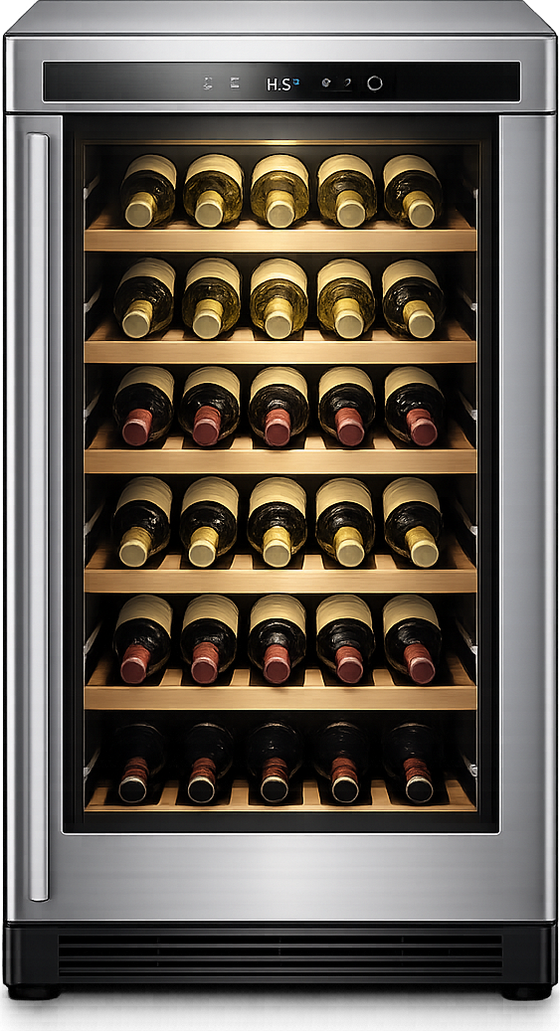
Wine storage in Lakeway runs the whole range. Some houses have a single undercounter cooler in the bar. Others have a full-height column in the kitchen behind a cabinet panel, or a built-out wine room with a dedicated cooling unit holding a few hundred bottles. The stakes differ accordingly, and so does the repair. What they have in common is that failure is quiet: nothing beeps, nothing leaks, the temperature just drifts up over a few days. In a house that sits empty between visits, that is enough time to cook a collection. We service undercounter and column wine coolers, dual zone units, and wine room cooling systems, and we treat a loaded cooler as a priority call.
Common wine cooler problems we fix in Lakeway
Cooler will not hold its set temperature
Drifting warm is the most common call and the most urgent one. The causes split into three groups: the unit cannot move heat out, the unit is losing cold, or the control is misreading. We start with airflow at the condenser, because an undercounter cooler built into an island with no clearance will slowly bake itself, and the dust and pet hair on that coil is invisible behind a toe kick. Then we check the door seal and the hinge alignment, then the thermistor and the control. We measure rather than assume, because a cooler that is five degrees warm for an airflow reason and one that is five degrees warm for a sealed-system reason look identical from the front.
Running constantly and never reaching set point
A compressor that never cycles off is working against something. Usually that is a dirty or blocked condenser, a failing condenser fan, or a door seal letting warm air in. Less often it is a refrigerant charge problem or a restriction in the sealed system, which is a different class of repair and needs certified handling. We separate those on site: a system with an airflow problem and a system that is low on charge behave differently when you watch the evaporator, and that difference is the test rather than a guess.
Freezing bottles at the back
Too cold is as damaging as too warm, and it is usually the thermistor or the control rather than the compressor. A sensor that reads a few degrees high makes the unit run longer than it should until bottles at the back of the shelf freeze and push their corks. On dual zone units a misplaced or failed sensor in one zone can also drag the other zone down. This one is worth calling about promptly because frozen wine is ruined wine.
One zone works and the other does not
Dual zone coolers use a damper, a second evaporator, or a second small compressor circuit depending on the design. When one zone holds and the other does not, the fault is specific to that zone: its damper motor, its fan, its sensor or its evaporator. We identify the design before diagnosing, because the same symptom on a damper-based unit and a dual-circuit unit leads to two completely different repairs.
Loud buzzing, rattling or a fan that will not stop
Noise matters more in a wine cooler than in most appliances, because vibration is bad for wine held long term. A buzz that comes and goes is often the condenser fan blade touching a shroud, or a compressor mount that has aged and hardened. A constant hum under the cabinet can be the fan bearing. These are small repairs and worth doing, both for the noise and because a fan running out of balance will eventually seize and take the cooling with it.
Water in the bottom or condensation on the glass
Water in the floor of the cabinet usually means the drain for the defrost water is blocked, or the unit is working hard enough in a humid room to condense more than it can handle. Condensation on the inside of the glass points at a door seal, and on the outside of the glass at a room that is warm and humid relative to the cabinet. Glass doors on wine coolers are usually dual pane with a coating, and a failed seal between panes shows up as permanent haze that cleaning will not touch.
Display dead or showing an error
A blank panel with the compressor still running is the display or the user interface board. A blank panel with nothing running at all is power, the main control, or a thermal fuse. Error codes on wine coolers are usually sensor faults, and a sensor is an inexpensive part, which is why we always read the code before concluding anything about the compressor.
Wine room cooling unit not keeping up
A dedicated wine room unit is a different machine from a cabinet cooler. These are ducted, split or through-wall systems, and when a room drifts warm the usual causes are a dirty coil, a condensate drain backed up, a failed fan on the condensing side, or a room that was never properly insulated and sealed in the first place. We check the equipment and the room, because a unit that is sized correctly and running correctly will still lose to an unsealed door or an uninsulated exterior wall.
Why wine cooler failures go unnoticed in Lakeway
Plenty of Lakeway houses are second homes or are empty for stretches while the owners travel. A refrigerator failure announces itself: milk spoils, the ice melts, somebody notices within a day. A wine cooler failure does not. The unit keeps the light on and the fan running while the temperature climbs five degrees a day, and the wine takes the damage silently. By the time anyone opens the door, bottles have been sitting warm for a week or more. If your house is empty regularly and you hold wine worth protecting, a simple wireless temperature sensor that alerts your phone is the cheapest insurance there is. We mention it on every wine cooler call because we have seen what the alternative costs.
Built-in units and clearance
Undercounter wine coolers are built for either freestanding or built-in installation and the two are not interchangeable. A freestanding unit vents from the back and needs air space around it. A built-in unit vents through the toe kick at the front and can be enclosed. We regularly find freestanding units installed flush into island cabinetry in Lakeway kitchens, which traps the heat the unit is trying to reject. Those coolers run hot, work constantly, and fail years early. If your unit has always struggled to hold temperature from the day it was installed, that is often the reason, and it is worth knowing before you spend money on parts.
What we handle and what needs a specialist
We repair the parts of a wine cooler that fail most: fans, sensors, controls, door seals, hinges, dampers and drains. We are EPA Section 608 certified, so we can work on sealed systems where that is the right answer. For a built-out wine room with a ducted or split cooling system, we will diagnose the unit and the room and tell you honestly whether it is an appliance repair or an HVAC job, and if it is the latter we will say so rather than taking it apart. The same applies to a cooler where the compressor has failed in a discontinued built-in model: sometimes the right advice is replacement planning rather than a repair, and you should hear that from us before you pay for parts.
Wine cooler questions from Lakeway customers
My cooler is five degrees warm. Is that urgent?
It depends on what is in it and for how long. Sustained warmth ages wine faster and the damage is not reversible. If the unit holds bottles you care about, treat it as urgent, and in the meantime moving the most valuable bottles somewhere cool is worth doing.
Bottles at the back are freezing. What causes that?
Usually a temperature sensor reading high, which makes the unit run longer than it should. It is a comparatively cheap fix, but call promptly, because frozen wine is ruined and a pushed cork lets air in permanently.
Our cooler has never held temperature since it was installed
Check whether it is a freestanding unit built into cabinetry. Freestanding coolers vent out the back and cannot be enclosed. If that is what happened, no part replacement will fix it; the installation has to change or the unit has to be swapped for a built-in model.
Do you work on wine room cooling units, not just cabinets?
We diagnose them and repair what falls on the appliance side. For a ducted or split system we will tell you plainly if it belongs with an HVAC contractor instead, rather than charging you to find that out slowly.
What does wine cooler repair cost in Lakeway?
The diagnostic is $99 and it is credited toward the repair when you approve it. Sensors, fans and door seals are inexpensive. Sealed system work and compressors are not, and on a built-in unit we will walk you through whether the repair is worth it against what replacing the installation would involve. You get a written estimate with parts, labor and tax before any work starts.
Book Wine Cooler Repair in Lakeway
Tell us the brand, whether the unit is undercounter, a full-height column or a wine room system, and what temperature it is actually holding. We serve Lakeway, Bee Cave, Lago Vista, Leander, Lakeway and the surrounding Hill Country, with same-day appointments when the schedule allows.
Wine Cooler Repair in Lakeway, TX
-

What we fix
- Cooler will not hold its set temperature
- Running constantly and never reaching set point
- Too cold, freezing bottles at the back
- One zone works and the other does not
- Loud buzzing, rattling or a fan that will not stop
- Water pooling in the bottom or condensation on the glass
- Display dead or showing an error code
-
Lakeway specifics
- Undercounter units built into islands with no clearance
- Full-height wine columns behind cabinet panels
- Conditioned wine rooms with a ducted or split cooling unit
- Bar and outdoor kitchen coolers exposed to summer heat
- Houses left empty where a failure goes unnoticed for days
- Thermoelectric units that cannot keep up in a warm room

Wine Cooler Brands We Service in Lakeway
If your brand is not listed, contact us — we likely service it.
We repair all major residential appliance brands across Central Texas, including Whirlpool, GE, Samsung, LG, Maytag, Frigidaire, KitchenAid, Amana, Bosch, Electrolux, Hotpoint, Kenmore, Haier, Fisher & Paykel, Sub-Zero, Wolf, Viking, Thermador, JennAir, Dacor, U-Line, Marvel, Miele, and GE Monogram.
Why Homeowners & Businesses Choose TakiDA
-
 Quality WorkWe deliver professional appliance repair with attention to detail, proper diagnostics, and long-lasting results you can rely on.
-
 OEM / High-Quality PartsWe use OEM or high-quality replacement parts to ensure correct operation, reliability, and extended appliance lifespan.
-
 Same-Day / Next-Day ServiceFast response with same-day or next-day service to reduce downtime and get your appliances back in working order quickly.
-
 Clear PricingUpfront estimates with transparent pricing. No hidden fees, no surprises — you know the cost before work begins.
-
 EPA Certified & InsuredEPA Section 608 Universal certified and fully insured for residential and commercial repair, giving you peace of mind and protection.
-
 Warranty on Labor & PartsAll repairs are backed by a warranty on labor and installed parts for added confidence and long-term reliability.
