
Washer Repair in Round Rock, TX
Water left in the drum, clothes still soaking after the spin, a machine that shakes the upstairs or a smell that keeps coming back — most of these are modest parts rather than a new washer. We repair front load and top load washers across Round Rock, from Old Town and Forest Creek to Teravista and Paloma Lake, upstairs laundry rooms included. The diagnostic is $99 and it comes off the repair.
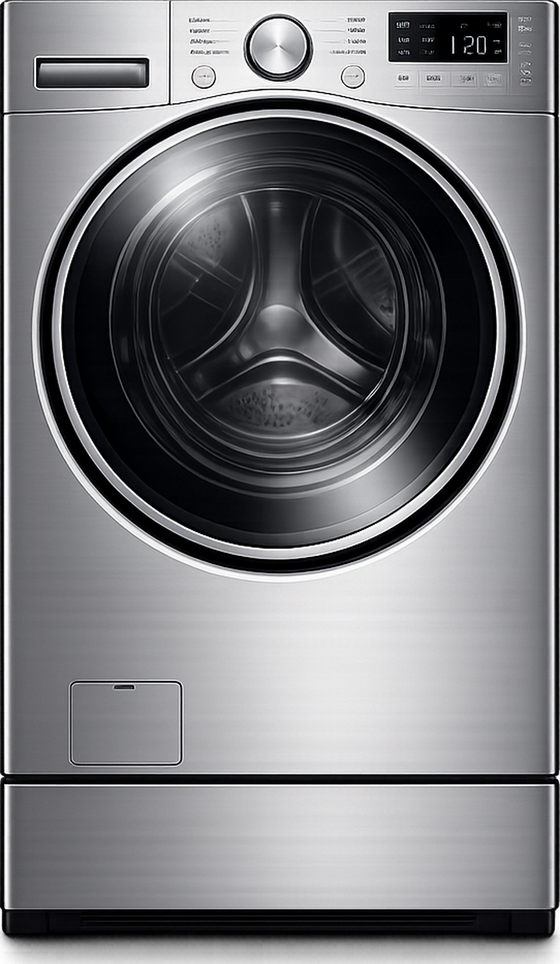
Common Washer Problems in Round Rock Homes
The cycle ends with water still standing in the drum
Before anything gets taken apart, the drain pump filter is where we look. On front loaders there is an access panel at the bottom front with a trap behind it, and what comes out of it is usually a sock, a bra wire, hair ties and a small amount of money. People have owned the machine for eight years and never opened it. If the trap is clear, the next questions are the pump impeller, the drain hose, and the standpipe in the wall, because a restriction outside the machine looks identical from in front of it. We check the pump current draw as well, since a motor that is running but weak drains slowly rather than not at all.
Clothes come out soaking after the spin
A washer that will not reach full spin speed leaves everything for the dryer to deal with, which costs you twice. On a front loader the first suspect is the door lock, because the control will not allow a high speed spin unless it is certain the door is latched, and a worn lock fails exactly that check. After that it is the belt, the motor control board, or an out of balance condition the machine is backing away from. On top loaders with a direct drive, the motor coupler or the shifter assembly is the usual answer. Either way the cycle completing is not proof the spin worked.
Banging and walking during the spin
In Round Rock a lot of laundry rooms are upstairs, and a washer that is even slightly out of balance up there announces itself through the whole house. On a new or recently moved machine, the first thing to check is whether the shipping bolts came out, because a front loader still bolted has no suspension at all. After that it is the suspension rods on a high efficiency top loader, or the springs and shock absorbers on a front loader, all of which wear gradually so nobody notices until it is bad. Levelling matters more on a wooden second floor than on a slab, and we set the feet properly rather than just nipping them down.
A smell from a front loader that comes back no matter what
The smell lives in the rubber door boot, under its lip, and in the detergent dispenser, and it comes from a combination of cold washes, too much detergent and the door being shut between loads. High efficiency machines use a fraction of the water, so excess detergent never rinses away and becomes food for biofilm. We clean the boot and the dispenser properly, check the drain path, and tell you honestly how much detergent your machine actually wants, which is usually far less than the cap suggests.
A leak that only shows up on some cycles
When it leaks tells us where it leaks. Water on the floor during fill points at the dispenser or the inlet hoses. During the wash, the door boot on a front loader, which tears at the bottom where it folds. During the drain or the spin, the drain hose connection or the pump housing. A slow leak that only shows after a heavy load is often the outer tub seal, and that is the one repair where we will stop and talk about whether the machine is worth it. Describing when you see the water saves us both time.
It will not fill, or takes forever to fill
Start at the taps, because they get turned part way off and left. Then the inlet screens, which on our water collect sediment and scale and are easy to clean, then the inlet valves themselves. On machines that sense load size by water level, a pressure switch or a blocked air dome tube will leave the machine thinking the tub is full when it is not, which shows up as short fills and poorly rinsed laundry rather than as an obvious fault.
The door locked itself and will not open
A front loader will not release the door while it believes there is water in the drum or the drum is still turning, so a locked door is often a drain fault wearing a different hat. When it is genuinely the lock, it is the solenoid or the switch inside it, which is a modest part. Most machines have a manual release behind the bottom panel for exactly this situation, and we will show you where yours is while we are there.
An error code and a cycle that stalls part way
Write the code down before you cancel it. Manufacturers use them to point at a specific circuit: fill timeout, drain timeout, out of balance, door lock, motor or control communication. Repeated out of balance codes are not a control problem, they are a loading or suspension problem, and clearing them over and over just delays the answer. The code usually saves a chunk of diagnostic time, which saves you money.
Washers We Repair in Round Rock
We work on front load and top load washers, high efficiency impeller models without an agitator, traditional agitator machines, stacked washer and dryer pairs and the compact units that go into closets and upstairs laundries, from Whirlpool, Maytag, LG, Samsung, GE, Frigidaire, Amana, Kenmore, Electrolux, Bosch and Speed Queen. That covers drain pumps and traps, door locks and boots, inlet valves and dispensers, belts, motor couplers and shifters, suspension rods, shocks and springs, bearings, pressure switches and controls.
What Washer Repair Costs in Round Rock
The residential diagnostic is $99 and comes off the repair when you approve it. You get a written price for parts and labor before anything is replaced. Drain pumps, door locks, boots, inlet valves, dispensers, belts, couplers, suspension rods and shocks are all modest parts, and they account for most washer faults. Outer tub bearings and main control boards are the expensive end, and on a machine past ten years that needs a bearing job we will tell you plainly that a replacement is usually the better buy.
A real share of washer calls end at a drain trap or a set of shocks, and those are quick repairs we are glad to make.
Neighborhoods We Cover in Round Rock
A great many Round Rock homes in Teravista, Forest Creek, Behrens Ranch, Paloma Lake, Mayfield Ranch and Stone Canyon are two story with the laundry upstairs, and that changes what matters. A machine that is slightly out of balance on a slab is a nuisance; upstairs it shakes the house and wears its own suspension out faster. It also means a leak reaches a ceiling rather than a floor, which is why we take slow leaks seriously there and check the pan and the drain while we are at it.
In Old Town, Greenlawn, Cat Hollow and Chandler Creek the laundries are more often on the ground floor or in a garage, and there the common work is drain pumps, traps, inlet valves and the older top loaders with couplers and lid switches. Closet laundries anywhere in town bring their own issue: no clearance behind the machine, so hoses get crushed and the drain hose sits too deep in the standpipe and siphons. Round Rock is an easy run from Leander and a same day slot is usually open.
Common Questions About Washer Repair in Round Rock
My washer will not drain. Can I check anything myself?
On most front loaders there is a filter behind a small panel at the bottom front. Put a towel and a shallow tray down first, because water will come out. If it is clear and the machine still will not drain, the pump or the standpipe is next.
Why does my front loader smell?
Biofilm in the door boot and the dispenser, fed by too much detergent and cold washes. Cleaning both properly and using far less detergent than the cap suggests deals with it. Leaving the door ajar between loads helps.
The machine shakes the whole upstairs. Is that dangerous?
It is at least damaging. Check the shipping bolts if the machine is new or was moved. Otherwise it is usually suspension rods or shocks, and leaving it will take out the bearings.
Is a bearing job worth doing?
Rarely on a machine past ten years. It is one of the few washer repairs that approaches the cost of replacing, and we will show you the numbers instead of starting the job and telling you halfway.
How soon can you get out to Round Rock?
Usually the same day or the next. Call (737) 388-3867 with the brand, whether it is front or top load, and any error code on the display.
Book Washer Repair in Round Rock
Tell us the brand, whether it is front load or top load, and what it is doing — not draining, not spinning, shaking, leaking, or stopping with a code. If the laundry is upstairs, say so, because a leak there needs looking at sooner. Call (737) 388-3867 or book online and we will confirm a time for Round Rock.
Washer Repair in Round Rock, TX
-

Symptoms We Sort Out
- Water left standing in the drum
- Clothes still soaking after spin
- Banging and walking on spin
- Smell coming from a front loader
- Leak that only appears sometimes
- Slow to fill or never filling
- Door locked shut mid cycle
- Error code and a stalled cycle
-
What We Work On
- Front load and top load washers
- High-efficiency impeller models
- Stacked washer and dryer pairs
- Upstairs and closet laundry rooms
- Drain pumps, belts and bearings
- Door locks, boots and dispensers

Washer Brands We Service in Round Rock
If your brand is not listed, contact us — we likely service it.
We repair all major residential appliance brands across Central Texas, including Whirlpool, GE, Samsung, LG, Maytag, Frigidaire, KitchenAid, Amana, Bosch, Electrolux, Hotpoint, Kenmore, Haier, Fisher & Paykel, Sub-Zero, Wolf, Viking, Thermador, JennAir, Dacor, U-Line, Marvel, Miele, and GE Monogram.
Why Homeowners & Businesses Choose TakiDA
-
 Quality WorkWe deliver professional appliance repair with attention to detail, proper diagnostics, and long-lasting results you can rely on.
-
 OEM / High-Quality PartsWe use OEM or high-quality replacement parts to ensure correct operation, reliability, and extended appliance lifespan.
-
 Same-Day / Next-Day ServiceFast response with same-day or next-day service to reduce downtime and get your appliances back in working order quickly.
-
 Clear PricingUpfront estimates with transparent pricing. No hidden fees, no surprises — you know the cost before work begins.
-
 EPA Certified & InsuredEPA Section 608 Universal certified and fully insured for residential and commercial repair, giving you peace of mind and protection.
-
 Warranty on Labor & PartsAll repairs are backed by a warranty on labor and installed parts for added confidence and long-term reliability.
