
Garbage Disposal Repair in Lakeway, TX
Two things make disposals in Lakeway different from disposals in town. The first is the switch. Many kitchens here use a counter-mounted air switch rather than a wall switch, which is a small button that sends a puff of air down a tube to a control under the sink. When that fails, the disposal looks completely dead even though the motor is fine. The second is drainage. A good number of homes out here are on septic rather than city sewer, and a disposal that is used heavily sends solids to a tank that was not sized for them. We repair and replace disposals of every type, including batch feed units and air switch systems, and we tell you which problems are the disposal and which are the drain line beyond it.
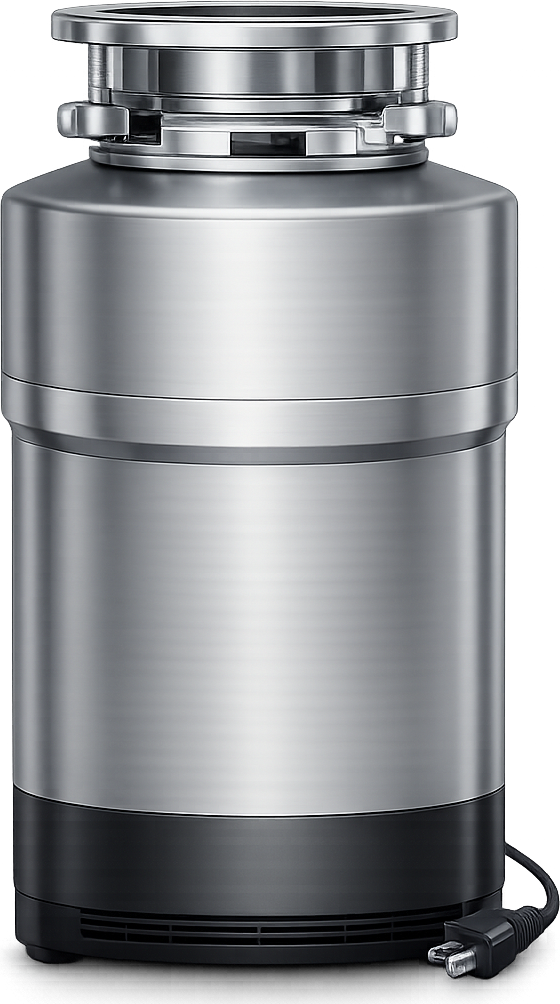
Common garbage disposal problems we fix in Lakeway
Disposal hums but the blades will not turn
A hum with no rotation means the motor has power and something is stopping the plate from spinning. Usually it is a bone fragment, a fruit pit, a bottle cap or a piece of silverware wedged between the impeller and the grind ring. Leaving it humming will burn the motor windings, so cut power at the switch first. We clear the jam, check that the plate spins freely by hand, and then check the motor for damage, because a unit that has been left humming for a while may have already cooked its start winding even after the jam is gone.
Completely dead, no hum at all
No sound means no power reaching the motor. The order we check is the reset button on the bottom of the unit, then the switch, then the outlet under the sink, then the motor itself. In Lakeway homes with a counter air switch there is one more link in that chain: the air switch button, the air tube and the control module plugged into the outlet. A cracked tube or a sticky button kills the disposal just as thoroughly as a dead motor, and it is a far cheaper fix.
Air switch does nothing when pressed
Counter air switches fail in three places. The button on the counter can lose its spring or crack. The small air tube can split or pull loose where it meets the control. And the control module under the sink, which converts that puff of air into a relay click, can fail outright. All three sound identical to the owner: you press the button and nothing happens. We test the air signal at the control rather than replacing parts in order, and often the whole repair is reseating a tube.
Leaking under the sink
Where the water is coming from tells us how serious it is. A leak at the sink flange means the plumber putty has dried out and the flange needs resealing, which is routine. A leak at the dishwasher inlet or the discharge tube is a gasket or a loose clamp. A leak from the bottom of the unit, at the motor housing seam, is different: it means the internal seal has failed and water is reaching the motor. That unit is finished and should be replaced, not repaired, and we will tell you so plainly rather than selling a repair that will not hold.
Loud grinding, rattling or vibration
A sudden loud rattle is usually a foreign object: a spoon, a bottle cap, a piece of glass. A constant grind that was not there before can be a broken or loose impeller, or mounting bolts that have worked loose so the whole unit vibrates against the sink. We open it up, clear what is in there, and check the mounting ring, since a unit that has loosened at the flange will keep making noise and will eventually leak.
Sink backs up when the disposal runs
This is almost never the disposal. The disposal grinds and pushes, and if the water has nowhere to go it comes back up. The restriction is downstream in the trap, the drain arm or the branch line. In Lakeway we see hard water scale narrowing those lines over years, plus the usual grease. We confirm whether the disposal is pushing properly, and if the unit is working and the water still backs up, the problem is the drain and we will tell you that instead of replacing a working disposal.
Keeps tripping its reset button
A reset button that pops repeatedly is the unit protecting itself from an overload. If the chamber is clear and it still trips, the motor is drawing too much current, which means worn bearings or a failing winding. At that point replacement is almost always the better value, because the motor is the unit. We measure the draw instead of guessing, so the recommendation is based on a number rather than a feeling.
Dishwasher backs up into the sink
If the dishwasher drains into the disposal, a blockage in the disposal or just past it sends dishwasher water into the sink basin. The other common cause, especially after a disposal has been replaced, is the knockout plug: a new disposal ships with a plug in the dishwasher inlet, and if the installer did not remove it the dishwasher cannot drain at all. We check that first on any call where both appliances are involved.
Septic systems and disposals
Plenty of homes outside the Lakeway city sewer area run on septic, and a disposal changes what goes into that tank. Ground food solids do not break down the way wastewater does, so heavy disposal use fills the tank faster and shortens the interval between pump-outs. We are not going to tell you to stop using it, but if your house is on septic it is worth knowing: run it with plenty of cold water, keep grease and fibrous material out of it, and expect to have the tank pumped more often than a neighbor who does not have one. If you are replacing a unit on a septic house, a smaller or a batch feed model is often the better choice, and we will go through that with you.
Bars, butler pantries and outdoor kitchens
Second disposals in a bar sink or an outdoor kitchen have a very different failure pattern because they sit unused for long stretches. The grind plate rusts, the seals dry, and the first time someone runs it after six months it jams or leaks. If you have a second sink that rarely gets used, run water through it occasionally. An outdoor kitchen unit has the added problem of temperature: a disposal under an outdoor sink can freeze in a cold snap, and a frozen disposal with water in it will crack.
Repair or replace
Disposals are one of the few appliances where replacement is frequently the right call. Jams, flange leaks, air switch faults and loose mountings are all worth repairing. A failed motor, a leak from the bottom housing, or a unit more than about ten years old that has started tripping its reset is usually not, because the motor and the housing are most of what you are buying. We give you the honest version: if the repair costs more than half of a new unit of the same grade, we say replace, and if it does not, we fix it.
Garbage disposal questions from Lakeway customers
My counter button does nothing. Is the disposal dead?
Often not. A counter air switch has a button, an air tube and a control box under the sink, and any of the three can fail while the disposal itself is fine. We test the air signal before we touch the motor.
Should I have a disposal if I am on septic?
You can, but use it lightly. Ground solids go into the tank and need pumping out later. Keep grease and stringy material out, run cold water while it works, and plan on more frequent pump-outs than a house without one.
The disposal works but the sink still backs up
Then the problem is downstream of the disposal, in the trap or the drain line. Replacing a working disposal will not fix it. We confirm the unit is pushing water properly and tell you where the restriction actually is.
Water is dripping from the bottom of the unit
That is the internal seal, and it means water has reached the motor housing. A unit leaking from the bottom seam is at the end of its life and should be replaced. A leak at the sink flange or a hose connection is a different matter and is repairable.
What does disposal repair cost in Lakeway?
The diagnostic is $99 and it is credited toward the repair when you approve it. Many disposal calls are jams, flange reseals or switch faults, which are inexpensive. If the unit turns out to need replacing we will quote the replacement and the install together before doing anything.
Book Disposal Repair in Lakeway
Tell us the brand, whether the disposal is switched at the wall or by a button on the counter, and what it is doing. We serve Lakeway, Bee Cave, Lago Vista, Leander, Lakeway and the surrounding Hill Country, with same-day appointments when the schedule allows.
Garbage Disposal Repair in Lakeway, TX
-

What we fix
- Disposal hums but does not turn
- Completely dead, no sound at all
- Leaking from the top flange or the bottom
- Loud grinding or rattling
- Backs up into the sink
- Air switch does nothing
- Disposal trips its reset button repeatedly
-
Lakeway specifics
- Counter air switches that fail at the button or the air hose
- Homes on septic where heavy disposal use is a problem
- Hard water scale narrowing the drain line downstream
- Second sinks in bars, butler pantries and outdoor kitchens
- Dishwasher drains tied to the disposal inlet
- Houses left empty where a dry unit seizes and corrodes

Garbage Disposal Brands We Service in Lakeway
If your brand is not listed, contact us — we likely service it.
We repair all major residential appliance brands across Central Texas, including Whirlpool, GE, Samsung, LG, Maytag, Frigidaire, KitchenAid, Amana, Bosch, Electrolux, Hotpoint, Kenmore, Haier, Fisher & Paykel, Sub-Zero, Wolf, Viking, Thermador, JennAir, Dacor, U-Line, Marvel, Miele, and GE Monogram.
Why Homeowners & Businesses Choose TakiDA
-
 Quality WorkWe deliver professional appliance repair with attention to detail, proper diagnostics, and long-lasting results you can rely on.
-
 OEM / High-Quality PartsWe use OEM or high-quality replacement parts to ensure correct operation, reliability, and extended appliance lifespan.
-
 Same-Day / Next-Day ServiceFast response with same-day or next-day service to reduce downtime and get your appliances back in working order quickly.
-
 Clear PricingUpfront estimates with transparent pricing. No hidden fees, no surprises — you know the cost before work begins.
-
 EPA Certified & InsuredEPA Section 608 Universal certified and fully insured for residential and commercial repair, giving you peace of mind and protection.
-
 Warranty on Labor & PartsAll repairs are backed by a warranty on labor and installed parts for added confidence and long-term reliability.
