
Dishwasher Repair in Round Rock, TX
Detergent grit left on the dishes, a cycle that stops with the lights on, water coming up in the sink or a burning smell — most of these are a sensor, an element or the drain rather than a new dishwasher. We repair built-in, drawer and panel-ready dishwashers across Round Rock, from Old Town and Forest Creek to Teravista and Paloma Lake. The diagnostic is $99 and it comes off the repair.
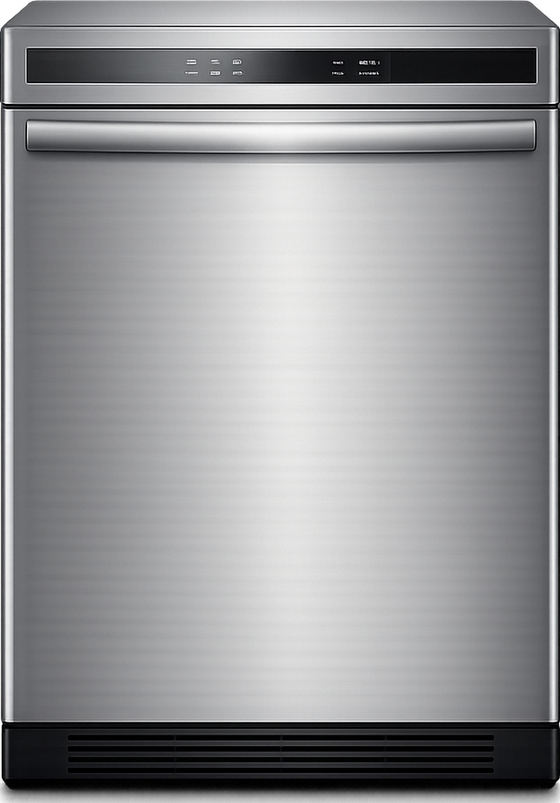
Common Dishwasher Problems in Round Rock Homes
Gritty detergent left on the dishes at the end
Powder or a tablet that has not dissolved means the water in the tub never got hot enough or the detergent was released at the wrong moment. Dishwashers heat their own water, and when the heating element or the temperature sensor fails, the machine runs the cycle to time rather than to temperature and the detergent sits there as grit. The other version is a dispenser flap blocked by a tall item in the lower rack, so the tablet drops into the pre-wash and goes straight down the drain. We check the actual tub temperature and the dispenser timing before anything gets replaced.
The cycle stops part way and the panel stays lit
A dishwasher that stops mid cycle with the lights on has usually decided something is wrong and stopped on purpose. Two causes account for most of them. The first is the heating circuit: if the control asks for heat and the sensor never reports it, the machine will wait indefinitely rather than fault. The second is the leak detection float in the base pan, which trips on a slow leak that has been collecting underneath for weeks. That float is worth finding, because it means there is water under your dishwasher right now.
Water backing up into the sink when the dishwasher drains
The dishwasher and the sink share a drain, so a restriction downstream sends the water wherever it can go. The air gap on the sink deck, if you have one, is the first thing to check, because it blocks with the fine debris that comes out of a dishwasher and then overflows across the counter. After that it is the branch that ties the two together, and the trap. The dishwasher itself is usually innocent here, and we would rather tell you that than replace a drain pump that was working fine.
A hot plastic or burning smell during the cycle
Stop the machine and look at the bottom of the tub. Nine times out of ten something has fallen through the lower rack onto the heating element: a lid, a spatula, a piece of packaging. It leaves a melted mark on the element and a smell that lasts for weeks. The other possibility is the wash pump motor running hot, which is a different problem and a more serious one. Either way, a dishwasher that smells of burning should not be left to finish the cycle.
The tablet is still sitting in the bottom of the tub
If the dispenser opened but the tablet ended up on the floor of the tub without dissolving, it was released into a part of the cycle with no hot water, or it fell out when the door was closed. If the dispenser did not open at all, that is the latch, the solenoid or the control. There is also a simple one worth ruling out first: tablets stored somewhere humid go hard and stop dissolving properly, which produces exactly this complaint with nothing wrong with the machine.
It has become much louder than it used to be
Dishwashers get quieter over the years as insulation and design improve, so a machine that gets louder is telling you something. A grinding or rattling noise usually means something hard has reached the chopper or the pump, often glass or a fruit pit. A droning hum points at the wash pump bearing. There is a dull one worth checking first: the mounting brackets that hold the dishwasher to the counter or cabinet work loose, and then the whole machine vibrates against the cabinetry.
Rust spots inside the tub or on the racks
On a stainless tub, rust usually comes from somewhere else: a rack tine with the vinyl coating broken, so the steel underneath corrodes and stains everything resting against it, or iron in the water supply. On a plastic tub, staining is normally mineral rather than rust. Tine repair kits and replacement racks are inexpensive. If it is the water rather than the racks, we will tell you so instead of selling you parts that will not change anything.
Dishes coming out wet, especially the plastics
This one is often not a fault at all. A large number of dishwashers sold now dry by condensation rather than with a heating element, which means they rely on hot rinse water and a cold stainless tub wall to pull moisture out of the air. Rinse aid is not optional on those machines, it is part of the design, and plastics will still come out damp because they do not hold enough heat. If yours has a heated dry option and it has stopped working, that is a real fault and we can fix it. We will tell you honestly which of the two you have.
Dishwashers We Repair in Round Rock
We work on standard 24 inch built ins, 18 inch compact units, drawer dishwashers and panel ready integrated machines, from Whirlpool, Maytag, KitchenAid, GE, Frigidaire, Bosch, LG, Samsung, Amana, Kenmore and Electrolux. That covers wash and drain pumps, heating elements and sensors, diverters, spray arms and feed tubes, door latches and springs, detergent and rinse aid dispensers, float and leak detection, racks and tines, and the drain side including air gaps and high loops. Parts for the mass market brands are on the shelf or a day out.
What Dishwasher Repair Costs in Round Rock
The residential diagnostic is $99 and comes off the repair when you approve it. You get a written price for parts and labor before anything is replaced. Sensors, heating elements, dispensers, door springs and cables, latches, spray arms, floats, drain pumps and rack kits are all modest parts. Control boards and complete wash motor assemblies are not, and on a machine past ten years that needs one we will tell you plainly when replacing is the better buy.
A fair number of dishwasher calls end at a filter, a water temperature or a blocked air gap, and we would rather charge you for the visit and tell you that than find a part to sell.
Neighborhoods We Cover in Round Rock
Across Teravista, Forest Creek, Behrens Ranch, Cat Hollow, Chandler Creek and Sendero Springs, most of the dishwashers are now at the age where the heating element, the sensor, the door springs and the wash pump start to go. Those are all worth repairing: the tubs and the cabinetry around them are fine, and the parts are modest. Hard water does its work here too, on spray arm holes and on heating elements, so a machine that has lost performance gradually is often recoverable rather than finished.
In Old Town, Greenlawn and the older streets, the dishwasher has often been replaced into an opening that was cut for something else, and the plumbing predates the high loop and the air gap being taken seriously, so drain complaints there are frequently about the installation. North toward Mayfield Ranch, Paloma Lake and Stone Canyon the machines are newer, which means panel ready units, condensation drying and more electronics, and the work shifts toward diverters, sensors and controls. Round Rock is an easy run from Leander and a same day slot is usually open.
Common Questions About Dishwasher Repair in Round Rock
Why is there detergent grit left on everything?
The water in the tub is not getting hot enough, or the tablet is being released into a part of the cycle that drains away. Both are checkable, and neither usually means a new dishwasher.
My dishes always come out wet. Is it broken?
Possibly not. Many machines dry by condensation and have no heating element for drying, so rinse aid is required and plastics stay damp by design. We will tell you which type you have before anybody pays for a repair.
Water comes up in the sink when it drains. Whose problem is that?
Usually the shared drain rather than the dishwasher: a blocked air gap, the branch to the sink, or the trap. We check that before touching the drain pump.
It stopped mid cycle with the lights still on. What is it?
Often either the heating circuit waiting for a temperature it will never see, or the leak detection float tripping on water under the machine. The second one is worth finding quickly.
How soon can you get out to Round Rock?
Usually the same day or the next. Call (737) 388-3867 with the brand, the model and what the machine is doing, and we will tell you honestly what the day looks like.
Book Dishwasher Repair in Round Rock
Tell us the brand, roughly how old the machine is and what it is doing — grit left behind, stopping part way, backing up into the sink, smelling hot, or leaving everything wet. Call (737) 388-3867 or book online and we will confirm a time for Round Rock.
Dishwasher Repair in Round Rock, TX
-

Symptoms We Sort Out
- Detergent grit left on the dishes
- Cycle stopping with the lights on
- Water backing up into the sink
- A hot plastic or burning smell
- Tablet still sitting in the bottom
- Suddenly much louder than it was
- Rust spots inside the tub
- Dishes still wet at the end
-
What We Work On
- Built-in 24 inch dishwashers
- 18 inch and compact units
- Drawer dishwashers
- Panel-ready and integrated models
- Wash pumps, heaters and sensors
- Drain lines, air gaps and high loops

Dishwasher Brands We Service in Round Rock
If your brand is not listed, contact us — we likely service it.
We repair all major residential appliance brands across Central Texas, including Whirlpool, GE, Samsung, LG, Maytag, Frigidaire, KitchenAid, Amana, Bosch, Electrolux, Hotpoint, Kenmore, Haier, Fisher & Paykel, Sub-Zero, Wolf, Viking, Thermador, JennAir, Dacor, U-Line, Marvel, Miele, and GE Monogram.
Why Homeowners & Businesses Choose TakiDA
-
 Quality WorkWe deliver professional appliance repair with attention to detail, proper diagnostics, and long-lasting results you can rely on.
-
 OEM / High-Quality PartsWe use OEM or high-quality replacement parts to ensure correct operation, reliability, and extended appliance lifespan.
-
 Same-Day / Next-Day ServiceFast response with same-day or next-day service to reduce downtime and get your appliances back in working order quickly.
-
 Clear PricingUpfront estimates with transparent pricing. No hidden fees, no surprises — you know the cost before work begins.
-
 EPA Certified & InsuredEPA Section 608 Universal certified and fully insured for residential and commercial repair, giving you peace of mind and protection.
-
 Warranty on Labor & PartsAll repairs are backed by a warranty on labor and installed parts for added confidence and long-term reliability.
