
Dishwasher Repair in Georgetown, TX
A dishwasher that leaves the dishes dirty, will not drain or takes three hours to finish is almost always one of a handful of faults, and most of them are cheap. We repair dishwashers across Georgetown — Sun City, Wolf Ranch, Water Oak, Berry Creek, Serenada, Cimarron Hills and the older blocks around the Square. The diagnostic is $99 and it comes off the repair.
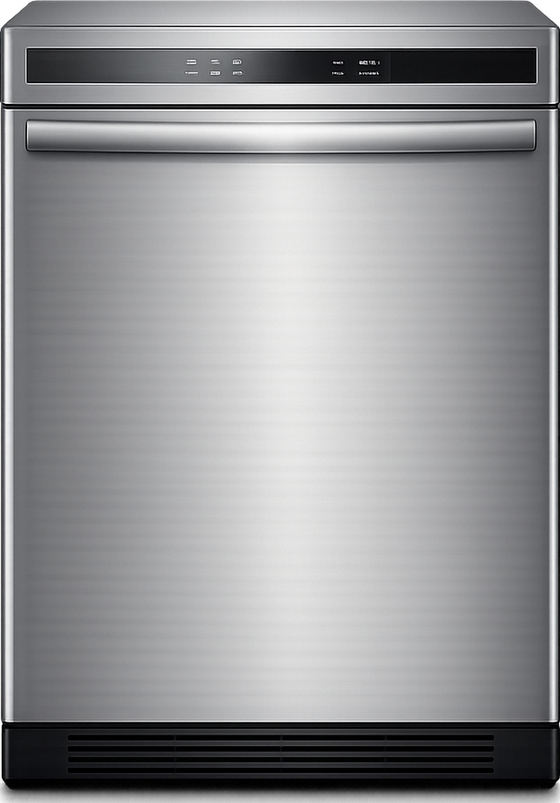
Common Dishwasher Problems in Georgetown Homes
The cycle runs three hours and the dishes come out cold
A dishwasher no longer runs on a clock. The control watches a temperature sensor in the sump and holds the wash step until the water reaches its setpoint, usually between 120 and 150 degrees. If the heating element cannot get there, the control simply keeps waiting, which is why a one hour cycle turns into three. On Georgetown water the element is the usual reason: scale builds up on it, insulates it, and the heat never reaches the water even though the element is drawing current. An element like that can still read a correct resistance on a meter. We measure the water temperature in the tub as well as the element and the sensor, because that is the only way to tell which of the three is lying.
It will not drain, and the trouble starts at the disposal
When a dishwasher shares a drain with a garbage disposal, most drain complaints are not inside the dishwasher at all. The drain line enters the disposal through a short inlet that has a cast plug in it from the factory, and on a replacement disposal that plug sometimes never gets knocked out. More often the inlet branch is packed with what the disposal ground up and the dishwasher cannot push past it. We check the branch, the air gap or the high loop, and the pump impeller in that order, because the cheap causes sit on the outside and the pump is the expensive one.
Standing water that comes back after every load
A film of water in the sump is normal and keeps the pump seal from drying out. An inch of it is not. The check valve at the pump outlet is there to stop what you just pumped out from coming back in, and the flap goes stiff or holds a piece of debris open. The other cause is plumbing: if the drain hose was run without a high loop, the line siphons back into the tub every time the sink drains. Both are inexpensive, and both get misread as a failed pump.
The door drops open instead of staying where you leave it
The door is counterbalanced by springs under the tub pulling on cables that run over pulleys at the front corners. The cable frays where it wraps the pulley, and when a strand lets go the cable jumps the groove. After that the door has no support and falls the whole way open under its own weight. This one is worth calling about sooner rather than later, because a loaded door that drops unannounced will take a knee or a child with it. Cables and pulleys are a modest part and a straightforward job.
The top rack comes out dirty while the bottom rack is clean
That pattern tells you where the water is not going. On most machines a diverter under the sump alternates pressure between the lower spray arm and the feed tube that runs up the back wall to the upper arm. When the diverter motor or its position sensor fails, the machine wash the lower rack properly every time and never sends a full charge upward. The simpler version of the same symptom is a feed tube that has come loose from its clip at the back of the tub, so the water is going up and then spilling out behind the rack. We look at the tube and the arm bearing before touching the diverter.
A smell that returns a day after you clean the filter
If cleaning the filter buys you one day, the smell is not in the filter. It is in the drain hose and under the check valve flap, where a layer of grease and starch builds into something that does not rinse away at wash temperature. A hose run without a high loop makes it worse, because sink water stands in the low spot between loads. We pull the filter assembly and the sump cover, clear the valve seat, and check how the hose is routed. Running a cleaner through a machine with a sagging hose is money spent on nothing.
Rust on the racks and spots on the cutlery
Outside the city mains, a good number of Georgetown and Weir addresses are on well water carrying iron, and that iron is what puts orange staining on racks and knives. The repair question is narrower than the water question: once the vinyl coating on a rack tine is broken, the steel underneath rusts and then rusts everything resting against it, and no amount of cleaner reverses that. Tine repair caps and replacement rack kits solve it. If the staining is on the tub walls rather than the racks, we look at the water supply instead, and we will say so rather than sell you a rack.
It runs, but you can hear that it is not spraying
A dishwasher that sounds like it is running while the dishes come out untouched is usually a circulation problem, not a motor problem. A spray arm that no longer turns, a bearing that has seized, or holes blocked by hard water scale will all leave the pump happily moving water that goes nowhere useful. Fill level matters too: a float that sticks or a valve that only partly opens leaves the pump cavitating in too little water, and that is the hollow sound people describe. We check fill volume first, then the arms, then the pump.
Dishwashers We Repair in Georgetown
We work on the machines that are actually in Georgetown kitchens, which mostly means Whirlpool, Maytag, KitchenAid, GE, Frigidaire, Bosch, LG and Samsung, along with Amana, Kenmore and Electrolux. That covers standard 24 inch built ins, the 18 inch units that go into smaller Sun City floor plans and casitas, drawer dishwashers, and the panel ready machines being installed in the newer builds. Parts for the mass market brands are on the shelf or a day away. On the European units the parts are available but less often local, so we confirm what a part costs and how long it takes before you commit to the repair.
What Dishwasher Repair Costs in Georgetown
The residential diagnostic is $99 and it comes off the repair when you approve it. You get a written price covering parts and labor before anything is replaced. Door cables, latches, spray arms, check valves, float switches, rack kits and drain pumps are modest parts. Control boards, complete circulation motor assemblies and tub liners are not, and on a machine past ten years we will say plainly when a replacement is the better buy rather than quoting you a repair we would not pay for ourselves.
A real share of dishwasher calls end with water temperature, a blocked drain branch or a filter, and we would rather tell you that and charge you for the visit than find a part to sell.
Neighborhoods We Cover in Georgetown
Georgetown splits into two very different kinds of dishwasher work. In Sun City, a large number of homes are still running the dishwasher the builder put in, and after fifteen or twenty years it is the door cables, the racks and the heating element that go, not the electronics. Those are good repairs: the parts are cheap, the machines were built when the tubs were thicker, and the owners are usually there during the day, which makes a same day visit easy. We work the whole Del Webb side of town, Berry Creek, Serenada and Cimarron Hills on the same basis.
On the Wolf Ranch and Water Oak side the machines are newer and the faults are different. Panel ready and integrated units are tight to the cabinetry, the controls are more involved, and the complaints are diverter valves, sensors and drain faults rather than worn hardware. In the older blocks around the Square and along San Gabriel the plumbing is the variable: drain lines that predate the high loop requirement, and disposals teed in by somebody in a hurry. Outside the mains, toward Weir and the east side, well water with iron and high hardness changes what fails and how fast. We serve Georgetown daily from Leander and the drive is short enough that a same day slot is usually open.
Common Questions About Dishwasher Repair in Georgetown
My dishwasher is twenty years old. Is it worth repairing?
Often yes, and more often than with a newer one. A machine from the early 2000s has a simpler control, a thicker tub and parts that are still made. If what failed is a door cable, a pump, a rack or an element, the repair is a fraction of a replacement and the machine will keep going. If the control board is dead on a unit that old, that is usually the end of it, and we will tell you so.
Do I need a water softener for the dishwasher to last?
You do not need one, but hard water is what kills heating elements and valves here, and a softener measurably slows that down. That is a plumbing decision, not a repair decision, and we have no stake in it. What we will tell you is whether the damage we are looking at came from the water or from something else, so you are not spending on a softener to fix a problem it will not touch.
Can you work on a panel ready or integrated dishwasher?
Yes. The service procedure is the same once the machine is out, but getting it out takes care with custom panels and stone counters, and the mounting is different from a standard unit. We bring the machine out, work on it, and put the panel back the way it was. Tell us when you book that it is an integrated unit so we allow the time.
Should I rinse the dishes first?
Scrape, do not rinse. Detergent needs something to act on and pre rinsed loads often come out worse. What matters for the machine is keeping bones, fruit pits and broken glass out of it, because those are what reach the pump.
How soon can you get out to Georgetown?
Usually the same day or the next, and Georgetown is a short run for us. Call (737) 388-3867 and we will tell you honestly what the day looks like rather than booking a window we cannot hold.
Book Dishwasher Repair in Georgetown
Tell us the brand, roughly how old the machine is and what it is doing — not draining, not cleaning, leaking, or stopping part way through. That is usually enough for us to bring the likely parts on the first visit. Call (737) 388-3867 or book online and we will confirm a time for Georgetown.
Dishwasher Repair in Georgetown, TX
-

Dishwasher Symptoms We Sort Out
- Cycle dragging on for hours
- Dishes coming out cold
- Will not drain past the disposal
- Door falling open on its own
- Top rack staying dirty
- Smell returning after cleaning
- Rust showing on the racks
-
Dishwashers We Work On
- Built-in 24 inch dishwashers
- 18 inch and compact units
- Drawer dishwashers
- Panel-ready and integrated models
- Portable and countertop units
- Drain and supply line work

Dishwasher Brands We Service in Georgetown
If your brand is not listed, contact us — we likely service it.
We repair all major residential appliance brands across Central Texas, including Whirlpool, GE, Samsung, LG, Maytag, Frigidaire, KitchenAid, Amana, Bosch, Electrolux, Hotpoint, Kenmore, Haier, Fisher & Paykel, Sub-Zero, Wolf, Viking, Thermador, JennAir, Dacor, U-Line, Marvel, Miele, and GE Monogram.
Why Homeowners & Businesses Choose TakiDA
-
 Quality WorkWe deliver professional appliance repair with attention to detail, proper diagnostics, and long-lasting results you can rely on.
-
 OEM / High-Quality PartsWe use OEM or high-quality replacement parts to ensure correct operation, reliability, and extended appliance lifespan.
-
 Same-Day / Next-Day ServiceFast response with same-day or next-day service to reduce downtime and get your appliances back in working order quickly.
-
 Clear PricingUpfront estimates with transparent pricing. No hidden fees, no surprises — you know the cost before work begins.
-
 EPA Certified & InsuredEPA Section 608 Universal certified and fully insured for residential and commercial repair, giving you peace of mind and protection.
-
 Warranty on Labor & PartsAll repairs are backed by a warranty on labor and installed parts for added confidence and long-term reliability.
