
Commercial Steam Table and Hot Holding Repair in Pflugerville, TX
Hot holding is the other half of the temperature log, and it is the half that gets less attention than refrigeration until an inspector asks for the numbers. In Pflugerville the steam tables that give trouble are the ones in school kitchens, buffets and catering lines, and the cause is usually scale or an element rather than anything complicated.
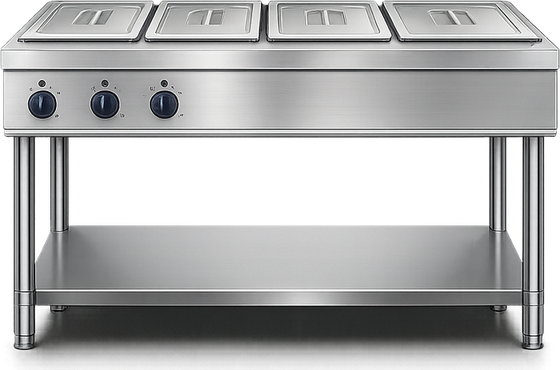
Common Steam Table and Hot Holding Problems in Pflugerville
Wells not holding food-safe temperature
Usually an element that has weakened or a thermostat that has drifted, and on a wet well, scale on the element acting as insulation. Product temperature is what matters rather than the dial, so that is what gets measured first. A table that reads fine and holds food below temperature is the version that fails an inspection.
One well cold while the rest are working
That isolates it: that well has its own element, its own thermostat or its own switch. It is a straightforward repair and worth doing rather than working around, because a cold well on a serving line usually means product gets crowded into the others, which drops those too.
Heavy scale in a wet well
Pflugerville water leaves a hard deposit, and a wet well boils it down day after day. Scale on the element reduces heat transfer, which means longer heat-up, higher energy use and eventually a burned-out element. Descaling on schedule is what keeps these alive.
Water not filling or not draining
Fill valves, float controls, drain valves and lines blocked with scale and food debris. A well run dry when it is designed to be wet takes out the element quickly, so a fill problem on a wet table is urgent rather than an inconvenience.
Product drying out or crusting on top
A dry well running too hot, a wet well run without water, or pans that are not sized to the opening so heat escapes around them. Product quality complaints at the end of a service usually trace back to one of those three rather than to a fault.
Hot holding cabinets that will not maintain temperature
Door gaskets, hinges, the element, the fan or the thermostat. A cabinet with a tired gasket loses heat continuously and runs the element far harder than it should, which is the same economics as a walk-in with a bad seal, in the other direction.
Controls, switches and indicator lights that stopped working
These units live in steam and spills, and the controls are the first thing to suffer. An indicator that no longer lights means the line cannot tell at a glance whether a well is on, which is how product ends up sitting in an unheated well through a service.
A gas steam table with pilot or burner trouble
Thermocouple, pilot assembly or burners needing cleaning, the same family of faults as any other gas equipment. These are less common than electric units in Pflugerville, but the diagnosis is measured rather than guessed just the same.
Hot Holding Equipment We Service in Pflugerville
Electric and gas steam tables, wet and dry wells, drop-in and modular wells, hot holding and proofing cabinets, soup warmers and countertop wells, buffet and serving lines, carving stations and heat lamps. Common brands include Vollrath, Duke, Wells, APW Wyott, Hatco, Alto-Shaam, Cres Cor, Server and Nemco.
We are insured and can issue a certificate of insurance to a school district, property manager or landlord before work starts.
Who We Work For in Pflugerville
School and daycare kitchens across the district, buffets and cafeterias, restaurants and taquerias along Pecan Street and FM 685, convenience stores with hot food programs, churches and event venues, caterers and food trailers.
The commercial diagnostic is one hundred forty nine dollars and it is credited toward the repair once the work is approved. For a serving line that has to run tomorrow, tell us on the phone and we will say honestly whether the part is something we can source same day.
Common Questions About Steam Table Repair in Pflugerville
Wet well or dry well, which is better?
Wet wells hold moist product better and are gentler on quality; dry wells are simpler and have no scale problem. Most kitchens inherit whichever came with the line. What matters more is running each the way it was designed rather than switching between them.
How often should wet wells be descaled?
Monthly on Pflugerville water in daily service. Scale is the single biggest cause of element failure on these units, and descaling costs a fraction of an element.
Can I run a wet well without water?
No. The water is what carries heat to the pans and protects the element. Running dry overheats the element and usually ends it, and it is one of the more common ways these tables are killed.
Why does my product cool at the ends of the line?
Usually a weak element in those wells, pans not sized correctly, or a serving line placed in a draft. All three are fixable and all three look identical from the floor.
Do you work with school kitchens and districts?
Yes, including scheduling around service hours and providing a certificate of insurance and documentation for the district before the work.
Book Steam Table Service in Pflugerville
Tell us the brand, whether the wells are wet or dry, and what the product is reading against the setting, and we can usually narrow it down before we arrive. Call (737) 388-3867. The one hundred forty nine dollar commercial diagnostic is credited toward the repair.
Commercial Steam Table and Hot Holding Repair in Pflugerville, TX
-

What We Service
- Electric and gas steam tables
- Wet and dry hot wells
- Drop-in and modular wells
- Hot holding and proofing cabinets
- Soup warmers and countertop wells
- Buffet and serving lines
- Carving stations and heat lamps
-
Typical Calls
- Wells not holding food-safe temperature
- One well cold while the others work
- Elements and thermostats failing
- Scale buildup in wet wells
- Water not filling or not draining
- Controls, switches and indicator lights

Hot Holding Brands We Service in Pflugerville
If your brand is not listed, contact us — we likely service it.
Why Homeowners & Businesses Choose TakiDA
-
 Quality WorkWe deliver professional appliance repair with attention to detail, proper diagnostics, and long-lasting results you can rely on.
-
 OEM / High-Quality PartsWe use OEM or high-quality replacement parts to ensure correct operation, reliability, and extended appliance lifespan.
-
 Same-Day / Next-Day ServiceFast response with same-day or next-day service to reduce downtime and get your appliances back in working order quickly.
-
 Clear PricingUpfront estimates with transparent pricing. No hidden fees, no surprises — you know the cost before work begins.
-
 EPA Certified & InsuredEPA Section 608 Universal certified and fully insured for residential and commercial repair, giving you peace of mind and protection.
-
 Warranty on Labor & PartsAll repairs are backed by a warranty on labor and installed parts for added confidence and long-term reliability.
