
Commercial Refrigeration and Walk-In Repair in Austin, TX
Austin kitchens ask a lot of their refrigeration. Downtown restaurants with the condensers on a hot roof, bars on Rainey and East Sixth running back bar coolers flat out until two in the morning, coffee shops and breweries in converted buildings, and a food trailer scene where the whole cold side lives in a box behind a generator. When one of those goes down, the clock is on product, not convenience.
Common Commercial Refrigeration Problems in Austin Kitchens
A walk in that climbs through service and recovers overnight
This is a capacity problem, not a failure. The box holds fine when nobody is opening the door, then loses ground once the line gets busy and ambient temperature peaks. A restricted or dirty condenser, a low charge, or a defrost cycle landing in the middle of lunch will all do it. The way to tell them apart is pressures and temperature split across the coil during the busy part of the day, not a thermometer reading at eight in the morning.
A freezer running constantly but holding above zero
When a freezer runs without stopping and still will not pull down, ice on the evaporator is the first thing to look for. A failed defrost heater, a termination thermostat that has gone open, or a control that is no longer calling for defrost all end the same way: a coil packed in frost that cannot absorb heat. That is a very different repair from a refrigerant problem and it gets diagnosed before anybody puts gauges on.
A back bar cooler that cannot keep up on a busy night
Back bar and under counter units have small condensers sitting at floor level in the warmest, dustiest part of the room. In a busy Austin bar they choke in weeks rather than months. Add bottles packed tight against the evaporator and warm product loaded in during service, and the unit never gets a chance to catch up. A proper cleaning and a look at how it is loaded fixes a lot of these.
Ice rebuilding on the evaporator after every defrost
If the coil never clears completely, each cycle leaves a little more ice behind until airflow collapses. Usually the defrost is ending on time rather than on temperature, so a cycle that was long enough in March is not long enough in August. It gets read as low refrigerant constantly, and it is not.
A condenser choked with grease and dust
Rooftop and alley condensers in Austin pull in kitchen exhaust, construction dust and whatever the wind brings. Once the coil is coated, head pressure climbs, capacity drops, and the compressor runs hot for months before it fails. Compressors rarely die suddenly. They die slowly, from a coil nobody cleaned, and that is the cheapest failure on this list to prevent.
Condensate pooling on the kitchen floor
A blocked drain line, a failed condensate pump, a rusted drain pan, or on a freezer, drain line heat tape that has failed so the line freezes solid internally. Besides the slip hazard and the inspection risk, standing water under a walk in quietly destroys the floor and the panel bottoms. It is worth fixing properly the first time.
A unit short cycling or tripping its breaker
Short cycling can be a control, a pressure switch doing its job for a reason nobody has found yet, or a compressor struggling to start. During peak summer load, supply voltage at the panel sags, and a tired start component that worked all winter cannot get the compressor turning. That is measured while the unit tries to start, with in rush current and voltage under load, rather than from a reading taken at rest.
Food trailer and mobile refrigeration failing in the heat
Trailer refrigeration lives a harder life than anything in a building. Voltage drop on long shore power cords, generator output that wanders, condensers installed in compartments with almost no airflow, and vibration that works fittings loose over a season. We look at the power first on these, because replacing a component that failed from poor voltage just buys another failure.
Equipment We Service in Austin
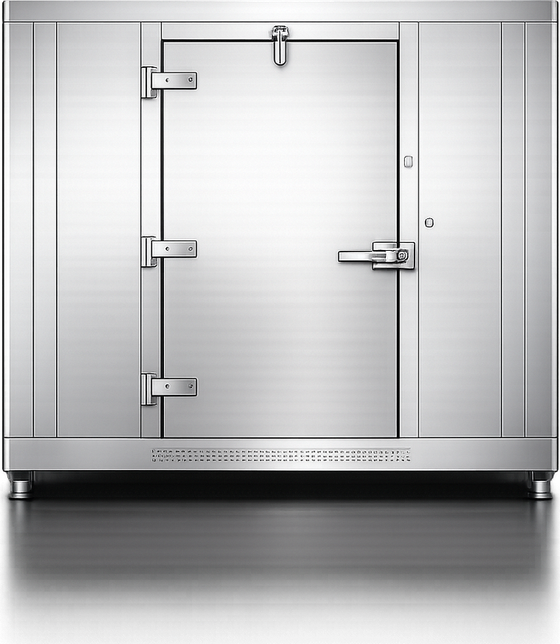
Walk in coolers and freezers, reach in refrigerators and freezers, under counter and back bar coolers, glass door merchandisers, prep refrigeration, and both self contained and remote condensing units. We also work on food trailer and mobile refrigeration. Common brands include True, Turbo Air, Beverage Air, Continental, Traulsen, Delfield, Hoshizaki, Master Bilt, Bohn and Heatcraft.
We are EPA Section 608 Universal certified and insured, and certificates of insurance are available for landlords and property managers when a building requires one.
What Commercial Refrigeration Repair Costs in Austin
The commercial diagnostic is one hundred and forty nine dollars and it is credited toward the repair once you approve the work. Fans, defrost components, controls, gaskets, contactors and start components are routine. Compressor and sealed system work on a walk in is a larger decision, and we will give you the honest comparison against replacing the condensing unit rather than just quoting the repair.
For restaurants and bars, the number that matters is usually downtime, so we tell you up front what can be done today and what depends on a part arriving.
Neighborhoods We Cover in Austin
Downtown and Rainey Street, East Sixth, East Austin, South Congress and South Lamar, Bouldin, Zilker, Burnet Road and the Domain, North Loop and Hyde Park, Riverside and Airport Boulevard, and the trailer parks and commissary kitchens around them.
Common Questions About Commercial Refrigeration Repair in Austin
Can you come out the same day when a walk in is losing temperature?
We prioritize refrigeration calls where product is at risk, and same day is normally possible. Call rather than book online in that situation, and tell us what the box is reading now and what it was reading two hours ago, because the rate of change tells us how urgent it really is.
What do we do with the product while the box is down?
Move it to your coldest working unit first, keep doors shut, and do not open the failing box to check it every ten minutes. If the walk in has lost significant ground, start making calls about temporary cold storage before we arrive rather than after, because that is the part that takes time to arrange.
Do you work on food trailers?
Yes. Trailers and mobile kitchens are a normal part of what we do here. Tell us whether you are on shore power or a generator when you call, because it changes what we check first and often what the actual problem turns out to be.
Should we repair the compressor or replace the condensing unit?
It depends on the age of the system, what caused the failure, and whether the rest of the equipment is sound. A compressor that failed because of a dirty condenser on an otherwise healthy five year old system is worth repairing. One that failed on a twenty year old system with a corroded coil usually is not. You get both numbers before you decide.
Do you offer scheduled maintenance?
Yes, and on commercial refrigeration it pays for itself faster than on anything else. Coil cleaning, gasket and door checks, drain lines, and a look at defrost timing ahead of summer prevent most of the emergency calls we get in July and August.
Book Commercial Refrigeration Service in Austin
Tell us what kind of equipment it is, what the box is holding now, and whether product is at risk, and we will tell you what we can do today. Call (737) 388-3867 or book online. The one hundred and forty nine dollar commercial diagnostic is credited toward the repair.
Commercial Refrigeration Repair in Austin, TX
-

What Brings Us Out to Austin Kitchens
- Walk in climbing through a hot service
- Freezer running but holding above zero
- Back bar cooler that cannot keep up on a busy night
- Ice on the evaporator after every defrost
- Condenser on a rooftop or in an alley choked with dust
- Condensate pooling on the kitchen floor
- Unit short cycling and tripping its breaker
-
Refrigeration We Cover
- Walk in coolers and freezers
- Reach in refrigerators and freezers
- Under counter and back bar coolers
- Merchandiser and glass door cases
- Remote and self contained condensing units
- Food trailer and mobile refrigeration

Commercial Refrigeration Brands We Service in Austin
If your brand is not listed, contact us — we likely service it.
Why Homeowners & Businesses Choose TakiDA
-
 Quality WorkWe deliver professional appliance repair with attention to detail, proper diagnostics, and long-lasting results you can rely on.
-
 OEM / High-Quality PartsWe use OEM or high-quality replacement parts to ensure correct operation, reliability, and extended appliance lifespan.
-
 Same-Day / Next-Day ServiceFast response with same-day or next-day service to reduce downtime and get your appliances back in working order quickly.
-
 Clear PricingUpfront estimates with transparent pricing. No hidden fees, no surprises — you know the cost before work begins.
-
 EPA Certified & InsuredEPA Section 608 Universal certified and fully insured for residential and commercial repair, giving you peace of mind and protection.
-
 Warranty on Labor & PartsAll repairs are backed by a warranty on labor and installed parts for added confidence and long-term reliability.
