
Commercial Oven Repair in Round Rock, TX
An oven that passes its own diagnostic and still bakes badly, one deck running hotter than the other, a door that no longer seals or a combi that will not hold steam — we service convection, combi, deck and conveyor ovens across Round Rock, from Old Town and Main Street to La Frontera and the I-35 corridor. Insured for commercial premises. Commercial diagnostic $149, credited toward the repair.
Common Commercial Oven Problems in Round Rock Kitchens
The oven passes its own self test but bakes nothing like it used to
Built in diagnostics check that circuits respond, not that heat is arriving where the food is. An oven can report no faults while running thirty degrees below setpoint, cycling badly or losing heat through a tired door. So we do not start from the diagnostic screen. We put calibrated probes at the shelf positions the kitchen actually uses, watch a full cycle, and record what the cavity does rather than what the control believes. That record is what tells us whether the problem is calibration, heat input, airflow or heat loss.
The top deck is finished long before the bottom
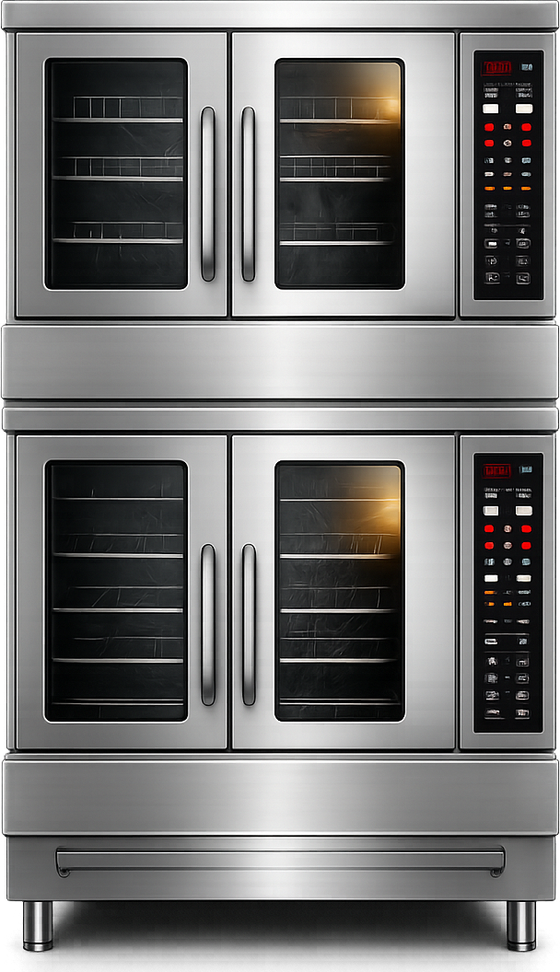
On a double stack or a multi shelf oven, a consistent difference between decks is a heat distribution problem rather than a mystery. Each deck has its own elements or burner and its own thermostat, so a weak element, a drifted sensor or a failed relay on one side produces exactly this. On convection models the baffle or fan cover going back in the wrong way after cleaning does it too. We check deck by deck and give you the numbers, because kitchens usually compensate for this for months before calling.
The door latch no longer pulls the door tight
Commercial oven doors seal by compression, and the latch is what provides it. When the roller catch wears or the strike moves, the door closes but no longer squeezes the gasket, and heat escapes along one edge. You can often feel it with a hand along the door during a bake. Latches, strikes, hinges and gaskets are all inexpensive and serviceable, and they are among the best value repairs on an older oven, because the lost heat shows up in both cook times and gas bills.
It trips the breaker as the elements come on
On an electric oven, a trip that happens exactly when heating starts points at an element that has broken down to ground rather than at the control. Those often work for a while and fail once hot, which makes them intermittent and frustrating. On three phase equipment a lost or weak leg produces a related set of symptoms with slow heating and overheating contactors. Both are confirmed with insulation and current measurements, and repeatedly resetting the breaker is not a diagnostic step we recommend.
A combi that will not hold humidity in steam mode
Steam mode depends on generating steam and then keeping it in the cavity, and failures happen at both ends. On the generating side it is the water inlet solenoid, the level probe or the injection nozzle. On the retention side it is the cavity door gasket, or a drain and condenser arrangement that is pulling steam out as fast as it is made, often because a drain has lost its trap or a condenser spray is running constantly. We test which end is at fault before anyone talks about a generator.
The conveyor belt is tracking off to one side
A belt that creeps sideways will eventually catch and jam, and it happens for mechanical reasons rather than electronic ones: tension uneven across the belt, a take up or idler adjustment out of square, worn drive sprockets, or debris built up in the end roller. Adjusting the tracking is part of routine service, and while we are in there it is worth checking the finger arrangement in the chamber, because that is what actually determines the bake.
A smell of gas at light up
A brief smell when a burner lights usually means delayed ignition: gas is flowing for a moment before it catches, and that short cloud is what you smell and sometimes hear as a soft thump. Dirty burner ports, a weak igniter or low gas pressure all cause it. It is worth sorting out promptly rather than living with, because delayed ignition gets worse and the thump gets bigger. A persistent smell when nothing is lighting is a different matter: shut the gas off at the appliance, ventilate, and call the gas utility before anyone else.
The controls keep losing their programs
Programmable ovens hold their settings in memory that depends on either a small battery or a stable supply, and both fail in a kitchen. Heat is the usual culprit: a control mounted where it sits above a hot vent runs its electronics far warmer than intended and the memory goes first. Voltage dips when other equipment starts can do it too. We look at where the control lives and what the supply is doing before condemning the board, because a replacement in the same conditions will go the same way.
Equipment We Service in Round Rock
We service gas and electric convection ovens in full and half size, double stacks, combi ovens, deck and pizza ovens, conveyor ovens, cook and hold cabinets and ranges with oven bases, from Vulcan, Blodgett, Garland, Southbend, Imperial, Bakers Pride, Middleby Marshall, Rational, Henny Penny, Montague and the Avantco and Atosa equipment common in smaller kitchens. That covers thermostats and probes, gas valves, pilots and ignition, burners and orifices, elements and contactors, blower motors and belts, door latches, hinges and gaskets, conveyor drives and tracking, and the steam and water side on combi units. We are insured for commercial premises.
What Commercial Oven Repair Costs in Round Rock
The commercial diagnostic is $149 and it comes off the repair when you approve it. You get a written price covering parts and labor before anything is replaced. Thermostats, probes, igniters, thermocouples, door gaskets, latches and strikes, hinges, belts, contactors, conveyor adjustment and calibration are modest. Blower motors, gas valves, control boards, combi generator components and deck work are the expensive end. Where an older oven needs several of those together, we will put the total next to a replacement so you can decide with real numbers.
A good number of oven calls end at calibration, a door seal or a latch, and that is a cheap fix that changes what the kitchen puts out.
Neighborhoods We Cover in Round Rock
Along the I-35 corridor, La Frontera and the outlets, and at the larger venues on the east side of town, the equipment is newer and the duty is heavy: conveyor and combi ovens running all day, where the faults cluster around belts, blowers, controls and water quality. Those kitchens tend to have good records, and a note of when baking times started changing is genuinely useful to us.
Around Old Town, Main Street and Mays the kitchens are smaller and older, with deck ovens and single convection units in buildings that were not built as restaurants, and gas supply shared across a tight equipment line is a recurring theme. We also service school and institutional kitchens across Round Rock, where a double stack going down before a meal service is urgent rather than inconvenient. Round Rock is an easy run from Leander and we will tell you straight how soon we can be there.
Common Questions About Commercial Oven Repair in Round Rock
The oven says there are no faults but the baking is wrong. Now what?
Diagnostics check circuits, not heat delivery. We probe the cavity at the shelves you actually use and record a full cycle, which is what identifies calibration, heat loss or airflow problems.
One deck runs hotter than the other. Is that normal?
No. Each deck has its own heat source, sensor and control, so a consistent difference means a specific fault on one side. It is measurable and usually an inexpensive part.
Our oven smells of gas for a second when it lights. Is that dangerous?
It means delayed ignition, usually dirty burner ports, a weak igniter or low pressure, and it gets worse if left. A persistent smell with nothing lighting is different: shut the gas off and call the utility first.
Can you calibrate rather than replace controls?
Often yes. Many commercial thermostats have a calibration adjustment and drift can be corrected. We check against a calibrated probe at the shelf you use before deciding anything.
How quickly can you get to Round Rock?
Often the same day. Call (737) 388-3867 with the make, model and what the oven is doing, and we will give you a straight answer on timing.
Book Commercial Oven Service in Round Rock
Tell us the make and model, whether it is gas or electric, and what it is doing — baking unevenly, losing heat, tripping a breaker, weak steam, or a belt tracking off. If you know roughly when cook times started changing, that helps. Call (737) 388-3867 or book online and we will confirm a time for Round Rock.
Commercial Oven Repair in Round Rock, TX
-

Symptoms We Sort Out
- Passes its own diagnostic but bakes badly
- Top deck done long before the bottom
- Door latch no longer holding the seal
- Tripping the breaker as elements come on
- Combi not holding humidity
- Conveyor belt tracking to one side
- Smell of gas at light-up
- Controls losing their programs
-
Equipment We Service
- Gas and electric convection ovens
- Combi ovens and steam generators
- Deck and pizza ovens
- Conveyor ovens
- Cook and hold cabinets
- Ranges with oven bases

Commercial Oven Brands We Service in Round Rock
If your brand is not listed, contact us — we likely service it.
Why Homeowners & Businesses Choose TakiDA
-
 Quality WorkWe deliver professional appliance repair with attention to detail, proper diagnostics, and long-lasting results you can rely on.
-
 OEM / High-Quality PartsWe use OEM or high-quality replacement parts to ensure correct operation, reliability, and extended appliance lifespan.
-
 Same-Day / Next-Day ServiceFast response with same-day or next-day service to reduce downtime and get your appliances back in working order quickly.
-
 Clear PricingUpfront estimates with transparent pricing. No hidden fees, no surprises — you know the cost before work begins.
-
 EPA Certified & InsuredEPA Section 608 Universal certified and fully insured for residential and commercial repair, giving you peace of mind and protection.
-
 Warranty on Labor & PartsAll repairs are backed by a warranty on labor and installed parts for added confidence and long-term reliability.
