
Commercial Oven Repair in Pflugerville, TX
Most commercial oven complaints in Pflugerville start as a product complaint rather than a breakdown: trays coming out darker on one side, pizzas needing a turn halfway, bakes that take longer than the recipe says. By the time an oven is genuinely dead it has usually been drifting for weeks, and that drift is measurable.
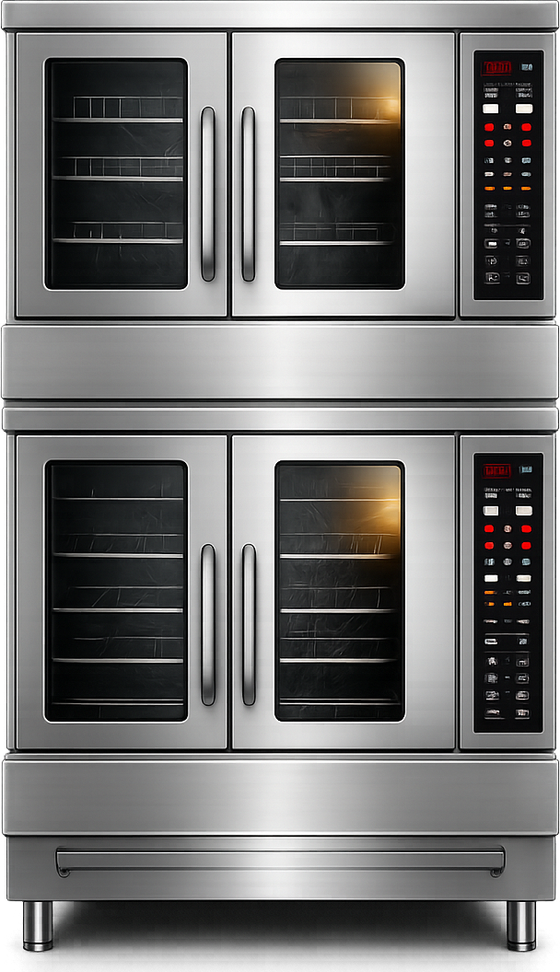
Common Commercial Oven Problems in Pflugerville
One side of the tray browns before the other
On a convection oven this is airflow: a blower wheel with buildup on the blades, a fan motor that has lost speed, or a baffle that was left out after cleaning. On a deck oven it is burner balance or a deck that has shifted. Crews compensate by rotating trays, which hides the fault until the oven is far out.
The oven will not reach temperature
Gas side: thermostat, gas valve, burners needing cleaning, or a supply that drops when everything fires at once. Electric side: an element, a contactor or a relay. The first number we take is actual cavity temperature against the setpoint, because an oven that is simply out of calibration does not need parts.
Long preheat and slow recovery between loads
Door seals and hinges more often than the heat source. An oven that does not close tight loses heat continuously, so preheat takes longer and every door opening costs more than it should. Gaskets and hinges are cheap and they are the first thing we look at when the complaint is time rather than temperature.
Pilot or igniter will not stay lit
Thermocouple, pilot assembly, igniter or flame sensor. On a hot surface igniter the part can glow and still not draw enough current to open the valve, which is why it gets measured rather than judged by eye. Replacing a gas valve for what was a weak igniter is an expensive and avoidable mistake.
A combi oven that is not steaming or throws water faults
Combi ovens are the most water-sensitive equipment in a kitchen, and Pflugerville water is hard. Scale in the steam generator, on the probes and in the water lines causes most of the faults. Descaling on schedule does more for a combi here than anything else, and a unit that has never been descaled is usually telling you so through its error codes.
A conveyor oven running the wrong bake time
Belt speed control, drive motor, or a fingers arrangement that was reassembled differently after cleaning. A conveyor that is a few seconds off puts every pizza out slightly wrong, which the kitchen notices long before any alarm does.
Door glass, hinges and handles
Ovens take abuse. Hinges sag, glass cracks, handles loosen and doors stop sealing. These look cosmetic and are not: a door that no longer seals changes every bake in that oven and runs the burners harder than they need to work.
Controls, probes and boards
A probe reading out of range makes a perfectly good oven behave badly, and that is a far more common cause than a failed control board. We check what the probe is reporting against actual cavity temperature before anything expensive gets ordered.
Commercial Ovens We Service in Pflugerville
Gas and electric convection ovens, combi ovens, deck and pizza ovens, conveyor ovens, range ovens and salamanders, countertop and rapid-cook ovens, proofers and holding cabinets. Common brands include Vulcan, Blodgett, Garland, Southbend, Middleby Marshall, Bakers Pride, Rational, Turbo Chef, Hobart and Imperial.
Gas work is done to manufacturer specification, and we verify a conversion between natural gas and propane rather than assuming it was done correctly.
Who We Work For in Pflugerville
Restaurants and pizzerias along Pecan Street and FM 685, bakeries and coffee shops, fast casual at Stone Hill Town Center, school and daycare kitchens, churches and event venues, and catering operations.
The commercial diagnostic is one hundred forty nine dollars and it is credited toward the repair once the work is approved. We will tell you on the phone whether this is a same-day fix or a part that has to be ordered, so you can plan service around it.
Common Questions About Commercial Oven Repair in Pflugerville
How far out of calibration is too far?
Twenty five degrees changes bake times noticeably and fifty changes the product. Calibration is an inexpensive service call and it is worth doing annually rather than waiting for a complaint from the line.
Why does my combi oven keep faulting on water?
Scale, almost always. Hard water here loads the steam generator and the probes quickly. A descaling schedule and the right water treatment solve most of it; ignoring it eventually costs a generator.
Can you work on deck and conveyor ovens?
Yes, both, including belt drives, thermostats, burners and controls. Tell us the brand and model when booking so the common parts are on the truck.
Is it worth replacing just the door gasket?
Almost always. A gasket is one of the cheapest parts on an oven and a leaking door costs fuel on every preheat and changes every bake. It is the repair with the best return on a commercial oven.
Can you provide a certificate of insurance?
Yes. We carry general liability and can have a COI issued to your landlord or property manager before the first visit.
Book Commercial Oven Service in Pflugerville
Tell us the brand, whether it is gas or electric, and what the oven is actually reading against the setpoint, and we can usually narrow it down before we arrive. Call (737) 388-3867. The one hundred forty nine dollar commercial diagnostic is credited toward the repair.
Commercial Oven Repair in Pflugerville, TX
-

What We Service
- Gas and electric convection ovens
- Combi ovens and steam cabinets
- Deck and pizza ovens
- Conveyor ovens
- Range ovens and salamanders
- Countertop and rapid-cook ovens
- Proofers and holding cabinets
-
Typical Calls
- Uneven bakes and hot spots
- Oven will not reach temperature
- Pilot or igniter failures
- Fan motors and blower wheels
- Door seals, hinges and glass
- Thermostats, probes and controls

Commercial Oven Brands We Service in Pflugerville
If your brand is not listed, contact us — we likely service it.
Why Homeowners & Businesses Choose TakiDA
-
 Quality WorkWe deliver professional appliance repair with attention to detail, proper diagnostics, and long-lasting results you can rely on.
-
 OEM / High-Quality PartsWe use OEM or high-quality replacement parts to ensure correct operation, reliability, and extended appliance lifespan.
-
 Same-Day / Next-Day ServiceFast response with same-day or next-day service to reduce downtime and get your appliances back in working order quickly.
-
 Clear PricingUpfront estimates with transparent pricing. No hidden fees, no surprises — you know the cost before work begins.
-
 EPA Certified & InsuredEPA Section 608 Universal certified and fully insured for residential and commercial repair, giving you peace of mind and protection.
-
 Warranty on Labor & PartsAll repairs are backed by a warranty on labor and installed parts for added confidence and long-term reliability.
