
Commercial Oven Repair in Lakeway, TX
Two things shape oven repair in Lakeway. The water, which is hard enough to scale a combi oven steam generator in a fraction of the time an equipment manual assumes, and the gas supply, since kitchens off the main run propane and an oven converted badly never holds a steady deck. On top of that, a lot of the cooking here happens in club and event kitchens that sit quiet for days and then run flat out for one evening, which is the worst pattern for finding a fault at a convenient time. We repair convection, combi, deck, conveyor and range ovens, including ignition and gas trains, thermostats and probes, controls, doors and steam systems.
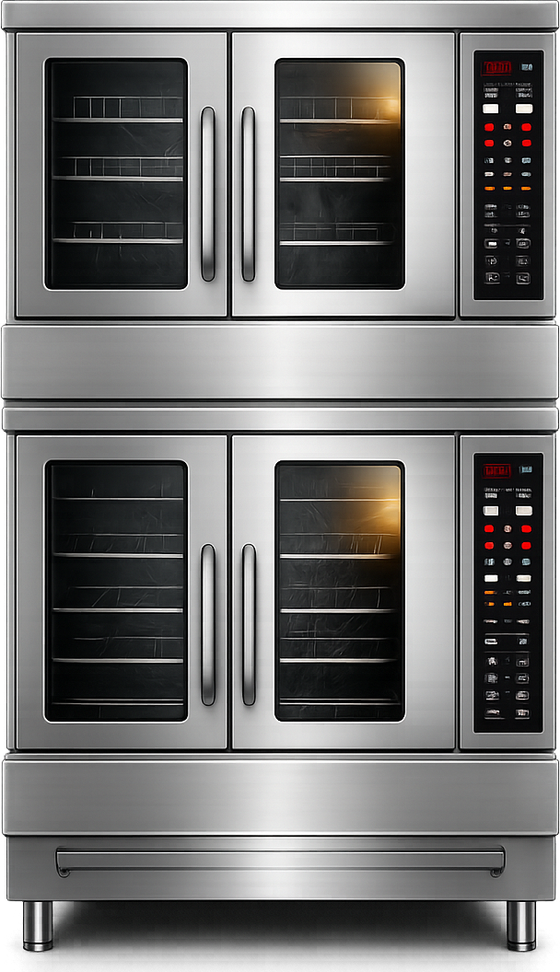
Common commercial oven problems we fix in Lakeway
Oven will not light or will not heat
On a gas or propane oven this is the pilot, the flame sensor, the ignition module, the gas valve or a safety limit. On electric it is the elements, the contactors or the limit. We check the safety circuit before the heat source, because a tripped limit presents exactly like a failed valve. On propane units the conversion gets checked too, since an oven running on the wrong orifice can light badly or not at all.
Oven runs hot or cold against the setpoint
Every oven drifts over time as thermostats age and probes degrade. The problem is that a kitchen compensates without realizing: cooks adjust the dial by feel until nobody knows what the real temperature is. We measure actual cavity temperature against the control at several points in the cycle. Sometimes the fix is a calibration, sometimes a probe, and occasionally the oven is fine and the recipe timings have drifted instead.
Uneven baking, hot spots and one side darker
In a convection oven uneven results usually mean airflow: a failed or slowing fan motor, a fan wheel out of balance, or a baffle that has been removed and never put back. The other big cause is the door. A door that no longer seals lets heat escape from one edge and the product on that side cooks differently. Door gaskets and hinges are cheap and they are the first thing we check on an uneven baking complaint.
Combi oven not making steam, or scaled up
This is the Lakeway-specific one. A combi oven generates steam from the local water supply, and that water is hard. Scale builds in the steam generator, on the level probes and on the heating elements, and the oven progressively loses steam output until it throws a fault. Without proper water treatment this happens far sooner than operators expect. We descale generators, replace probes and elements, and we will tell you plainly whether your water treatment is adequate, because a descale on untreated water buys months rather than years.
Door will not seal, glass cracked or hinge sagging
Oven doors take abuse in a busy kitchen and a sagging door costs energy every hour the oven is on. Hinges wear, springs weaken, gaskets harden and crack. On a combi the door seal also determines whether steam stays in the cavity. These are inexpensive repairs with an immediate effect on cooking consistency and on the gas bill.
Controls, displays and error codes
Modern ovens throw fault codes that point at a circuit rather than a part. A probe fault, a communication fault and a heating fault all look like a dead oven from the front. We read the fault and test what it names. A temperature probe is inexpensive and a control board is not, which is why we do not start at the board.
Pilot or burner going out during service
A burner that drops out when the hood is on full points at draft rather than at the burner. A kitchen with a strong exhaust and no makeup air path can pull enough air that pilots become unstable, which is a building problem presenting as an appliance fault. We check the burner and we check the conditions around it, because replacing a thermopile will not fix a kitchen under negative pressure.
Conveyor or deck oven running slow or uneven
On a conveyor the belt drive, the speed control and the air fingers all affect the result, and a finger plate that was reassembled wrong after cleaning will bake unevenly forever. On a deck oven, uneven decks usually trace to burner adjustment or to a deck that has shifted. Both are fixable and both are often mistaken for an oven that is simply worn out.
Hard water and combi ovens
If you run a combi in Lakeway, water treatment is not optional maintenance, it is the main thing standing between you and a generator replacement. Untreated water scales the generator, the probes and the elements continuously. The oven responds by heating longer for less steam, then by throwing faults, then by failing. Reverse osmosis or a properly specified softener feeding the oven changes the economics of owning one. We descale and repair generators, but we will always tell you what the water is doing, because a descale without treatment is a repeating bill rather than a fix.
Event kitchens and the Saturday problem
Clubs, venues and seasonal restaurants around Lakeway often cook on a schedule of nothing, nothing, nothing, then two hundred covers. Faults in an oven that sits idle do not show up until it is loaded: a weak igniter lights fine cold and fails on the third cycle, a fan bearing that is quiet at low temperature screams at 400 degrees. The practical answer is to run the equipment under something like real load a few days before a big service rather than switching it on an hour before. If you run on that pattern, a check in the quiet week is worth more than an emergency call during the event, and we would much rather do it that way.
Propane ovens and conversion
Kitchens outside the natural gas main run propane, and an oven converted for propane needs the correct orifices and the regulator set to propane manifold pressure. A badly converted oven underfires, which shows up as an oven that takes forever to come up to temperature and loses the deck every time the door opens, or overfires, which scorches the back of everything on the top shelf. We verify the conversion as part of diagnosis rather than treating it as somebody else is work, because it is a common cause of complaints that otherwise look like thermostat problems.
Commercial oven questions from Lakeway operators
Our combi keeps losing steam. Is the generator finished?
Often not. Scale on the elements and probes is the usual cause, and a proper descale restores most of it. The real question is your water treatment, because without it the same thing happens again on a short cycle.
One side of the oven bakes darker than the other
Usually airflow or the door. A slowing convection fan, a missing baffle or a door that no longer seals will all do it. These are inexpensive to fix and the difference in product consistency is immediate.
Our oven has been running cold and we just turn the dial up
Worth getting measured properly. A drifting thermostat or a failing probe means nobody in the kitchen actually knows the cavity temperature, and that costs consistency on every cook. Calibration is usually inexpensive.
Do you check propane conversions on ovens?
Yes, on every propane unit. Wrong orifice or wrong manifold pressure produces symptoms that look like thermostat faults, and replacing the thermostat will not fix it.
What does commercial oven repair cost in Lakeway?
The commercial diagnostic is $149 and it is credited toward the repair when you approve it. Gaskets, probes and igniters are inexpensive; combi generators and control boards are not. You get a written estimate with parts, labor and tax before work begins.
Book Commercial Oven Service in Lakeway
Tell us the oven type and brand, whether it runs on natural gas, propane or electric, and any fault code on the display. We serve restaurants, clubs, bakeries and event kitchens in Lakeway, Bee Cave, Lago Vista, Leander, Lakeway and the surrounding Hill Country, with same-day service when the schedule allows.
Commercial Oven Repair in Lakeway, TX
-

What we service
- Convection ovens, gas and electric
- Combi ovens and steam systems
- Deck and pizza ovens
- Conveyor ovens
- Range ovens and salamanders
- Thermostats, probes and controls
- Door hinges, gaskets and glass
-
Lakeway specifics
- Hard water scaling combi steam generators
- Propane conversions on gas ovens off the main
- Club and venue kitchens idle then at full load
- Pilot and ignition problems from hood draft
- Uneven baking traced to doors and gaskets
- Single-oven kitchens with no backup during service

Commercial Oven Brands We Service in Lakeway
If your brand is not listed, contact us — we likely service it.
Why Homeowners & Businesses Choose TakiDA
-
 Quality WorkWe deliver professional appliance repair with attention to detail, proper diagnostics, and long-lasting results you can rely on.
-
 OEM / High-Quality PartsWe use OEM or high-quality replacement parts to ensure correct operation, reliability, and extended appliance lifespan.
-
 Same-Day / Next-Day ServiceFast response with same-day or next-day service to reduce downtime and get your appliances back in working order quickly.
-
 Clear PricingUpfront estimates with transparent pricing. No hidden fees, no surprises — you know the cost before work begins.
-
 EPA Certified & InsuredEPA Section 608 Universal certified and fully insured for residential and commercial repair, giving you peace of mind and protection.
-
 Warranty on Labor & PartsAll repairs are backed by a warranty on labor and installed parts for added confidence and long-term reliability.
