
Commercial Ice Machine Repair in Liberty Hill, TX
Ice machines around Liberty Hill fight two things. The water is hard, and on some sites it comes from a well with sediment on top of the mineral, which scales an evaporator in a season. And the demand is lumpy: venues and event spaces need a full bin on Saturday and barely any ice on Tuesday, which is exactly the pattern that hides a failing machine until the worst moment.
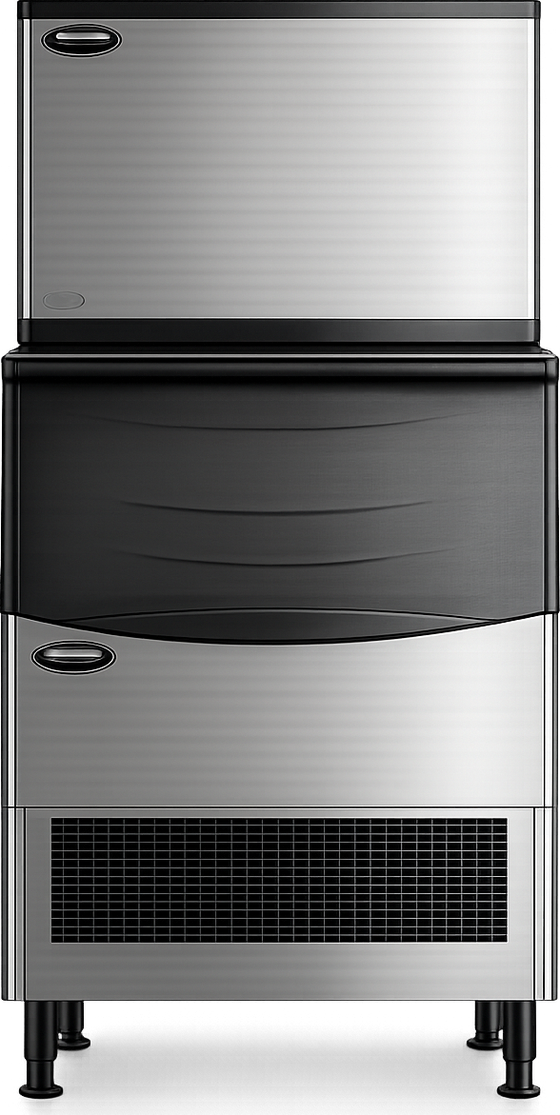
Common Ice Machine Problems in Liberty Hill Kitchens
Production falling short on an event weekend
Every ice machine is rated at a given air and water temperature, and the published number falls sharply as both climb. A machine in a back room or an outbuilding in August can lose a third of its output without a single component failing. If the bin was fine last month and is empty by eight on Saturday, we check what the machine is actually breathing before we open it up.
Cubes coming out small, cloudy or hollow
Cube shape is a diagnostic in itself. Thin or hollow cubes usually mean the freeze cycle is ending early or water distribution across the evaporator is uneven, often from scale in the spray bar. Cloudy ice points at water quality and mineral carried into the cube. On a cube machine the ice tells us more in ten seconds than a code does.
A machine that cycles but drops almost no ice
If the harvest cycle runs but the ice does not release, the hot gas valve, the harvest assist or the thermostat ending the freeze cycle is where to look. Scale on the evaporator plate also makes ice cling long past the point it should let go. A machine stuck in this pattern can run all night and fill nothing.
Scale building unusually fast on well water
A machine on an untreated well deals with both dissolved mineral and suspended sediment. The sediment loads filters and fouls the water trough and float, while the mineral coats the evaporator. Service intervals written for treated city water are simply wrong in that situation, and the right answer is filtration sized for the water rather than cleaning more often forever.
Water running constantly to the drain
A water inlet valve that no longer seats, a float or probe reading wrong, or a purge cycle that is not ending will all quietly run water all day. On a well that also means the pump is cycling far more than it should. It rarely stops the ice, so it goes unnoticed until something else draws attention to it.
A bin full of ice fused into one block
Bridged ice means the bin is not cold enough or the ice is arriving wetter than it should. A failing bin thermostat, a door gasket letting warm air in, or ice harvesting before it is fully frozen all cause it. Staff attack it with a mallet, which is how bin liners and evaporators get damaged.
A machine shutting down on a safety code
Modern machines stop themselves and tell you why. High pressure usually means a dirty condenser or a failed fan. Long freeze or long harvest times point at scale, refrigerant or a valve. The code tells us which direction to look, it does not name the part, and resetting it without finding the cause just moves the shutdown a few hours later.
A machine in an outbuilding or on a trailer
Air cooled machines in a metal building, a barn or a trailer compartment are being asked to reject heat into air already at their limit. They short cycle, lose production and eventually trip on high pressure. Either the airflow gets fixed or the machine gets relocated, and we will tell you plainly which is realistic for your setup.
Machines We Service in Liberty Hill
Modular and under counter cube machines, nugget and chewable ice machines, flake ice machines, air cooled and water cooled condensers, remote condenser installations, plus bins, dispensers and water filtration. Common brands include Hoshizaki, Manitowoc, Scotsman, Ice O Matic, Follett, Cornelius and True.
We are EPA Section 608 Universal certified and insured, and we can provide a certificate of insurance when a venue or landlord asks for one.
What Commercial Ice Machine Repair Costs in Liberty Hill
The commercial diagnostic is one hundred and forty nine dollars and it is credited toward the repair once you approve the work. Water valves, float switches, fan motors, thermostats, hot gas valves and a full descale and sanitize are routine. Sealed system work is a bigger decision, and on an older machine we will give you the honest comparison against a replacement.
If an event is coming up, say so when you call. The useful question is what we can get running before the doors open, not what is theoretically cheapest.
Neighborhoods We Cover in Liberty Hill
Downtown Liberty Hill and the businesses along 29, Santa Rita Ranch, Orchard Ridge, Rancho Sienna, Butler Farms, Bar W Ranch, Stonewall Ranch, the venues and event barns off 183 and Ronald Reagan, and commercial properties toward Bertram and Leander.
Common Questions About Ice Machine Repair in Liberty Hill
How often should an ice machine be cleaned on well water?
Quarterly is realistic, and that is before you count sediment. Machines on treated city water can often stretch to six months. On a well, the filter change interval matters as much as the descale, because sediment reaches the trough and the float long before scale becomes visible.
Does a water filter actually help here?
More than almost anywhere. Filtration aimed at sediment and scale extends evaporator life, keeps production up and reduces how often the machine needs stripping. It is the cheapest item on this page and the most often skipped.
Our ice tastes off. Machine or water?
Both are possible and easy to separate. Taste the water feeding the machine first. If that is clean, the problem is inside, usually biofilm in the trough or a filter nobody changed. On a well with sulfur, the water itself is often the answer.
We only need full output on weekends. Any advice?
Yes. Have the machine serviced before your busy season rather than during it, and do not let the bin sit full of old ice all week, because bridged ice is the complaint we get most often from venues. A clean machine with a working bin thermostat will recover between events without drama.
Can you service nugget machines?
Yes. Nugget machines work on a completely different principle from cube machines, with an auger and gearbox rather than a plate and a harvest cycle. Bearings, augers, water levels and gearbox wear are where those calls land.
Book Ice Machine Service in Liberty Hill
Tell us the make, whether it is cube, nugget or flake, whether the site is on a well, and any code on the display, and we can usually narrow it down before we arrive. Call (737) 388-3867 or book online. The one hundred and forty nine dollar commercial diagnostic is credited toward the repair.
Commercial Ice Machine Repair in Liberty Hill, TX
-

What Brings Us Out to an Ice Machine in Liberty Hill
- Production falling short on an event weekend
- Cubes coming out small, cloudy or hollow
- Machine cycling but dropping almost no ice
- Scale building fast on well water
- Water running constantly into the drain
- Bin full of ice fused into one block
- Machine shutting down on a safety code
-
Ice Machines We Cover
- Cube machines, modular and under counter
- Nugget and chewable ice machines
- Flake ice machines
- Air cooled and water cooled condensers
- Remote condenser installations
- Bins, dispensers and water filtration

Ice Machine Brands We Service in Liberty Hill
If your brand is not listed, contact us — we likely service it.
Why Homeowners & Businesses Choose TakiDA
-
 Quality WorkWe deliver professional appliance repair with attention to detail, proper diagnostics, and long-lasting results you can rely on.
-
 OEM / High-Quality PartsWe use OEM or high-quality replacement parts to ensure correct operation, reliability, and extended appliance lifespan.
-
 Same-Day / Next-Day ServiceFast response with same-day or next-day service to reduce downtime and get your appliances back in working order quickly.
-
 Clear PricingUpfront estimates with transparent pricing. No hidden fees, no surprises — you know the cost before work begins.
-
 EPA Certified & InsuredEPA Section 608 Universal certified and fully insured for residential and commercial repair, giving you peace of mind and protection.
-
 Warranty on Labor & PartsAll repairs are backed by a warranty on labor and installed parts for added confidence and long-term reliability.
