
Commercial Ice Machine Repair in Bee Cave, TX
In a bar where cocktails are part of the reputation, ice is an ingredient rather than a supply. Clarity, size and consistency all come back to how the machine is freezing and harvesting, and the thing that degrades all three in Bee Cave is scale from hard Hill Country water.
Common Ice Machine Problems in Bee Cave
Production has dropped but the machine still runs
Usually scale on the evaporator and a loaded condenser together. Scale insulates the plate so ice takes longer to form, and a dirty condenser raises head pressure so the system makes less of it. Both are maintenance rather than failure, and a machine in this state is normally recoverable.
Cloudy ice instead of clear
Clarity comes from how slowly and evenly the plate freezes and how well the water flows across it. A worn water pump, a partly blocked distribution tube, or minerals in the water all produce cloudy, soft cubes that dilute a drink faster. In a cocktail program that is a quality complaint long before it is a breakdown.
Thin, hollow or incomplete cubes
Not enough water reaching parts of the plate each fill. A clogged distribution tube, a pump losing output, or a low sump level. Hollow cubes melt quickly and customers notice before the kitchen does.
Ice that will not release from the evaporator
The harvest cycle: hot gas valve, harvest thermostat or probe, or a water curtain switch that is not reporting. A machine that freezes a full slab and then sits there is stuck mid-harvest, and running it that way is hard on the compressor.
A bar machine that cannot keep up on a Friday
Undercounter machines in a bar are sized tightly, and when the room is full the ambient around them rises while demand doubles. If a machine keeps up Monday and falls short Friday, the question is whether it has lost capacity to scale and dust or was always marginal for the volume.
Slime in the bin, odor or a taste complaint
Biofilm in the bin and the water path. It is a health inspection item rather than cosmetic, and it also means the machine is overdue for a full clean and sanitize. A filter past its capacity usually feeds the problem.
Water on the floor around the machine
A blocked drain, a drain line without proper slope or air gap, a cracked sump, or condensation off an uninsulated line. Ice machines move a lot of water through a floor drain, and a slow drain backs up quietly for weeks.
A machine that only struggles in summer
Ambient temperature decides how much heat the machine can reject. One that is marginal because of scale or a dirty condenser copes in February and falls short in July. The summer failure is the symptom; the condition was there months earlier.
Ice Machines We Service in Bee Cave
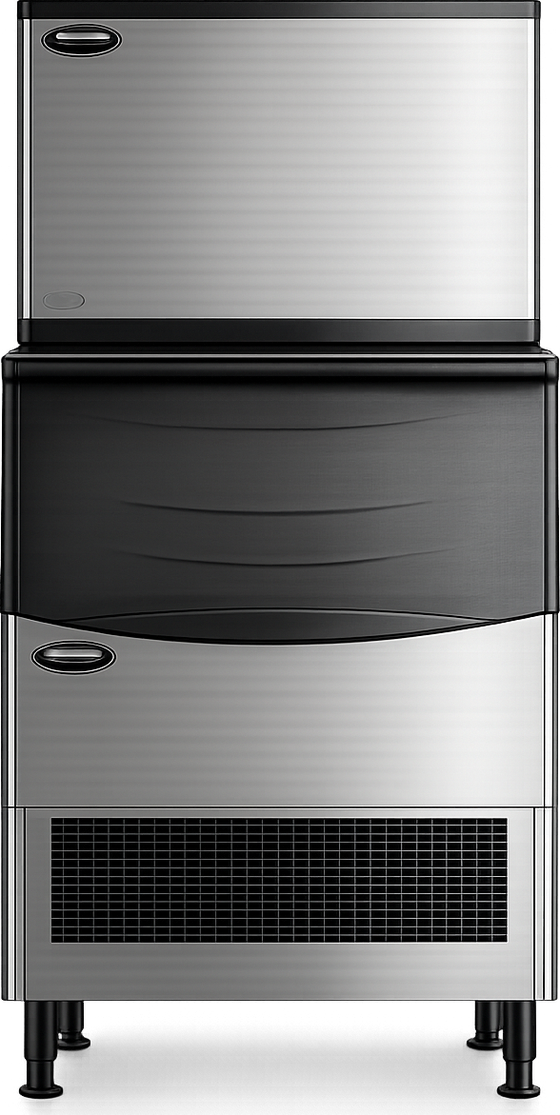
Modular cubers on storage bins, undercounter and bar machines, nugget and chewable ice machines, flake machines, water-cooled and air-cooled units, remote condenser systems, and ice and water dispensers. Common brands include Manitowoc, Hoshizaki, Scotsman, Ice-O-Matic, Follett, Kold-Draft and Cornelius.
We are EPA Section 608 Universal certified and insured, and we can issue a certificate of insurance to a property manager or club before work starts.
Who We Work For in Bee Cave
Restaurants, bars and cafes at the Hill Country Galleria and along Bee Cave Road and Highway 71, country club and golf course kitchens, caterers and event venues, tasting rooms, school kitchens, gyms and medical offices.
The commercial diagnostic is one hundred forty nine dollars and it is credited toward the repair once the work is approved. For a bar without ice we will tell you on the phone whether this is a same-day fix or a part on order, so you can arrange bagged ice if you need to.
Common Questions About Ice Machine Repair in Bee Cave
How often should the machine be cleaned?
Every six months at minimum, and every three to four on hard water or in a kitchen with grease in the air. Manufacturers tie warranty coverage to documented cleaning, and most production complaints we see come from machines that are overdue.
Will a filter make the ice clearer?
A scale-inhibiting filter helps with both clarity and machine life here, but clarity also depends on the pump and the water distribution. If clear ice matters to your program it is worth having both looked at together.
Why does it struggle only when the room is busy?
Ambient temperature rises and demand doubles at the same time. A machine with any lost capacity shows it exactly then. That is a diagnosis rather than a complaint about the room.
Is an older machine worth repairing?
Usually. Pumps, valves, boards, thermostats and sensors are serviceable parts and a well-maintained cuber lasts a long time. A failed compressor or a leaking evaporator on an older unit is where we give you both numbers.
How quickly can you get out?
Same day when the schedule allows. Tell us the brand and model on the phone so the common parts are on the truck when we arrive.
Book Ice Machine Service in Bee Cave
Tell us the brand and model, when it was last cleaned, and whether the problem is no ice or poor ice, and we can usually tell you what to expect before we arrive. Call (737) 388-3867. The one hundred forty nine dollar commercial diagnostic is credited toward the repair.
Commercial Ice Machine Repair in Bee Cave, TX
-

What We Service
- Modular cubers on storage bins
- Undercounter and bar ice machines
- Nugget and chewable ice machines
- Flake ice machines
- Remote and air-cooled condensers
- Water-cooled machines
- Ice and water dispensers
-
Typical Calls
- Low production or thin hollow cubes
- Running but making no ice
- Cubes that will not release
- Scale buildup and failed clean cycles
- Cloudy ice and taste complaints
- Water leaking under the machine

Ice Machine Brands We Service in Bee Cave
If your brand is not listed, contact us — we likely service it.
Why Homeowners & Businesses Choose TakiDA
-
 Quality WorkWe deliver professional appliance repair with attention to detail, proper diagnostics, and long-lasting results you can rely on.
-
 OEM / High-Quality PartsWe use OEM or high-quality replacement parts to ensure correct operation, reliability, and extended appliance lifespan.
-
 Same-Day / Next-Day ServiceFast response with same-day or next-day service to reduce downtime and get your appliances back in working order quickly.
-
 Clear PricingUpfront estimates with transparent pricing. No hidden fees, no surprises — you know the cost before work begins.
-
 EPA Certified & InsuredEPA Section 608 Universal certified and fully insured for residential and commercial repair, giving you peace of mind and protection.
-
 Warranty on Labor & PartsAll repairs are backed by a warranty on labor and installed parts for added confidence and long-term reliability.
