
Commercial Fryer Repair in Lakeway, TX
A fryer is the piece of equipment in a Lakeway kitchen most likely to be running on propane, and propane is where fryer problems usually start out here. Properly converted, a propane fryer performs exactly like a natural gas one. Converted carelessly, it either starves and will not recover between baskets or runs hot enough to scorch oil and trip its high limit. On top of that, the service pattern here punishes recovery rate: a quiet afternoon followed by a dinner rush that drops basket after basket into the same vat. We repair gas, propane and electric fryers, including thermostats and high limits, ignition and pilot systems, filtration, and the conversion itself.
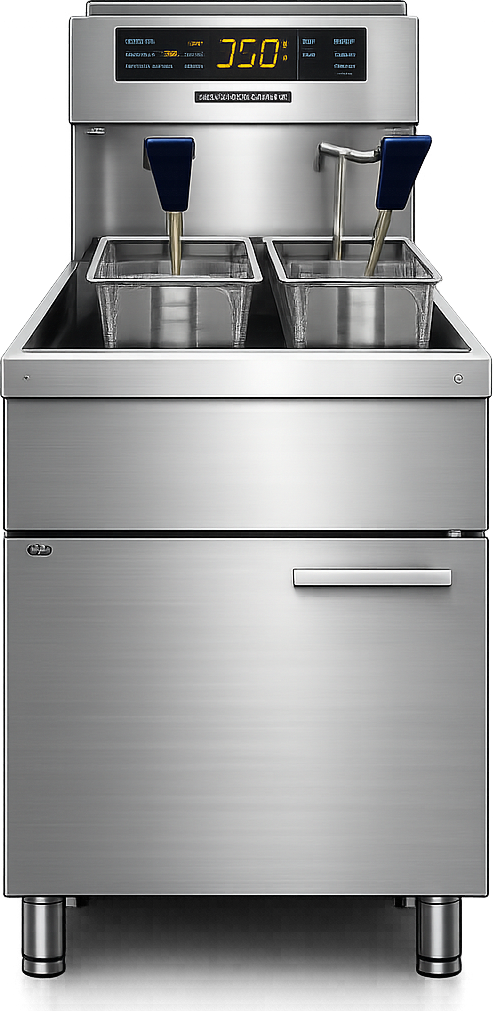
Common fryer problems we fix in Lakeway
Fryer will not heat or will not light
On a gas or propane fryer this is the pilot, the thermopile or thermocouple, the gas valve or the ignition module. On an electric fryer it is the elements, the contactor or the high limit. The order matters: a tripped high limit will keep a fryer cold and looks exactly like a failed valve or element, and resetting it without finding why it tripped only postpones the problem. We check the safety side first, then the heat source.
Slow recovery between baskets
This is the complaint that costs a kitchen money without ever becoming an outage. The fryer holds temperature when idle but takes too long to come back after a drop, so the food absorbs oil and the line backs up. The usual causes are a burner not firing at full rate, a propane conversion that never got the right orifice, carbon buildup on the heat exchanger tubes, or simply a fryer being asked for more than its rated recovery. We measure the recovery rate rather than taking the thermostat display at face value.
Oil overheating or scorching
Oil running above setpoint burns product, breaks down the oil far faster, and costs real money in replacement oil. The cause is normally a thermostat out of calibration or a failed probe, but on propane units it can also be a burner running overfired because of a wrong orifice or a regulator left at natural gas pressure. We verify actual oil temperature against the control with an independent measurement before we change any part.
High limit tripping repeatedly
The high limit is a safety device and it is doing its job when it trips. The question is why. Low oil level, a failed thermostat letting the burner run on, a dirty heat exchanger, or an overfired burner are the common reasons. A high limit that has to be reset more than occasionally is a warning, and bypassing or replacing it without diagnosing is how fryer fires start. We will not do that.
Pilot will not stay lit
A pilot that lights and goes out when you release the knob is a thermopile or thermocouple problem, a dirty pilot assembly, or a draft issue. Draft matters more in Lakeway than people expect: a kitchen with a high CFM hood and no makeup air path can pull the pilot out, and a patio or outdoor kitchen fryer is exposed to actual wind. We test the millivolt output at the valve, which tells us whether the sensor is weak or the gas valve is the problem.
Filtration system not pumping or leaking
Built-in filtration fails at the pump, the motor, the drain valve or the hoses and seals. A fryer whose filtration has stopped working gets used with old oil, which costs more in oil than the repair does. Drain valves also seize when the fryer has been sitting, which is common in a seasonal Lakeway kitchen.
Oil leaking from the vat or drain
Leaks come from the drain valve packing, the vat seams, or the fittings on a filtration system. Hot oil on a kitchen floor is a serious burn and slip hazard and it is not something to work around for a weekend. If your fryer is leaking, take it out of service and call us.
Controls or digital display faults
Computer-controlled fryers throw error codes for probe faults, communication faults and heating faults. The code narrows the circuit but does not name the part, and a probe is far cheaper than a controller. We read the code, test the circuit it points at, and replace the part that actually failed.
Propane conversions are the thing to check first
If your kitchen is not on the natural gas main, every gas appliance in it was either bought for propane or converted. A fryer conversion means the correct orifice for propane and a regulator set to the right manifold pressure. Get it wrong in one direction and the burner underfires, which shows up as poor recovery that no thermostat adjustment will fix. Get it wrong the other way and it overfires, scorching oil and tripping the high limit. We see both regularly around Lakeway, often on equipment that was converted quickly at delivery and never verified under load. On any propane fryer we check the conversion as part of the diagnosis, because it explains the complaint often enough to be worth ruling out before anything is replaced.
Recovery rate and weekend volume
Most Lakeway kitchens run far more volume on a Friday and Saturday than during the week, and a fryer that is fine on a Wednesday can fall behind on a Saturday. Recovery rate, not vat temperature, is what determines whether the line keeps up. When we diagnose a slow-recovery complaint we tell you whether the fryer is underperforming its own specification, which is a repair, or performing to spec and simply undersized for your peak, which is not. The second answer is less satisfying but it saves you paying for parts that will not change anything.
Oil care, boil-outs and fryer life
The work that keeps a fryer healthy is unglamorous: regular filtration, periodic boil-outs, and keeping carbon off the heat exchanger tubes on a gas unit. Carbon acts as insulation, so a neglected fryer burns more gas to deliver less heat and recovers more slowly every month. In a seasonal kitchen the other risk is the opposite: a fryer sitting with old oil in it between busy periods, where the drain valve seizes and the oil degrades. We handle boil-outs and we will tell you honestly whether your fryer needs one or whether the problem is mechanical.
Fryer questions from Lakeway operators
The fryer holds temperature but cannot keep up at dinner
That is recovery rate, not setpoint. Usual causes are an underfiring burner, a propane conversion that was never correct, or carbon on the heat exchanger. We measure recovery and tell you whether you have a fault or a capacity limit.
Do you check propane conversions?
Yes, on every propane unit we diagnose. The orifice and the manifold pressure both have to be right. A bad conversion is behind a large share of the fryer complaints we see outside the gas main area.
Our high limit keeps tripping. Can you just replace it?
We can replace it, but not without finding why it trips. The high limit is the last safety between a hot vat and a fire. Repeated trips mean something else is wrong, usually the thermostat, the oil level or an overfired burner.
Is a boil-out something you do?
Yes. We also tell you whether it will actually help. If the problem is carbon on the exchanger tubes or an ignition fault, a boil-out will not change anything and we will say so rather than charging for it.
What does fryer repair cost in Lakeway?
The commercial diagnostic is $149 and it is credited toward the repair when you approve it. Thermostats, thermopiles and high limits are inexpensive; controllers and gas valves are not. You get a written estimate with parts, labor and tax before any work begins.
Book Fryer Service in Lakeway
Tell us the brand, whether the fryer runs on natural gas, propane or electric, and what it is doing. We serve restaurants, clubs, bars and event kitchens in Lakeway, Bee Cave, Lago Vista, Leander, Lakeway and the surrounding Hill Country, with same-day service when the schedule allows.
Commercial Fryer Repair in Lakeway, TX
-

What we fix
- Fryer will not heat or will not light
- Slow recovery between baskets
- Oil overheating or scorching
- Thermostat drifting out of calibration
- High limit tripping repeatedly
- Pilot will not stay lit on a gas or propane unit
- Filtration pump and drain valve problems
-
Lakeway specifics
- Propane conversions with the wrong orifice or pressure
- Weekend and event volume that outruns recovery rate
- Patio and outdoor kitchen fryers exposed to wind
- Hoods with remote blowers affecting burner draft
- Seasonal kitchens idle for weeks between services
- Single-fryer lines with no backup during service

Fryer Brands We Service in Lakeway
If your brand is not listed, contact us — we likely service it.
Why Homeowners & Businesses Choose TakiDA
-
 Quality WorkWe deliver professional appliance repair with attention to detail, proper diagnostics, and long-lasting results you can rely on.
-
 OEM / High-Quality PartsWe use OEM or high-quality replacement parts to ensure correct operation, reliability, and extended appliance lifespan.
-
 Same-Day / Next-Day ServiceFast response with same-day or next-day service to reduce downtime and get your appliances back in working order quickly.
-
 Clear PricingUpfront estimates with transparent pricing. No hidden fees, no surprises — you know the cost before work begins.
-
 EPA Certified & InsuredEPA Section 608 Universal certified and fully insured for residential and commercial repair, giving you peace of mind and protection.
-
 Warranty on Labor & PartsAll repairs are backed by a warranty on labor and installed parts for added confidence and long-term reliability.
