
Commercial Dryer Repair in Round Rock, TX
Linen coming out hot but still damp, scorch marks on the load, lint escaping into the room or a cycle that ends with no cooldown — we service commercial tumble dryers across Round Rock, from hotel and senior living laundries along I-35 to gyms, salons and apartment laundry rooms. Duct and makeup air assessment included. Insured for commercial premises. Commercial diagnostic $149, credited toward the repair.
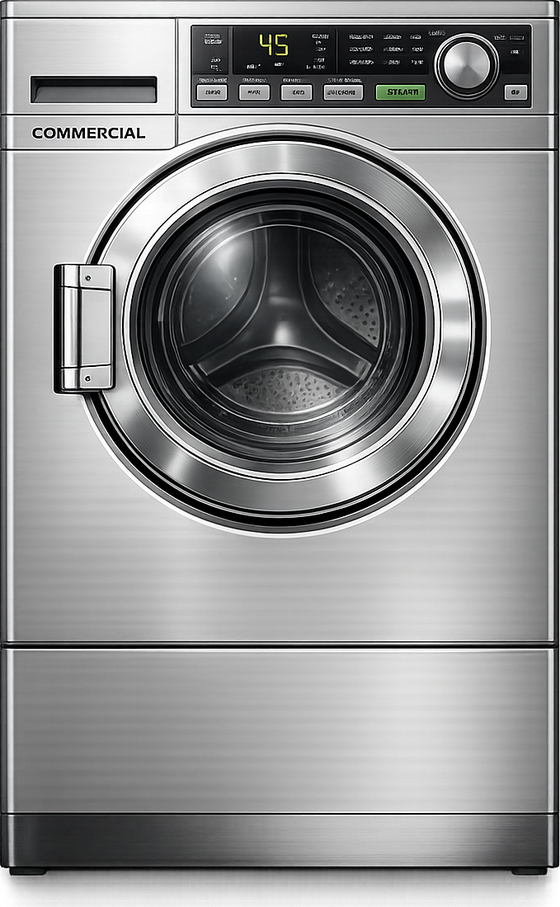
Common Commercial Dryer Problems in Round Rock Laundry Rooms
Linen comes out hot but still damp
Heat without drying means the moisture has nowhere to go. A commercial dryer is designed to move a large volume of air through the load and push it outside, and when the exhaust is restricted the machine heats the same air over and over. The other version of this complaint is simple overloading: a pocket packed past its rated weight never tumbles properly, so the middle of the load barely sees the airflow at all. We weigh a typical load and measure static pressure at the machine, because those two numbers between them explain most of these calls.
Scorch marks appearing on the load
Scorching means the drum is reaching temperatures it should not, and that points at the controls that are supposed to prevent it. A cycling thermostat that has failed closed will let the burner or element run past its range, and a sail switch that is not proving airflow correctly can allow heat with too little air moving. Both are modest parts. Neither should be worked around, because scorched linen is the visible version of a condition that also starts laundry fires.
Auto dry runs the full cycle no matter what
Moisture sensing works off metal strips in the drum that read how well the load conducts across them. In a commercial laundry those strips pick up a film from softeners and from residue in the linen, and once coated they read a dry load from the first minute, so the control simply times out instead. Cleaning the sensor bars properly restores the function. It is worth doing, because a dryer timing out every load uses far more gas than one that stops when the linen is ready.
Lint escaping into the room
Lint should go to the filter and the duct, not into the laundry. When it is collecting on surfaces and in the air, the usual causes are a lint drawer or filter frame that no longer seals, worn drum seals letting lint bypass the airflow path, or a duct joint that has separated behind the machine. It matters for more than cleanliness: airborne lint settles on hot surfaces and in electrical enclosures, and that is how a laundry fire begins.
Heat pouring out around the door
Door gaskets harden and tear, and door glass seals fail. Once the door no longer closes against a good seal, a large amount of heated air leaves the front of the machine instead of passing through the load. The laundry gets hotter, dry times get longer and the gas bill climbs. Gaskets and glass seals are inexpensive and quick, and on a bank of machines the saving across all of them adds up fast.
One pocket of a stack never matches the other
Each pocket of a stacked dryer has its own burner or element, its own blower and its own controls, so one side running cooler or slower is a fault specific to that pocket rather than to the machine. People often work around it for months by loading the good side first. We check the burner, the airflow and the controls on the slow pocket against the healthy one, which makes the difference obvious quickly because there is a working example sitting right there.
The gas valve chatters or the burner sounds rough under load
Chattering usually means the valve is not getting a stable supply: pressure dropping when several machines fire together, a regulator at the end of its life, or an undersized supply line for the number of dryers that have been added over the years. It can also be a valve coil breaking down. We measure manifold pressure with the whole laundry running rather than with one machine on, because that is the condition that produces the complaint.
The cycle ends with no cooldown
Cooldown is not a comfort feature. It brings the load down before it is removed, and it exists because hot linen piled in a cart or a bin can continue to heat on its own, particularly when it carries oils or greases. A dryer that has stopped running its cooldown step, because of a timer, a control or a thermostat fault, leaves that risk in place at the end of every load. This is one we treat as urgent rather than cosmetic, and we will say so.
Equipment We Service in Round Rock
We service single pocket and stacked commercial tumble dryers in gas and electric, from the 30 pound machines in apartment and salon laundries to the larger capacities used in hotels and senior living, from Speed Queen, Huebsch, Unimac, Dexter, Continental Girbau, Wascomat, Electrolux Professional, Maytag Commercial and Whirlpool Commercial. That covers ignition modules, igniters, gas valves and flame sensors, high limits and cycling thermostats, sail switches, moisture sensors, blowers, belts, idlers, rollers and trunnion bearings, motors, door gaskets and glass seals, controls and coin and card systems, as well as duct, static pressure and makeup air assessment. We are insured for commercial premises.
What Commercial Dryer Repair Costs in Round Rock
The commercial diagnostic is $149 and it comes off the repair when you approve it. You get a written price for parts and labor before anything is replaced. Igniters, flame sensors, high limits and cycling thermostats, sail switches, moisture sensors, belts, idlers, rollers, door gaskets and glass seals and control components are all modest parts. Gas valves, motors, blower assemblies and bearing work are the expensive end. If several of those are due together on an older machine, we will put the total next to a replacement so you can make the call with real numbers.
A large share of commercial dryer calls are airflow and seals rather than parts, and clearing those gets your dry times and your gas bill back at the same time.
Neighborhoods We Cover in Round Rock
Hotels along the I-35 corridor and around La Frontera depend on dryer throughput for room turnaround, and a slow machine costs more than most operators realise before anyone calls it a fault. Senior living and assisted living laundries around town run all day with a heavy lint load, and there the recurring issues are duct lint, seals and high limits cycling. Both are cheaper to stay ahead of than to chase.
We also service apartment and condo laundry rooms across Teravista, Forest Creek, Chandler Creek and the Old Town area, along with gym, spa and salon laundries, where payment hardware and door seals come up as often as burners do. Property managers usually want a certificate of insurance before access, and we can have that ready before we arrive. Round Rock is an easy run from Leander.
Common Questions About Commercial Dryer Repair in Round Rock
Linen is hot but still wet. What is wrong?
Airflow or load size. A restricted exhaust means the machine reheats the same air, and an overloaded pocket never tumbles properly. We measure static pressure and look at a typical load weight.
Why is auto dry running the full cycle every time?
The moisture sensor bars are coated with softener and residue, so they read dry from the start and the control times out instead. Cleaning them properly restores the function and saves gas.
Our dryer no longer cools down at the end. Does that matter?
Yes. Cooldown exists so hot linen is not piled into a cart while it can still heat on its own, especially when it carries oils. We treat a missing cooldown as urgent rather than cosmetic.
How often should commercial dryer ducts be cleaned?
On a schedule rather than on complaint, and more often than domestic ones. Lint in a commercial duct is a fire risk and usually an insurance condition as well.
How quickly can you get to Round Rock?
Often the same day. Call (737) 388-3867 with the make, model and whether it is gas or electric, and we will give you a straight answer on timing.
Book Commercial Dryer Service in Round Rock
Tell us the make and model, whether it is gas or electric, and whether one machine is affected or all of them, because that difference points in two very different directions. If a property manager needs a certificate of insurance, say so and we will have it ready. Call (737) 388-3867 or book online and we will confirm a time for Round Rock.
Commercial Dryer Repair in Round Rock, TX
-

Symptoms We Sort Out
- Linen coming out hot but still damp
- Scorch marks on the load
- Auto-dry running the full cycle regardless
- Lint escaping into the room
- Heat pouring out around the door
- One pocket of a stack never matching
- Gas valve chattering under load
- Cycle ending with no cooldown
-
Equipment We Service
- Single pocket and stacked dryers
- Gas and electric
- 30 pound to large capacity
- Ignition, burners and gas valves
- Blowers, belts and bearings
- Duct, static pressure and makeup air

Commercial Dryer Brands We Service in Round Rock
If your brand is not listed, contact us — we likely service it.
Why Homeowners & Businesses Choose TakiDA
-
 Quality WorkWe deliver professional appliance repair with attention to detail, proper diagnostics, and long-lasting results you can rely on.
-
 OEM / High-Quality PartsWe use OEM or high-quality replacement parts to ensure correct operation, reliability, and extended appliance lifespan.
-
 Same-Day / Next-Day ServiceFast response with same-day or next-day service to reduce downtime and get your appliances back in working order quickly.
-
 Clear PricingUpfront estimates with transparent pricing. No hidden fees, no surprises — you know the cost before work begins.
-
 EPA Certified & InsuredEPA Section 608 Universal certified and fully insured for residential and commercial repair, giving you peace of mind and protection.
-
 Warranty on Labor & PartsAll repairs are backed by a warranty on labor and installed parts for added confidence and long-term reliability.
