
Commercial Dryer Repair in Liberty Hill, TX
A commercial tumbler is mostly an airflow machine with a heat source attached, and out here the air path is usually the weak link. Long exhaust runs in metal buildings, make up air nobody provided, and on plenty of sites propane rather than natural gas feeding the burner. The heat source is often fine.
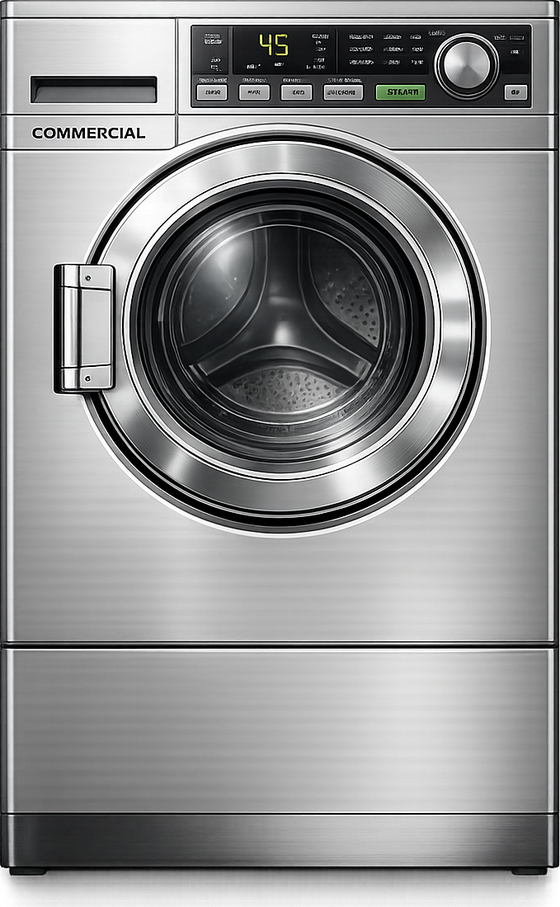
Common Commercial Dryer Problems in Liberty Hill
A tumbler turning with no heat at all
On a gas machine the order of suspicion is ignition, flame sensing, gas valve and the safety circuit above it. On electric it is contactors, elements and the high limit chain. What matters is that a dryer which has been running hot for months because of poor airflow usually fails at a safety device rather than at the heat source, so replacing the obvious part without finding out why it opened just repeats the failure.
Dry times creeping up across the whole room
When every machine is slower, the machines are not the problem. Exhaust ductwork loaded with lint, a roof cap partly blocked, or a make up air path that was closed off will slow a whole bank of dryers at once. Static pressure in the exhaust is measurable and it tells you immediately whether the room or the equipment is at fault.
A propane tumbler with weak heat or short cycling
On LP the orifice has to match the fuel and the regulator has to deliver under load. A tumbler converted badly, or fed from a tank that cannot vaporize fast enough when several appliances fire, produces exactly the symptoms people blame on the burner. Supply pressure under full load gets measured before any component is condemned.
A cylinder squealing or dragging
Commercial tumblers ride on rollers or bearings rather than a residential style drum slide, and those wear. Noise on startup, a cylinder that will not coast when power is cut, or belt dust under the machine all point there. Caught early it is a roller or a bearing. Ignored, it becomes a seized shaft and a much longer repair.
Lint getting past the screen into the cabinet
A torn lint screen, a gap in the lint drawer seal, or a split internal duct lets lint into the cabinet where it settles around the heat source. This is the fire risk in a laundry room, and it is the one thing on this page we treat as urgent no matter what the dryer is otherwise doing.
A dryer shutting down on a thermal cutout
Thermal cutouts do not open without a reason. Nine times out of ten the reason is airflow: lint, a long or crushed duct run, or a room that cannot supply replacement air. Replacing the cutout and sending the machine back into service with the original restriction is the most common wasted repair in commercial laundry.
A timer or control ending before the load is dry
In a coin or card room the cycle time is a business decision, and a machine set for a time that no longer matches its real drying performance produces complaints that look like faults. On machines with moisture sensing, residue on the sensor bars does the same thing. Both are worth checking before anyone calls the dryer broken.
One dryer behaving differently from the bank next to it
In a room of identical machines the outlier is informative. One slow dryer among healthy ones points at that machine or its branch of the duct. A whole room slowing together points at the building. We ask that question first, because it decides the entire direction of the visit.
Machines and Brands We Repair in Liberty Hill
Natural gas, propane and electric commercial tumblers, single pocket and stack dryers, on premise laundry for salons, spas and gyms, venue and short term rental linen laundry, and coin, card and app operated equipment. Common brands include Speed Queen, Huebsch, Maytag Commercial, Whirlpool Commercial, Dexter, American Dryer, Wascomat and Continental Girbau.
We are insured, and certificates of insurance are available for property managers, venues and building owners who need one before work begins.
What Commercial Dryer Repair Costs in Liberty Hill
The commercial diagnostic is one hundred and forty nine dollars and it is credited toward the repair once you approve the work. Igniters, flame sensors, thermostats, thermal cutouts, belts, rollers, switches and orifice conversions are routine. Gas valves, motors and control boards cost more, and you will see the number before anything is ordered.
Where the honest answer is exhaust duct cleaning, make up air or propane supply rather than parts, we will tell you, because a dryer repaired into a blocked duct will be back on your list within weeks.
Neighborhoods We Cover in Liberty Hill
Downtown Liberty Hill and the businesses along 29, Santa Rita Ranch, Orchard Ridge, Rancho Sienna, Butler Farms, Bar W Ranch, Stonewall Ranch, the venues and event barns off 183 and Ronald Reagan, and commercial properties toward Bertram and Leander.
Common Questions About Commercial Dryer Repair in Liberty Hill
Every dryer in our room got slower at the same time. What happened?
Almost certainly the shared exhaust or the make up air, not several machines failing together. Lint loading in the common duct, a blocked roof cap, or a louver that got sealed will do it. That is measurable and it is where we start.
How often should the exhaust ducting be cleaned?
At least annually in a busy room and realistically twice a year. It is the highest value maintenance item in commercial laundry and it prevents both slow dry times and the thermal cutout failures that follow.
We keep replacing the same safety part. Why?
Because the part is doing its job. A thermal cutout or high limit that opens repeatedly is reporting a real overheat, and the overheat almost always comes from restricted airflow. Fix the air path and the part stops failing.
Does a propane tumbler need converting?
Yes, and on used equipment it gets missed. The wrong orifice on LP means weak heat and long cycles no matter how healthy everything else is. It is worth confirming on any gas tumbler that has never dried well since it was installed.
Can you service a whole room in one visit?
Usually, and it is the efficient way to do it. One visit, every machine checked, and a written list splitting what needs attention now from what can wait. For property managers and venues that normally costs less than reacting to each failure separately.
Book Commercial Dryer Repair in Liberty Hill
Tell us the make, whether it is electric, natural gas or propane, how many machines share the room, and whether one dryer or all of them are affected, and we can usually narrow it down before we arrive. Call (737) 388-3867 or book online. The one hundred and forty nine dollar commercial diagnostic is credited toward the repair.
Commercial Dryer Repair in Liberty Hill, TX
-

What We See Most in Liberty Hill Laundry Rooms
- Tumbler turning with no heat at all
- Dry times creeping up across the room
- Propane tumbler with weak heat or short cycling
- Cylinder squealing or dragging on the rollers
- Lint getting past the screen into the cabinet
- Dryer shutting down on a thermal cutout
- Timer running out before the load is dry
-
Tumblers We Cover
- Natural gas, propane and electric tumblers
- Single pocket and stack dryers
- On premise laundry for salons, spas and gyms
- Venue and short term rental linen laundry
- Coin, card and app operated dryers
- Exhaust, make up air and static pressure checks

Commercial Dryer Brands We Service in Liberty Hill
If your brand is not listed, contact us — we likely service it.
Why Homeowners & Businesses Choose TakiDA
-
 Quality WorkWe deliver professional appliance repair with attention to detail, proper diagnostics, and long-lasting results you can rely on.
-
 OEM / High-Quality PartsWe use OEM or high-quality replacement parts to ensure correct operation, reliability, and extended appliance lifespan.
-
 Same-Day / Next-Day ServiceFast response with same-day or next-day service to reduce downtime and get your appliances back in working order quickly.
-
 Clear PricingUpfront estimates with transparent pricing. No hidden fees, no surprises — you know the cost before work begins.
-
 EPA Certified & InsuredEPA Section 608 Universal certified and fully insured for residential and commercial repair, giving you peace of mind and protection.
-
 Warranty on Labor & PartsAll repairs are backed by a warranty on labor and installed parts for added confidence and long-term reliability.
