
Commercial Dryer Repair in Lakeway, TX
In a Lakeway on-premise laundry the dryer is usually the bottleneck rather than the washer. Pool and lake towels are the slowest thing there is to dry, and a dryer losing twenty percent of its airflow to lint turns a forty minute cycle into an hour and a quarter, which in peak season is the difference between keeping up and falling behind. Two more things apply here: many of these buildings run propane rather than natural gas, so every dryer has been converted; and in multi-machine laundries several dryers often share one exhaust duct, so one blockage slows all of them. We repair gas, propane and electric commercial dryers and we service the venting as part of the job.
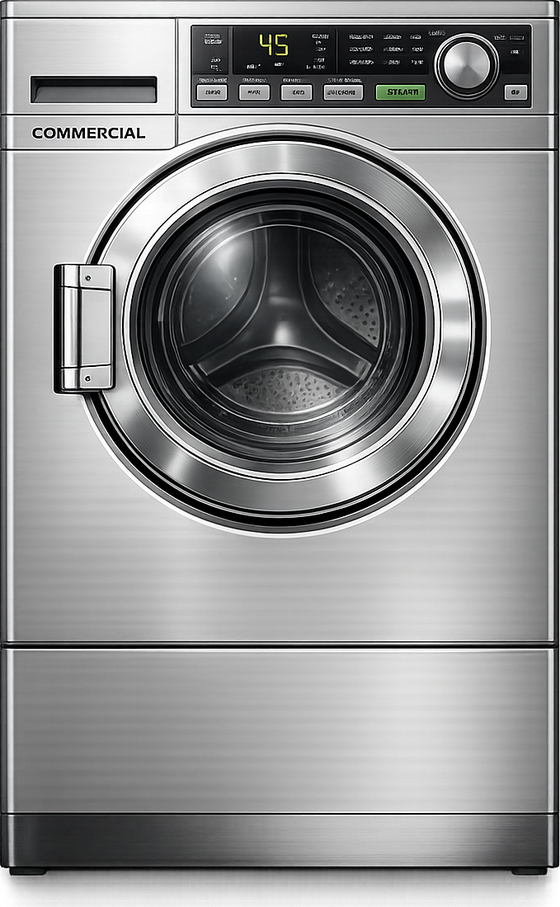
Common commercial dryer problems we fix in Lakeway
Cycles taking far longer than they should
This is the most expensive fault in a commercial laundry because it never stops the machine, it just slows everything down. The cause is almost always airflow: lint in the duct, a loaded lint screen and lint compartment, a blower wheel caked with lint, or an exhaust run that has been extended over the years past what the machine can push. We measure airflow and exhaust temperature rather than judging by feel, because a dryer that has slowly lost a third of its capacity feels normal to people who use it daily.
No heat on a gas or propane dryer
Ignition system, flame sensor, gas valve, or a safety limit that has tripped. On propane the conversion matters: a dryer on the wrong orifice either underfires, which looks like slow drying, or overfires, which trips the high limit and eventually blows the thermal fuse. We verify the conversion on any propane machine rather than replacing fuses repeatedly.
No heat on an electric dryer
Commercial electric dryers run on three phase or heavy single phase supply, and a lost leg or a failed contactor leaves the drum turning with no heat. We check supply at the machine in LoZ mode before touching elements, because a phantom reading on a dead leg sends people chasing the wrong part.
Dryer shutting down mid cycle
A machine that heats, runs, then quits is tripping a safety. High limit, thermal fuse, airflow switch or motor overload are the candidates, and on a commercial machine they usually point back to exhaust restriction. A dryer that shuts itself down is protecting the building, and bypassing the limit to keep it running is how laundry fires start.
Burner cycling on and off rapidly
Short cycling on the burner means the machine reaches its high limit too quickly, which again points at airflow or an overfired burner. It can also be a failing cycling thermostat. We measure exhaust temperature through the cycle, which separates these quickly.
Drum not turning, belt and bearing problems
Belts, idlers, rollers and drum bearings are wear parts on a machine running many hours a day. A rumble or a squeal under load is worth attending to before the bearing seizes and takes the shaft. In a laundry with no spare machine, catching this early is the difference between a scheduled repair and an outage in July.
Shared ducts and one slow machine
Where several dryers share a common exhaust, a restriction anywhere in the shared section affects all of them, and a failed backdraft damper on one machine lets exhaust from its neighbours back into it. If one dryer in a bank has become slow, we check the shared duct, because replacing parts on the slow machine will not fix a duct problem.
Controls, timers and payment systems
Commercial dryers run timers, coin or card systems and increasingly network controls. A machine that takes payment and will not start, or runs a shorter cycle than it charged for, is a control or payment system fault rather than a heating one. We diagnose those as well, since a machine that is mechanically fine can still be out of service.
Venting is most of commercial dryer performance
Nothing affects a commercial dryer more than its exhaust. Lint accumulates in the duct continuously, the run is usually longer than a residential one, and in a towel laundry the lint load is enormous. A duct at seventy percent airflow does not announce itself: the machines just take longer, the laundry starts running later into the evening, and the gas bill rises. We check duct condition, blower wheel loading and the exterior cap or roof termination on every commercial dryer call, and we will tell you where your real bottleneck is. This is also a fire safety matter and not a minor one: lint in a hot duct is the most common cause of laundry fires.
Towels, and how they load a machine
Commercial dryers are rated for a dry weight of mixed linen. A load of terry towels coming out of an extractor holds far more water than the same weight of sheets, so the drying load is much higher than the dry weight suggests. Operators often load by volume, filling the drum, which means a machine that is nominally within rating is well past it in practice. If your cycles are long and the venting is clean, load practice is the next thing we look at, and adjusting it costs nothing.
Seasonal operations and the July problem
Marinas, clubs and rental managers around Lakeway hit their peak in exactly the months when ambient temperature is highest and laundry volume is greatest. A dryer that was adequate in April can be the limiting factor in July. The time to deal with the duct, the bearings and the belts is in the quiet months, not during peak season when a machine down for a day backs up every room and every towel station in the building. If you run seasonally, a pre-season service on the laundry is the cheapest insurance you will buy.
Commercial dryer questions from Lakeway operators
Our cycles have gotten longer over the past year
Almost always airflow: lint in the duct, in the lint compartment, or caked on the blower wheel. It happens gradually enough that nobody notices the day it started. We measure airflow and tell you how much capacity you have lost.
One dryer in the bank is slower than the others
If they share an exhaust duct, check the duct and the backdraft dampers before anything on the machine. A failed damper lets the neighbours exhaust into the slow one, which no part replacement will fix.
We keep replacing thermal fuses
A fuse that keeps blowing is a symptom, not the fault. It means the dryer is overheating, usually from restricted exhaust or an overfired burner on a propane conversion. We find the cause rather than fitting another fuse.
Should we service the laundry before summer?
Yes, if you are seasonal. Duct cleaning, belts, bearings and burner service done in a quiet month cost far less than an outage in peak season, and a dryer at full airflow is the difference between keeping up and running late every night.
What does commercial dryer repair cost in Lakeway?
The commercial diagnostic is $149 and it is credited toward the repair when you approve it. Belts, rollers, igniters and thermostats are inexpensive; motors and control boards cost more, and duct work is quoted separately. Written estimate with parts, labor and tax before any work begins.
Book Commercial Dryer Repair in Lakeway
Tell us the brand, whether the dryer runs on natural gas, propane or electric, and how many machines share the exhaust. We serve clubs, marinas, spas, gyms and property managers in Lakeway, Bee Cave, Lago Vista, Leander, Lakeway and the surrounding Hill Country, with same-day service when the schedule allows.
Commercial Dryer Repair in Lakeway, TX
-

What we fix
- Long dry times and loads coming out damp
- No heat on gas, propane or electric units
- Dryer shutting down mid cycle
- Burner will not ignite or cycles off
- Drum not turning, belts and bearings
- Blocked or restricted exhaust venting
- Controls, timers and coin or card systems
-
Lakeway specifics
- Propane conversions on dryers off the gas main
- Pool and lake towels as the standard load
- Several dryers sharing one exhaust duct
- Rooftop and long duct runs loading with lint
- Peak season turnovers with no spare machine
- Seasonal operations idle between busy stretches

Commercial Dryer Brands We Service in Lakeway
If your brand is not listed, contact us — we likely service it.
Why Homeowners & Businesses Choose TakiDA
-
 Quality WorkWe deliver professional appliance repair with attention to detail, proper diagnostics, and long-lasting results you can rely on.
-
 OEM / High-Quality PartsWe use OEM or high-quality replacement parts to ensure correct operation, reliability, and extended appliance lifespan.
-
 Same-Day / Next-Day ServiceFast response with same-day or next-day service to reduce downtime and get your appliances back in working order quickly.
-
 Clear PricingUpfront estimates with transparent pricing. No hidden fees, no surprises — you know the cost before work begins.
-
 EPA Certified & InsuredEPA Section 608 Universal certified and fully insured for residential and commercial repair, giving you peace of mind and protection.
-
 Warranty on Labor & PartsAll repairs are backed by a warranty on labor and installed parts for added confidence and long-term reliability.
