
Commercial Dryer Repair in Bee Cave, TX
Towels are what commercial dryers in Bee Cave spend their lives on, and towels are the hardest thing to dry. A club, a gym or a spa runs the same machine all day, and when drying time doubles the whole linen rotation falls behind. Nine times out of ten the machine is fine and the vent is the problem.
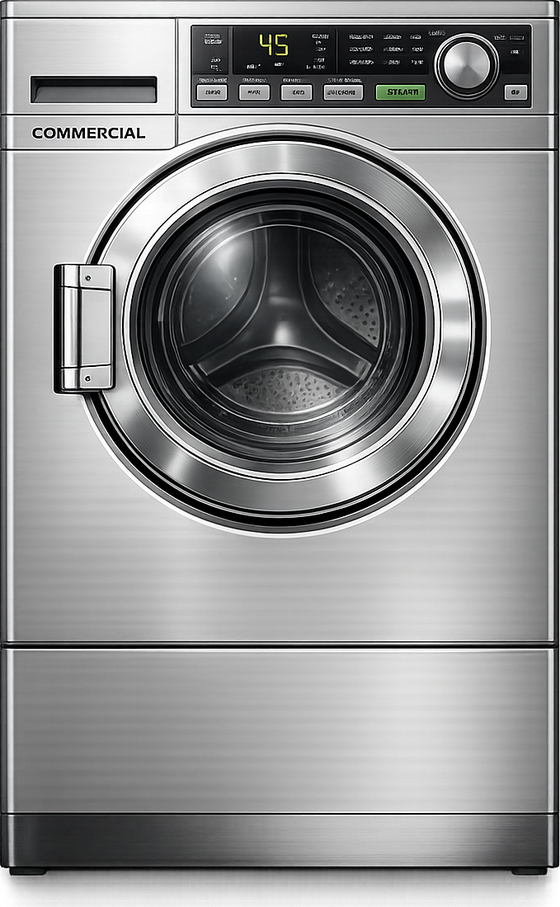
Common Commercial Dryer Problems in Bee Cave
Drying time has doubled
Airflow. Lint in the duct, a crushed or sagging run, a blocked exterior cap, or a shared duct that has never been cleaned. The dryer heats correctly and the moisture has nowhere to go. With towels this shows up faster than with anything else, because they hold more water to start with.
No heat at all on a gas dryer
Igniter, flame sensor, gas valve coils, or a thermal fuse that has opened. The fuse is worth noting: it opens because the machine overheated, and it overheats because of restricted airflow. Replacing only the fuse means it opens again within weeks.
No heat on an electric dryer
A heating element, a thermal cutoff, a high limit, or one leg of the power supply lost. A dryer that tumbles but never heats is often a breaker that tripped on one side only, which is why both legs get measured.
Heats at first and quits mid-cycle
Cycling high limit or a thermistor out of range, and behind both of them usually airflow again. Intermittent heat is the most reported symptom and the most frequently misdiagnosed, because at the time anyone looks the dryer is working.
Drum not turning
Belt, idler pulley, motor, or drive coupling. On a commercial dryer the belt usually goes gradually rather than suddenly, and a drum that turns slowly or stalls under a full load of towels is telling you the idler or the motor is next.
Loud rumbling, squealing or thumping
Drum rollers, bearings, the blower wheel, or something loose inside the drum. Rollers worn flat give the classic rumble. In a spa or salon where the laundry sits close to treatment rooms, the noise complaint usually comes before the performance complaint.
Lint everywhere and a filter that never seems to catch it
A lint filter that no longer seals, a blower housing full of lint, or a duct pushing it back into the room. This is a fire issue rather than a housekeeping one, and in a club or multi-tenant building it is also what an insurer asks about.
Timers, controls and payment systems
On an on-premise machine it is the timer or the control; on a coin machine it may be the mechanism or the reader. A dryer that takes money and does nothing is a different fault family from one that will not heat, and separating the two before parts are ordered saves paying for the wrong repair.
Commercial Dryers We Service in Bee Cave
On-premise laundry dryers, coin and card-operated dryers, stacked and single-pocket dryers, apartment and HOA laundry rooms, gas and electric models, and the vent runs, boosters and dampers that serve them. Common brands include Speed Queen, Huebsch, Maytag Commercial, Whirlpool Commercial, Dexter, American Dryer, Unimac and Continental Girbau.
We are insured and can have a certificate of insurance issued to a club, property manager or landlord before work starts.
Who We Work For in Bee Cave
Country clubs and golf courses, gyms and fitness studios, salons and day spas, restaurants and caterers, medical and veterinary offices, apartment and HOA laundry rooms, and short-term rental operators.
The commercial diagnostic is one hundred forty nine dollars and it is credited toward the repair once the work is approved. For property managers we report what we found in writing so the work can be approved without a second trip.
Common Questions About Commercial Dryer Repair in Bee Cave
Why does our dryer take so long with towels?
Towels hold the most water of anything you run, so any lost airflow shows up there first. Before replacing parts, the vent run and the exterior cap get checked, because that is usually where the time went.
How often should commercial dryer vents be cleaned?
At least annually, and twice a year for heavy daily use. It is the highest-value maintenance item on these machines, for drying time, for energy and for fire risk.
Is a thermal fuse that keeps blowing a dryer problem?
Almost never. The fuse is doing its job because the machine is overheating, and the overheating is airflow. A repair that only replaces the fuse has not found the fault.
Do you work with clubs and property managers?
Regularly, including billing the club or management company, providing a certificate of insurance, and scheduling around member or resident access.
Are older commercial dryers worth repairing?
Usually yes. Belts, rollers, bearings, igniters, valves, elements and controls are all available as parts, and commercial dryers are built to be rebuilt rather than replaced.
Book Commercial Dryer Repair in Bee Cave
Tell us the brand, whether it is gas or electric, and whether one machine or all of them are affected, and we can usually tell you whether this is a dryer problem or a vent problem before we arrive. Call (737) 388-3867. The one hundred forty nine dollar commercial diagnostic is credited toward the repair.
Commercial Dryer Repair in Bee Cave, TX
-

What We Service
- On-premise laundry dryers
- Coin and card-operated dryers
- Stacked and single-pocket dryers
- Apartment and HOA laundry rooms
- Gas and electric models
- Ignition systems and gas valves
- Vent runs, boosters and dampers
-
Typical Calls
- Cycles that take two or three turns
- No heat or intermittent heat
- Drum not turning
- High limit and thermal fuse failures
- Loud rumble, squeal or thumping
- Timers, controls and payment systems

Commercial Dryer Brands We Service in Bee Cave
If your brand is not listed, contact us — we likely service it.
Why Homeowners & Businesses Choose TakiDA
-
 Quality WorkWe deliver professional appliance repair with attention to detail, proper diagnostics, and long-lasting results you can rely on.
-
 OEM / High-Quality PartsWe use OEM or high-quality replacement parts to ensure correct operation, reliability, and extended appliance lifespan.
-
 Same-Day / Next-Day ServiceFast response with same-day or next-day service to reduce downtime and get your appliances back in working order quickly.
-
 Clear PricingUpfront estimates with transparent pricing. No hidden fees, no surprises — you know the cost before work begins.
-
 EPA Certified & InsuredEPA Section 608 Universal certified and fully insured for residential and commercial repair, giving you peace of mind and protection.
-
 Warranty on Labor & PartsAll repairs are backed by a warranty on labor and installed parts for added confidence and long-term reliability.
