
Commercial Dishwasher Repair in Bee Cave, TX
Glassware is where a Bee Cave dish machine gets judged. A bar that pours wine and cocktails notices film and spotting long before anyone checks a gauge, and on hard Hill Country water that film is the first sign the booster and the rinse system are scaling up.
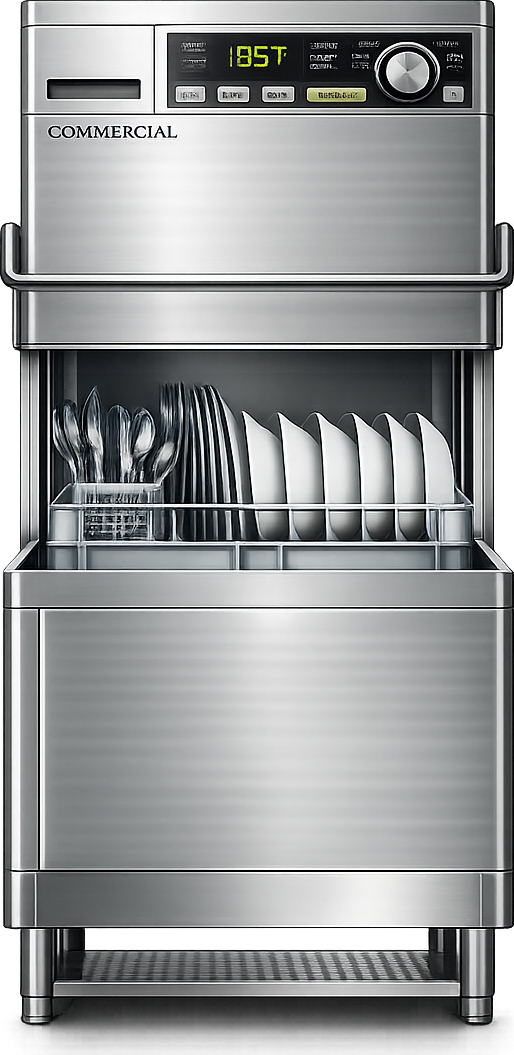
Common Dish Machine Problems in Bee Cave
Spotting and film on glassware
Mineral content plus rinse aid that is not feeding at the right rate. On a bar machine this shows first and it is a service problem rather than a cosmetic one. Check the rinse aid pump and the water treatment before replacing anything on the machine itself.
Final rinse not reaching sanitizing temperature
On a high-temp machine the rinse has to arrive hot at the manifold, not merely leave the booster hot. A scaled booster element, a failed thermostat, a slow supply or a long uninsulated line all look the same on the gauge. This is the fault that fails an inspection, so the temperature gets measured at the machine.
Dishes coming out dirty
Almost always wash arms. Scale and debris close the jets and the arms stop spinning freely, so coverage drops without the machine reporting anything. Pulling and clearing the arms is routine maintenance most kitchens discover only after a service call.
Chemical not being drawn
Detergent, rinse aid and sanitizer pumps have squeeze tubes that wear, pickup tubes that crack and lines that clog. A low-temp machine not drawing sanitizer is not sanitizing, even though it looks like it is working. Test strips catch this before an inspector does.
The machine will not fill or will not drain
Fill valve, float switch, drain valve, or an overflow tube left out after cleaning. A tank that drains during the cycle wastes heated water and chemical and makes everything else look marginal, so the drain side is checked even when the complaint is about washing.
Long cycles and slow recovery at the peak of service
Usually the booster not keeping up: scale on the element, or incoming water cooler than the machine was specified for. A machine that holds temperature when the room is quiet and falls behind at eight on a Saturday is telling you about capacity rather than failure.
Leaks, curtains and door seals
Water around a dish machine comes from door gaskets, missing or torn curtains on a conveyor, or the drain connection. Curtains are routinely left out after cleaning, and without them a conveyor throws water out both ends and loses heat on every rack.
A machine that trips its breaker
A booster element gone to ground, a failed contactor, or a motor drawing more than it should. Stop using it rather than resetting: the breaker is reacting to something real and dish machines sit in standing water.
Dish Machines We Service in Bee Cave
Door-type and hood machines, undercounter machines, conveyor and rack machines, glasswashers and bar machines, both high-temp with boosters and low-temp chemical sanitizing. Common brands include Hobart, Jackson, CMA, Champion, Ecolab, Meiko and Moyer Diebel.
We work on the machine, the booster and the chemical feed together, because passing an inspection depends on all three.
Who We Work For in Bee Cave
Restaurants, bars and cafes at the Hill Country Galleria and along Bee Cave Road and Highway 71, country club and golf course kitchens, caterers and event venues, school kitchens and churches.
The commercial diagnostic is one hundred forty nine dollars and it is credited toward the repair once the work is approved. A dish machine down during service is urgent and we treat it that way.
Common Questions About Dish Machine Repair in Bee Cave
How often should the machine be delimed?
Monthly in a busy kitchen on this water. Delime is not optional here: scale is what takes out boosters, wash arms and elements, and it builds faster than most operators expect.
Why do my glasses have film even though the machine is clean?
Mineral content plus rinse aid feeding at the wrong rate. Check the rinse aid pump and the water treatment before replacing machine parts.
What temperatures does the inspector check?
On a high-temp machine, wash and final rinse each have a minimum, and the rinse is measured at the manifold during the cycle. Rather than quote a number that varies by machine, we test yours against its own data plate and the current requirement.
Do you service the chemical pumps?
Yes. Squeeze tubes, pickup lines and feed settings are part of the job. If your chemical is on a supplier contract we will tell you what we found so you can take it up with them rather than paying twice.
Can you provide a certificate of insurance?
Yes. We carry general liability and can have a COI issued to your landlord, property manager or club before the first visit.
Book Dish Machine Service in Bee Cave
Tell us the brand, whether it is high-temp or chemical sanitizing, and what the gauges read during a cycle, and we can usually narrow it down before we arrive. Call (737) 388-3867. The one hundred forty nine dollar commercial diagnostic is credited toward the repair.
Commercial Dishwasher Repair in Bee Cave, TX
-

What We Service
- Door-type and hood dish machines
- Undercounter machines
- Conveyor and rack machines
- Glasswashers and bar machines
- High-temp machines with boosters
- Low-temp chemical sanitizing machines
- Booster heaters and chemical pumps
-
Typical Calls
- Final rinse not reaching temperature
- Glassware coming out spotted or filmy
- Machine will not fill or will not drain
- Wash and rinse arms not spinning
- Chemical not being drawn
- Leaks, door seals and curtains

Warewashing Brands We Service in Bee Cave
If your brand is not listed, contact us — we likely service it.
Why Homeowners & Businesses Choose TakiDA
-
 Quality WorkWe deliver professional appliance repair with attention to detail, proper diagnostics, and long-lasting results you can rely on.
-
 OEM / High-Quality PartsWe use OEM or high-quality replacement parts to ensure correct operation, reliability, and extended appliance lifespan.
-
 Same-Day / Next-Day ServiceFast response with same-day or next-day service to reduce downtime and get your appliances back in working order quickly.
-
 Clear PricingUpfront estimates with transparent pricing. No hidden fees, no surprises — you know the cost before work begins.
-
 EPA Certified & InsuredEPA Section 608 Universal certified and fully insured for residential and commercial repair, giving you peace of mind and protection.
-
 Warranty on Labor & PartsAll repairs are backed by a warranty on labor and installed parts for added confidence and long-term reliability.
