
Commercial Cooktop and Vent Hood Repair in Bee Cave, TX
Kitchens in Bee Cave tend to be compact and tightly built, and a powerful hood in a tight building is where the trouble starts. The exhaust pulls more air than the room can replace, and that shows up as doors that stick, pilots that drop out and a kitchen that gets smoky with the hood running flat out.
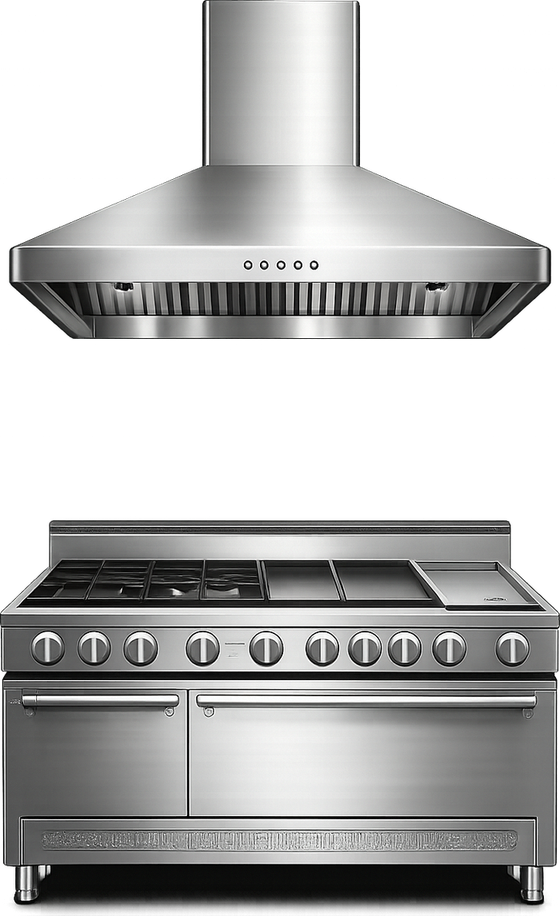
Common Cookline and Hood Problems in Bee Cave
Doors pulling hard and pilots blowing out
Negative pressure, and in a tightly built kitchen it is the first thing to check. The exhaust is moving more than the makeup air unit supplies, so the building makes up the difference through every opening it has. It costs energy, it puts out pilots on the equipment below the hood, and with gas appliances it is a combustion safety issue.
A smoky kitchen even though the hood is running
Capture and containment rather than fan speed. Filters loaded with grease, a fan that has lost speed through a slipping belt, ductwork needing cleaning, or makeup air that is not replacing what the hood pulls. A hood sounds identical whether it is moving design airflow or a fraction of it.
A burner that will not light or lights unevenly
Clogged ports, a pilot out of position, a weak thermocouple or a gas valve not opening fully. On an open burner range the ports fill with boil-over and carbon over a few months, and a burner that lights around only part of its ring is almost always telling you about that.
A griddle with a cold zone
Each zone has its own burner or element and its own thermostat with its own capillary bulb. A cold zone isolates to that circuit. On a well-used griddle the bulb can also come loose from the plate, which reads as a temperature fault even though nothing has failed.
A charbroiler burning on one side
Radiants out of position, a shifted burner, or ports blocked by grease. Charbroilers are the dirtiest piece on a line and the first to lose even heat. Realigning radiants and clearing burners is maintenance rather than repair, and it is most of what these need.
An exhaust fan that squeals, rattles or stops
Belts, bearings and mounts on the rooftop fan. These live in Texas sun and grease, and a glazed belt slips long before it breaks, which means the hood is quietly moving less air for weeks.
Hood lights and switches that stopped
Heat and grease take out lamps, sockets and switch contacts. These are small repairs that matter: a cook who cannot see the plate works slower, and a hood with a dead switch often gets left running overnight.
Grease dripping from the hood or collecting in the duct
Filters loaded or missing, a grease cup overflowing, or a hood gone too long between cleanings. This crosses from equipment into fire safety, and it is where we will tell you plainly that what you need is a hood cleaning service rather than a repair.
Cookline and Hood Equipment We Service in Bee Cave
Gas ranges and open burner tops, flat top griddles, charbroilers and radiant broilers, hot plates and stock pot ranges, electric ranges and French tops, salamanders and cheese melters, wok ranges, and the exhaust hoods, fans and makeup air units above them. Common brands include Vulcan, Garland, Imperial, Southbend, Wolf, Star, American Range, CaptiveAire and Greenheck.
Gas work is done to manufacturer specification, and a conversion between natural gas and propane gets verified rather than assumed. We do not perform hood cleaning and will say so when that is what the problem is.
Who We Work For in Bee Cave
Restaurants and bars at the Hill Country Galleria and along Bee Cave Road and Highway 71, country club and golf course kitchens, caterers and event venues, school kitchens and churches.
The commercial diagnostic is one hundred forty nine dollars and it is credited toward the repair once the work is approved. A cookline down mid-service is urgent and gets treated that way.
Common Questions About Cookline and Hood Repair in Bee Cave
Why do my doors pull hard when the hood runs?
Negative pressure from exhaust exceeding makeup air. It is worth correcting for energy cost alone, and it is also what blows out pilots on the equipment under the hood.
How often should grease filters be cleaned?
Daily to weekly depending on what you cook. Charbroilers and fryers load filters fastest. Clean filters keep the hood capturing and slow grease buildup in the duct.
Do you clean hoods and ducts?
No. We repair the equipment, the fans, the controls and the makeup air side. Grease cleaning of hoods and ductwork is a separate certified service and we will tell you when that is what is needed.
Can you work on rooftop exhaust and makeup air units?
Yes, including belts, bearings, motors and controls. Tell us when booking if roof access needs a ladder, a hatch key or notice to property management.
Is an older range worth repairing?
Usually. Burners, valves, pilots, thermocouples, thermostats and griddle plates are all serviceable, and commercial ranges are built to be rebuilt. We will tell you when a repair stops making sense.
Book Cookline or Hood Service in Bee Cave
Tell us what the equipment is, whether it is gas or electric, and whether the problem is on the cookline or at the hood, and we can usually narrow it down before we arrive. Call (737) 388-3867. The one hundred forty nine dollar commercial diagnostic is credited toward the repair.
Commercial Cooktop and Vent Hood Repair in Bee Cave, TX
-

Cooking Equipment
- Gas ranges and open burner tops
- Flat top griddles and plancha
- Charbroilers and radiant broilers
- Hot plates and stock pot ranges
- Electric ranges and French tops
- Salamanders and cheese melters
- Wok ranges
-
Hood and Exhaust Work
- Exhaust fans that stopped or slowed
- Belts, bearings and motor mounts
- Makeup air units and balance
- Hood lights, switches and wiring
- Grease filters and capture issues
- Fan controls and interlocks

Cookline and Hood Brands We Service in Bee Cave
If your brand is not listed, contact us — we likely service it.
Why Homeowners & Businesses Choose TakiDA
-
 Quality WorkWe deliver professional appliance repair with attention to detail, proper diagnostics, and long-lasting results you can rely on.
-
 OEM / High-Quality PartsWe use OEM or high-quality replacement parts to ensure correct operation, reliability, and extended appliance lifespan.
-
 Same-Day / Next-Day ServiceFast response with same-day or next-day service to reduce downtime and get your appliances back in working order quickly.
-
 Clear PricingUpfront estimates with transparent pricing. No hidden fees, no surprises — you know the cost before work begins.
-
 EPA Certified & InsuredEPA Section 608 Universal certified and fully insured for residential and commercial repair, giving you peace of mind and protection.
-
 Warranty on Labor & PartsAll repairs are backed by a warranty on labor and installed parts for added confidence and long-term reliability.
