
Dryer Repair in Cedar Park, TX
Clothes still damp, cycles that take twice as long, no heat at all, or a noise that has been getting worse. We repair electric and gas dryers across Cedar Park and clean the vent while we are there. The $99 diagnostic comes off the repair, and a fair share of these calls turn out to be the duct rather than the dryer.
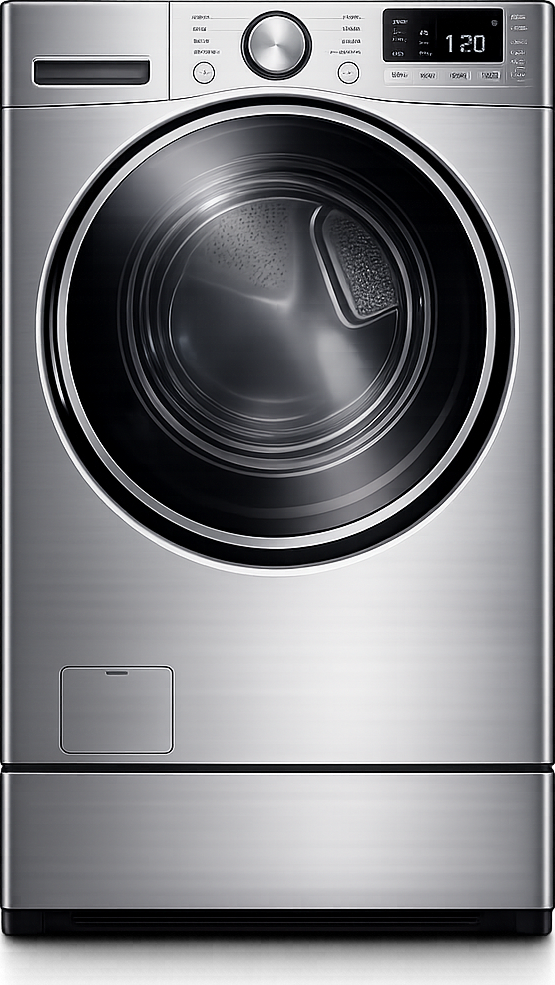
Common Dryer Problems in Cedar Park Homes
Automatic cycles stop while the clothes are still damp
Automatic and sensor-dry cycles do not run on a clock. Two metal strips inside the drum read how much moisture is bridging them, and the control ends the cycle when the reading says dry. Fabric softener and dryer sheets leave a film on those strips, and a filmed sensor reads dry early — every time. It is worth cleaning them before anyone discusses parts. If the clothes are still wet after cleaning, the sensor circuit itself gets measured, and that is a defined test in the service sheets rather than a guess.
The laundry room gets hot and humid while the dryer runs
A dryer is supposed to put that heat and moisture outdoors. If the room is warming up, the duct has come adrift behind the machine, a joint has pulled apart inside the wall, or someone has fitted an indoor lint trap. Beyond the discomfort, this is the fault that quietly ruins everything else: warm wet air going nowhere makes drying times climb, pushes the cycling thermostat and the high limit harder, and eventually opens the thermal fuse. We look at the duct before we look at the dryer.
Lint on the clothes and almost none in the screen
That combination means air is not carrying lint to the screen. Either the screen is not seating properly, it has a split you cannot see until it is held to the light, or airflow through the drum has dropped so far that lint settles on the load instead. Any of the three is worth a few minutes of someone's attention, because the same restriction that leaves lint on your shirts is the one that overheats the machine.
The dryer trips the breaker
An electric dryer runs on both legs of a 240-volt supply, and a trip usually means one of two things: a heating element that has sagged and is touching the housing, or a motor drawing far more current than it should. Both are measurable. What we will not do is keep resetting the breaker to see what happens — a breaker that trips repeatedly is reporting a real fault, and on a dryer that fault sits next to a lot of lint.
A rhythmic ticking once per drum revolution
Noise that keeps time with the drum is mechanical and it is usually cheap if it is caught early. A tick once per turn is often something caught in the drum seam or a worn drum glide. A squeal that rises with speed is an idler pulley. A rumble you feel through the floor is a drum support roller, and a roller left long enough wears a flat that no new belt will fix. The part is inexpensive; the delay is what costs money.
Clothes come out very hot and badly creased
Hot and creased usually means the dryer is heating properly but not moving air, so the load cooks instead of drying. The cycling thermostat switches the heat on temperature, not on time, and when airflow is restricted it keeps the heat on longer than the fabric wants. That is also how a thermal fuse ends up open. The manufacturers are blunt about it in their own documentation: the fuse rarely fails on its own, it fails because the duct is blocked, and replacing the fuse without clearing the duct just books the next call.
It heats on a timed cycle but not on an automatic one
This is a useful symptom because it rules a lot out. If timed dry heats, the element, the thermostats and the high limit are all working. The fault is in the sensing path that the automatic cycles depend on — the moisture strips, their wiring, or the thermistor the control reads. Thermistors have a specified resistance; around 10 kΩ at room temperature on most of the machines we see, so it is a two-minute check rather than a process of elimination.
It stops when someone walks past, or runs with the door ajar
Both point at the door switch and the latch. A switch that is worn opens when the cabinet flexes, which is exactly what happens when someone walks across a floor that the dryer is sitting on. A dryer that keeps running with the door open is the same part failing the other way, and that one should not be left alone — the door switch is a safety interlock, not a convenience.
Dryers We Repair in Cedar Park
Electric and gas dryers, vented and condenser, stacked units and laundry centres, and dryers sitting on pedestals. We also clean dryer vents, which on a long concealed run makes more difference to drying time than any part we could sell you.
Brands we repair in Cedar Park: Whirlpool, Samsung, LG, Maytag, GE, Frigidaire, Amana, Kenmore, Electrolux, Bosch and Speed Queen.
What Dryer Repair Costs in Cedar Park
The residential diagnostic is $99 and comes off the repair when you approve it. You get a written price covering parts and labor before anything is replaced. Dryers are among the cheaper appliances to repair — elements, thermostats, fuses, rollers, belts and switches are all modest parts — and a fair number of calls turn out to be the duct rather than the machine.
Gas work finishes with a leak check on anything we opened.
Neighborhoods We Cover in Cedar Park
Two things shape dryer work in Cedar Park. A lot of the older homes around Buttercup Creek and Cedar Park Ranchettes have garage installs, where the dryer draws warm garage air in August and drying times climb for reasons that have nothing to do with the machine. The newer two-storey builds off Whitestone Boulevard and in Ranch at Brushy Creek run long concealed ducts to a roof or gable termination, and those collect lint out of sight. We cover both, and we bring vent cleaning gear rather than making it a second appointment.
Common Questions About Dryer Repair in Cedar Park
How often should a dryer vent be cleaned?
Once a year for a short straight run, and more often for a long concealed one or a household doing laundry daily. The honest early warning is drying time: when a load that used to take forty minutes takes seventy, the duct is telling you before the dryer does.
Do you clean vents, or only repair dryers?
Both, and usually in the same visit. There is not much point replacing a thermal fuse and leaving the reason it blew in place.
Is a gas dryer different work?
Yes. Gas dryers add the igniter, the flame sensor, the gas valve coils and the manifold pressure to the list, and the job ends with a leak check. We work on both and the diagnostic is the same price.
My dryer is twelve years old. Worth fixing?
Usually yes. Dryers are mechanically simple and the parts that fail on them are cheap; a twelve-year-old dryer with a bad element or a worn roller is normally worth repairing. We will tell you if yours is the exception.
How quickly can you get to Cedar Park?
Usually the same day. Call (737) 388-3867 and say whether it is heating or not — that one answer splits the job in half before we leave.
Book Dryer Repair in Cedar Park
Tell us the brand, whether it is gas or electric, and whether it is heating. That is normally enough for us to arrive with the right parts on the van.
Dryer Repair in Cedar Park, TX
-

Dryer Symptoms We Sort Out
- Clothes still damp after a full cycle
- Drum turning with no heat
- Shutting down early every time
- Hot to the touch on the outside
- Squeal that comes and goes
- Nothing happens when you press start
- Lint showing up around the machine
-
Dryers We Work On
- Gas dryers
- Electric dryers
- Vented and ventless units
- Stacked washer and dryer units
- Vent airflow diagnostics
- Whirlpool, GE, Samsung, LG, Maytag
- Frigidaire, Bosch, Electrolux, Amana

Dryer Brands We Service in Cedar Park
If your brand is not listed, contact us — we likely service it.
We repair all major residential appliance brands across Central Texas, including Whirlpool, GE, Samsung, LG, Maytag, Frigidaire, KitchenAid, Amana, Bosch, Electrolux, Hotpoint, Kenmore, Haier, Fisher & Paykel, Sub-Zero, Wolf, Viking, Thermador, JennAir, Dacor, U-Line, Marvel, Miele, and GE Monogram.
Why Homeowners & Businesses Choose TakiDA
-
 Quality WorkWe deliver professional appliance repair with attention to detail, proper diagnostics, and long-lasting results you can rely on.
-
 OEM / High-Quality PartsWe use OEM or high-quality replacement parts to ensure correct operation, reliability, and extended appliance lifespan.
-
 Same-Day / Next-Day ServiceFast response with same-day or next-day service to reduce downtime and get your appliances back in working order quickly.
-
 Clear PricingUpfront estimates with transparent pricing. No hidden fees, no surprises — you know the cost before work begins.
-
 EPA Certified & InsuredEPA Section 608 Universal certified and fully insured for residential and commercial repair, giving you peace of mind and protection.
-
 Warranty on Labor & PartsAll repairs are backed by a warranty on labor and installed parts for added confidence and long-term reliability.
